 Asset
Bank
Asset
Bank

What Is a Grinding Machine? Explaining the Differences in Types, Applications, and Machining Accuracy (Surface, Cylindrical, Internal, Centerless)
Table of Contents
A grinding machine is a machine tool used in the final finishing process of a product.
After machining processes such as turning on a lathe or cutting with a machining center, workpieces may have dimensional errors, excess protrusions, or surface irregularities.
A grinding machine removes these unwanted portions, corrects dimensions, and finishes the surface smoothly.
This is a critical process that directly affects not only appearance but also precision, functionality, and durability.
This article explains the basic structure of grinding machines, their main types, differences in machining accuracy, applications, and key points for selection.
What Is a Grinding Machine?
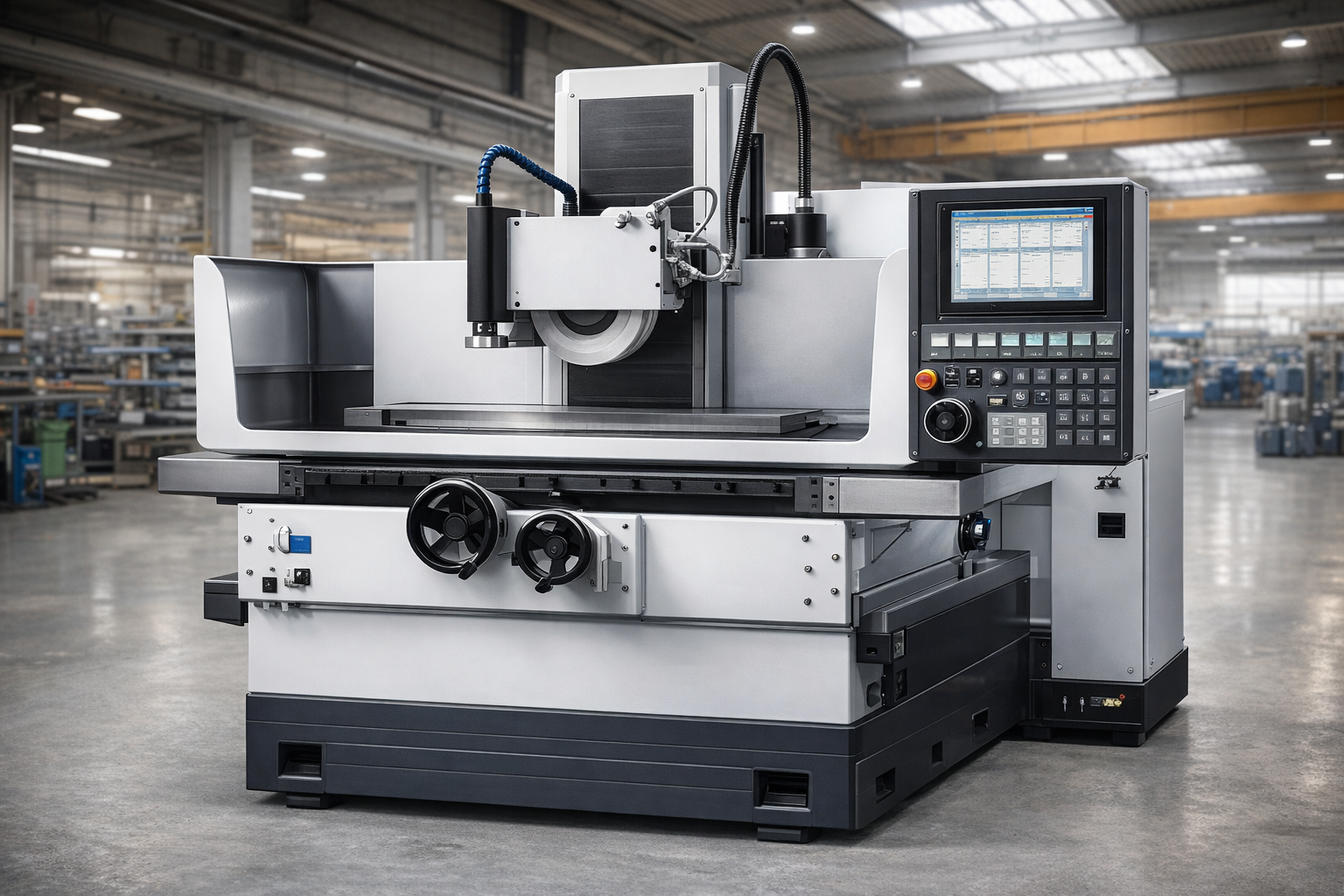
A grinding machine is a machine tool that removes minute amounts of material from a metal surface using a high-speed rotating grinding wheel. Compared to lathes and milling machines, it enables higher-precision finishing, achieving dimensional accuracy in the micron range and superior surface roughness. Many manufacturers incorporate grinding as a final finishing process after rough machining to improve dimensional stability and overall product quality.
Main Types of Grinding Machines
Surface Grinding Machine
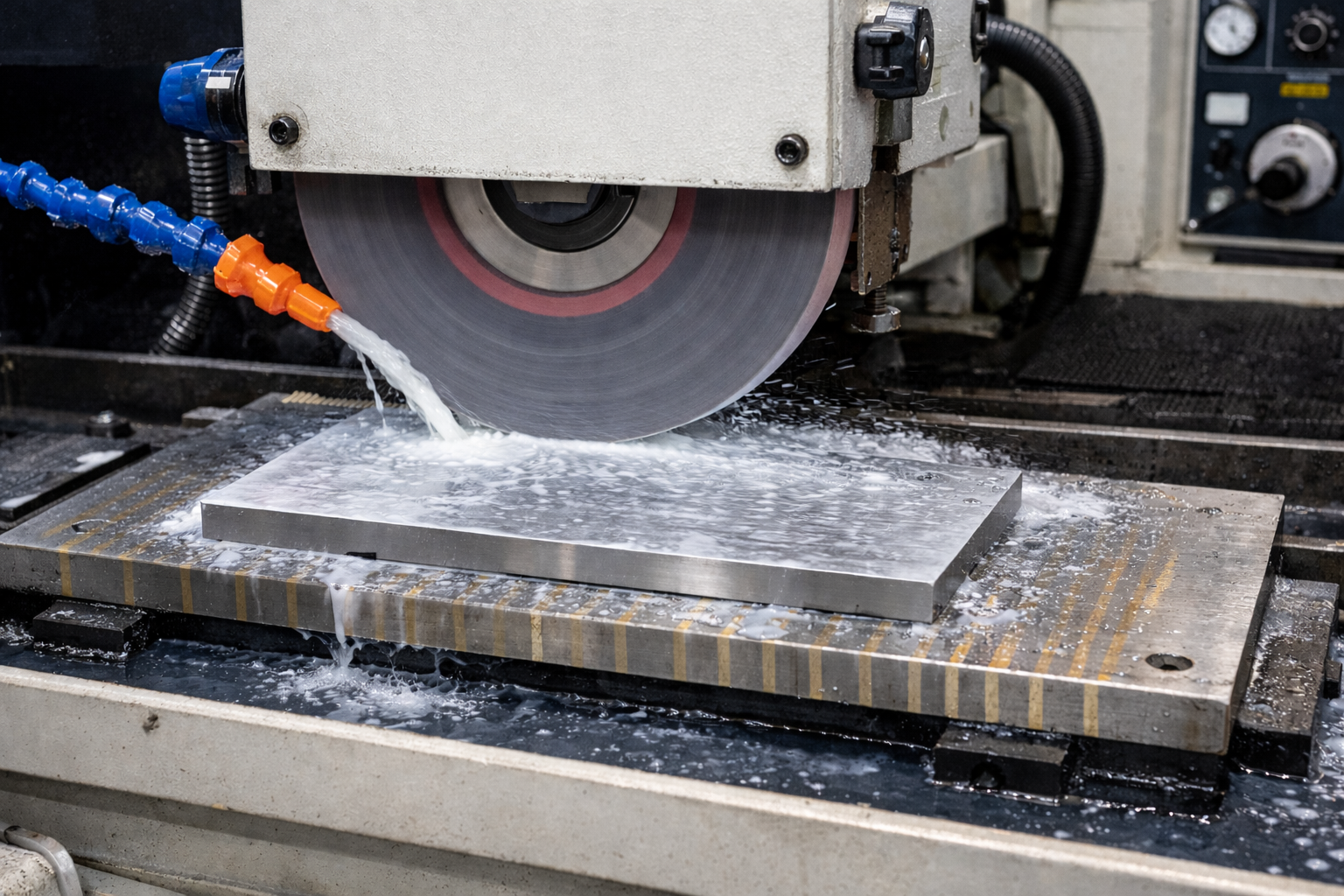
A surface grinding machine is used to finish flat surfaces of metal parts with high precision.
After shaping a part with a lathe or machining center, it is used in the final process to achieve the required dimensions, flatness, and surface roughness. As the name suggests, it is primarily used for high-precision finishing of flat surfaces.
Cylindrical Grinding Machine
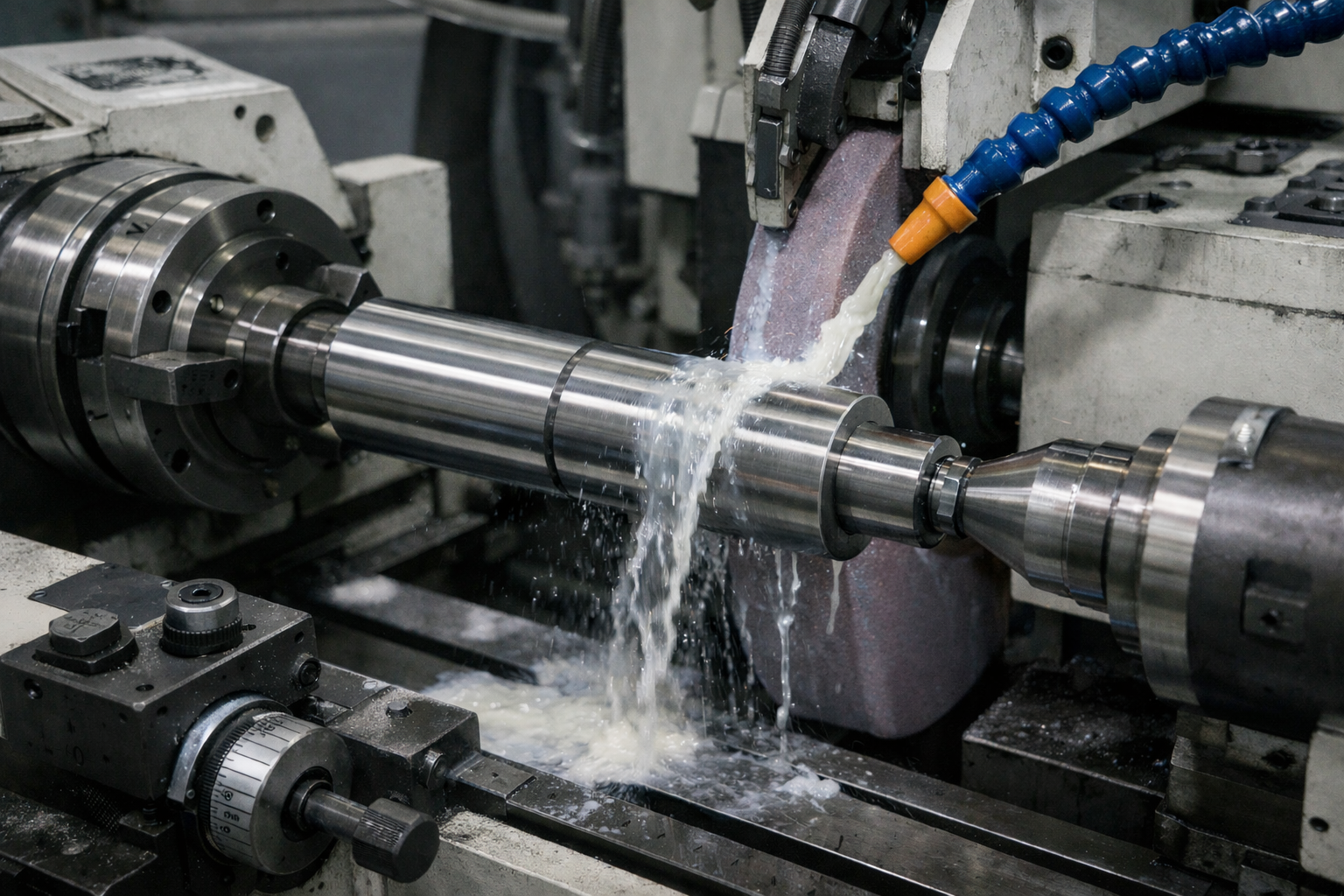
A cylindrical grinding machine is used to finish the outer diameter of cylindrical components such as shafts and rollers with high precision.
For example, after forming a cylindrical shaft by turning, it is used to achieve final dimensional accuracy, roundness, and surface roughness. It enables micron-level dimensional adjustments that are difficult to achieve through turning alone. Particularly for rotating components, even slight errors in outer diameter or roundness can cause vibration, abnormal noise, and wear, making precision finishing with a cylindrical grinder essential.
Internal Grinding Machine
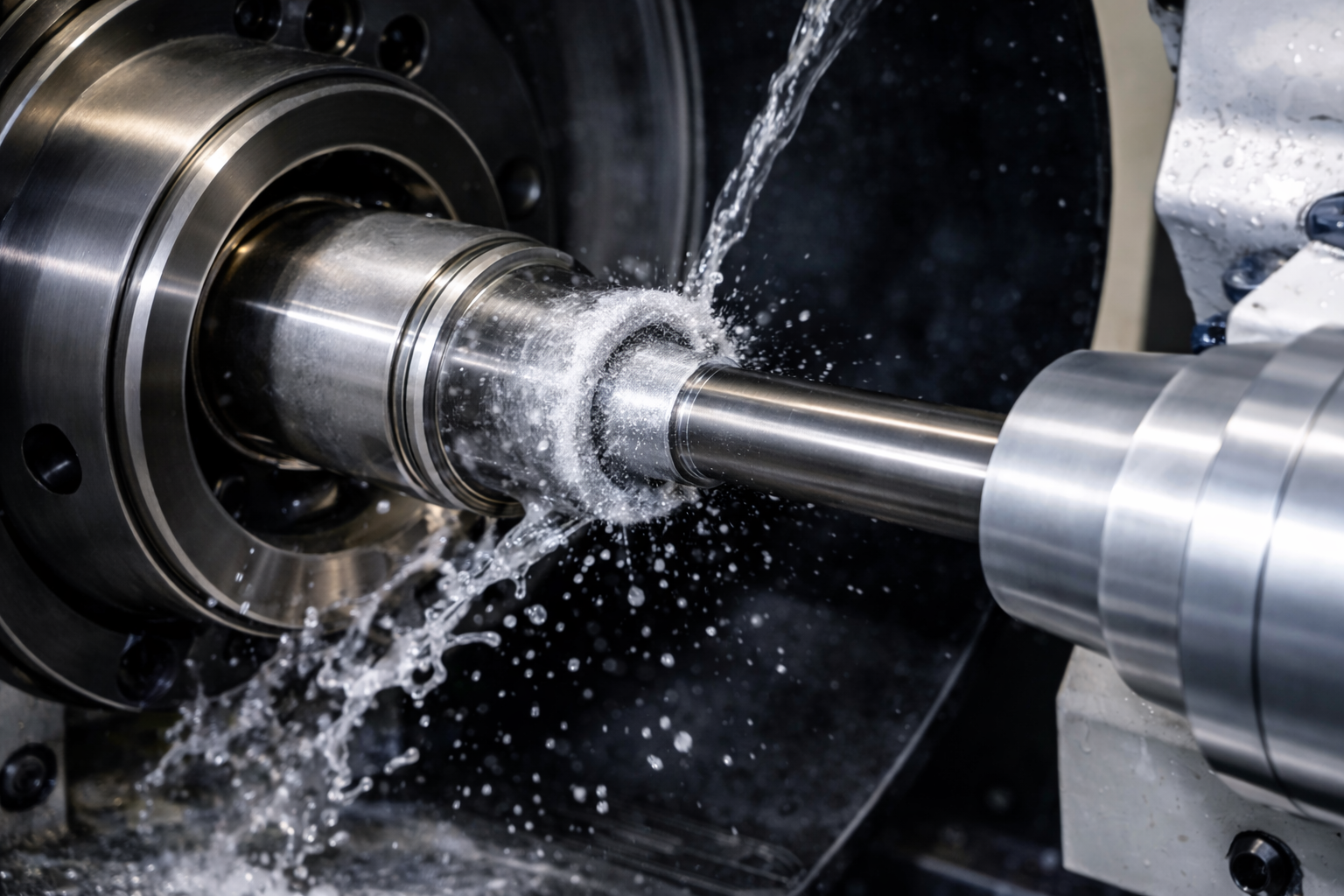
An internal grinding machine is used to finish the inner diameter (inside of holes) of cylindrical components. While a cylindrical grinding machine processes the outer diameter, an internal grinder processes the inner surface.
It is mainly used for finishing parts such as bearings, gears, bushings, and hydraulic components.
Centerless Grinding Machine
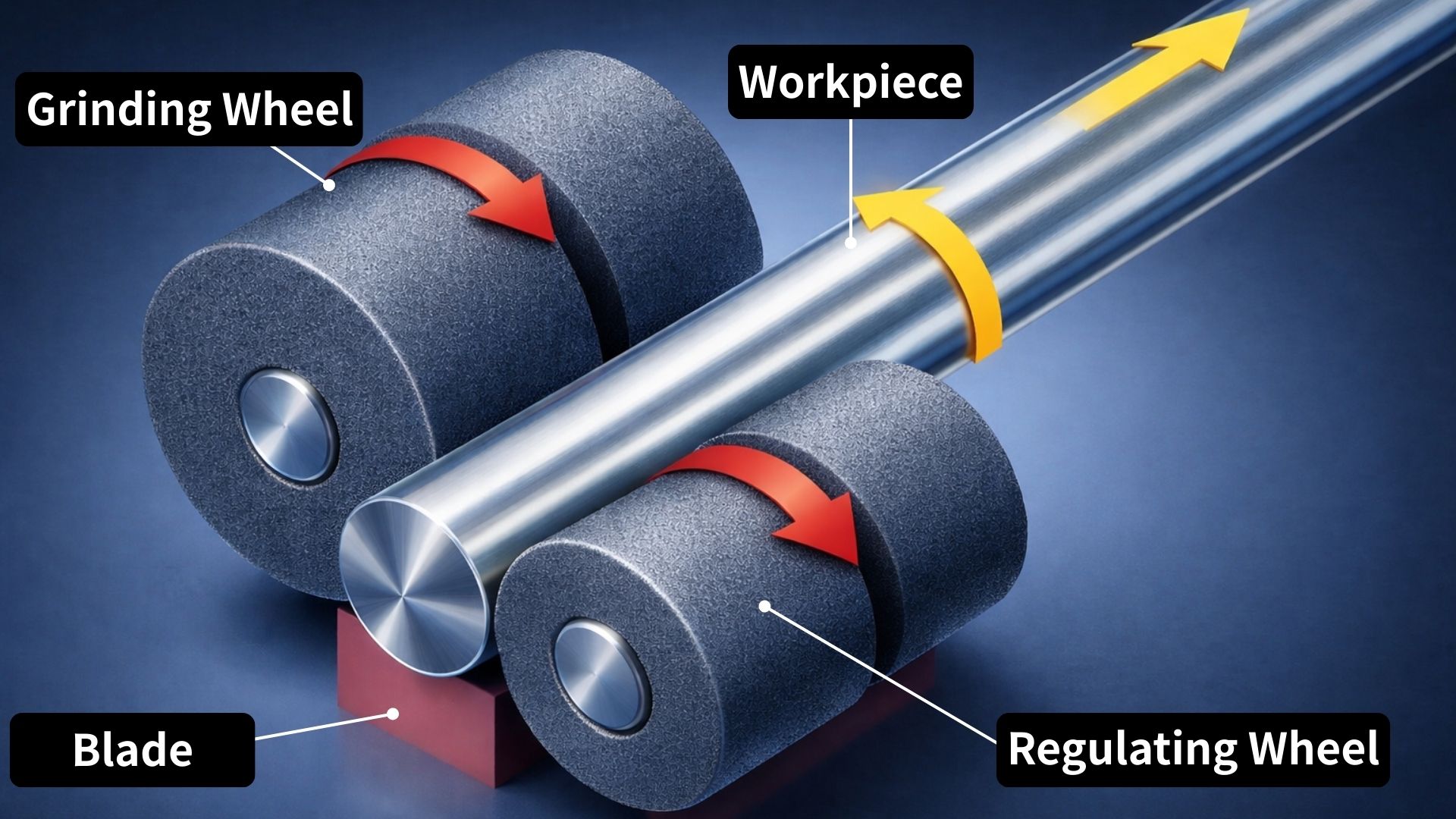
A centerless grinding machine grinds the outer diameter of a workpiece without fixing it between centers. The workpiece is placed between a rotating grinding wheel and a regulating wheel and is supported by a work rest blade while the outer diameter is ground. Typical workpieces include cylindrical components such as shafts, pins, and rollers.
Because the workpiece is supported at three points—the grinding wheel, regulating wheel, and blade—around its outer circumference, deflection and vibration are easier to suppress compared to cylindrical grinding. Therefore, it is well suited for machining long, slender parts and mass production of components with the same diameter.
Honing Machine
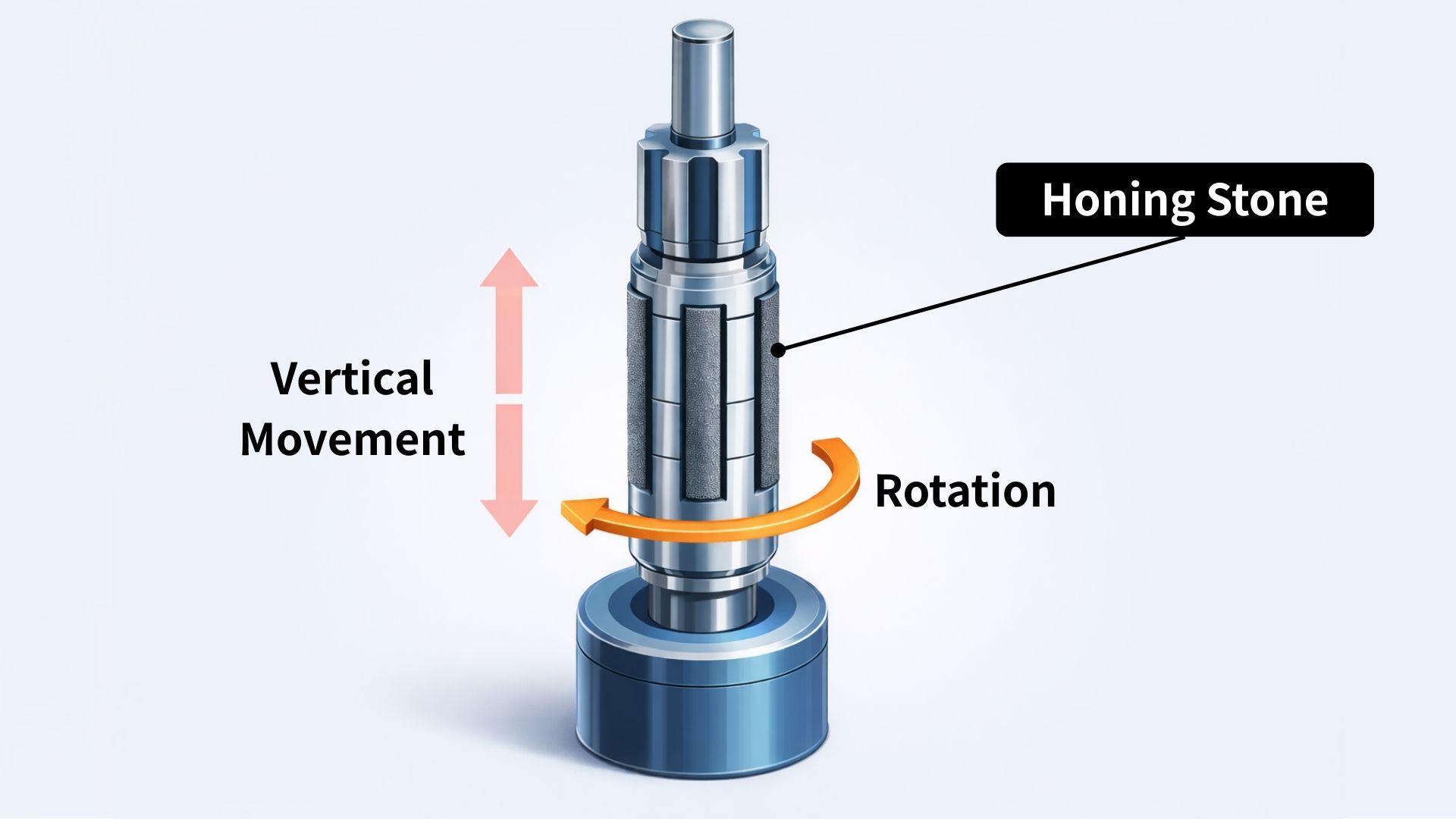
A honing machine is a machine tool used to ultra-precisely finish the inner diameter of cylindrical parts. Machining is performed by pressing abrasive stones against the inner surface while simultaneously applying rotational and reciprocating motion.
Although it is similar to internal grinding in that it processes inner diameters, the purpose differs clearly. Internal grinding mainly focuses on dimensional finishing, whereas honing not only corrects dimensions but also improves roundness, cylindricity, and functional performance. Another key feature is its ability to create a crosshatch pattern that retains lubricating oil.
In other words, while internal grinding is a process for “finishing dimensions,” honing can be described as the final finishing process that enhances functional performance.”
Differences in Machining Accuracy, Surface Roughness, and Grinding Wheel Specifications
Differences in Machining Accuracy
Machining accuracy refers to how much the actual dimensions of a part deviate from its design dimensions. The smaller the deviation, the higher the accuracy.
General guidelines for machining accuracy are as follows:
General grinding: ±0.005–0.01 mm
Precision grinding: ±0.001–0.003 mm
Ultra-precision: 1 μm or less
Note: Values vary depending on machine specifications, processing conditions, and environment.
Even among the various grinding machines mentioned above, the required machining accuracy differs depending on the specific application. The finishing requirements for general mechanical parts differ from those for precision rotating components or high-performance parts.
For example, when accuracy in the range of several microns is required, it is necessary to select a grinding machine with high-precision specifications.
Differences in Surface Roughness
Surface roughness indicates how smooth a surface is after machining and is generally expressed as Ra (arithmetic average roughness). The smaller the value, the smoother the surface.
Achievable surface roughness varies depending on the machining method:
Surface grinding: Ra 0.4–0.8 μm (typical)
Precision grinding: Ra 0.2 μm or less
Honing: Ra 0.1 μm or less
General grinding is widely used as a finishing process to ensure dimensional accuracy. However, when higher sliding performance or adhesion is required, precision grinding or superfinishing processes are necessary.
Differences in Abrasives
Grinding performance is mainly determined by three factors: abrasive grain type, grain size, and bond type. It is important to select the appropriate combination based on the work material and required precision.
Grain Size
Grain size indicates the size of abrasive particles and affects both the surface finish and material removal rate.
Coarse (#24–#60)
→ Suitable for rough grinding (high material removal)Medium (#80–#180)
→ Suitable for intermediate finishingFine (#240 and above)
→ Suitable for finishing (improves surface roughness)
The finer the grain size, the better the surface roughness; however, the material removal rate decreases accordingly.
Conclusion
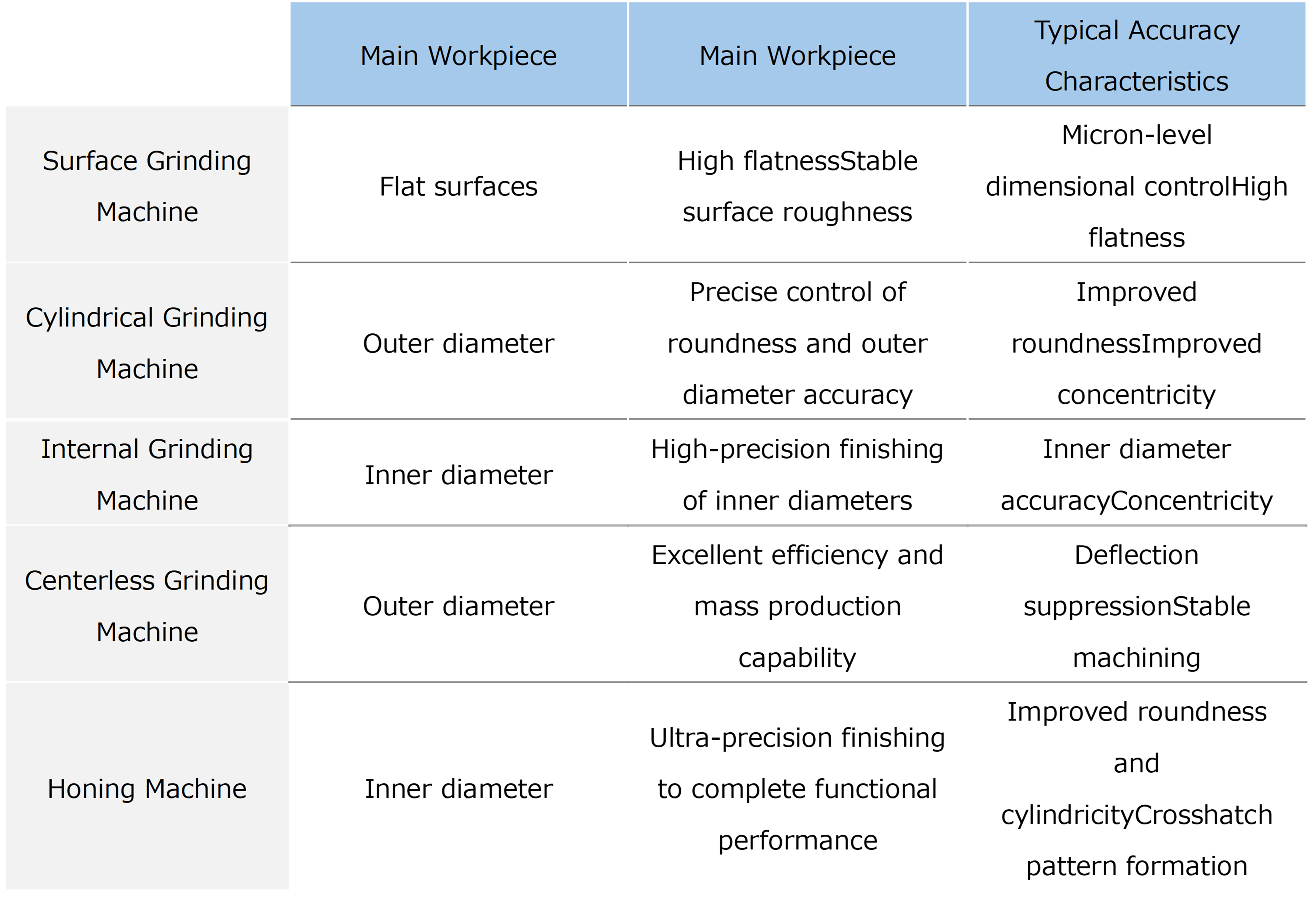
Grinding machines are essential machine tools for achieving dimensional accuracy and high-quality surface finishes. Each type—surface, cylindrical, internal, centerless, and honing—has its own area of specialization. It is important to select the optimal machine based on the shape of the workpiece, required tolerances and surface roughness, and production volume. For high-precision requirements, optimization of grinding wheel specifications and processing conditions is also necessary. Proper selection and operation directly contribute to consistent quality and improved production efficiency.
In addition to purchasing new equipment, utilizing used grinding machines is an effective way to significantly reduce capital investment.
Our company supports the buying and selling of various types of used equipment, including:
Surface grinding machines
Cylindrical grinding machines
Internal grinding machines
Centerless grinding machines
Honing machines
Please feel free to contact us for more information.