 Asset
Bank
Asset
Bank

What Is a Press Machine? A Clear Guide to Types and Features by Operating Mechanism and Application
Table of Contents
Press machines are one of the essential pieces of equipment in manufacturing environments. They are used in processes such as punching, forming, and compressing parts, and various types exist depending on the intended application and processing requirements.
Selecting the wrong press machine may result in inefficiency, poor product quality, or even an inability to manufacture the intended product.
Although commonly referred to simply as “press machines,” they can be classified based on:
How they operate (operating mechanism)
Their structural design (frame structure)
What they process (application type)
This article organizes press machines from these three perspectives and explains their characteristics in an easy-to-understand manner.
Types of Press Machines by Operating Mechanism
Here are four types of press machines categorized by how they operate. Each differs in its method of applying pressure and motion characteristics, which affects machining accuracy, productivity, and suitable applications.
Mechanical Press
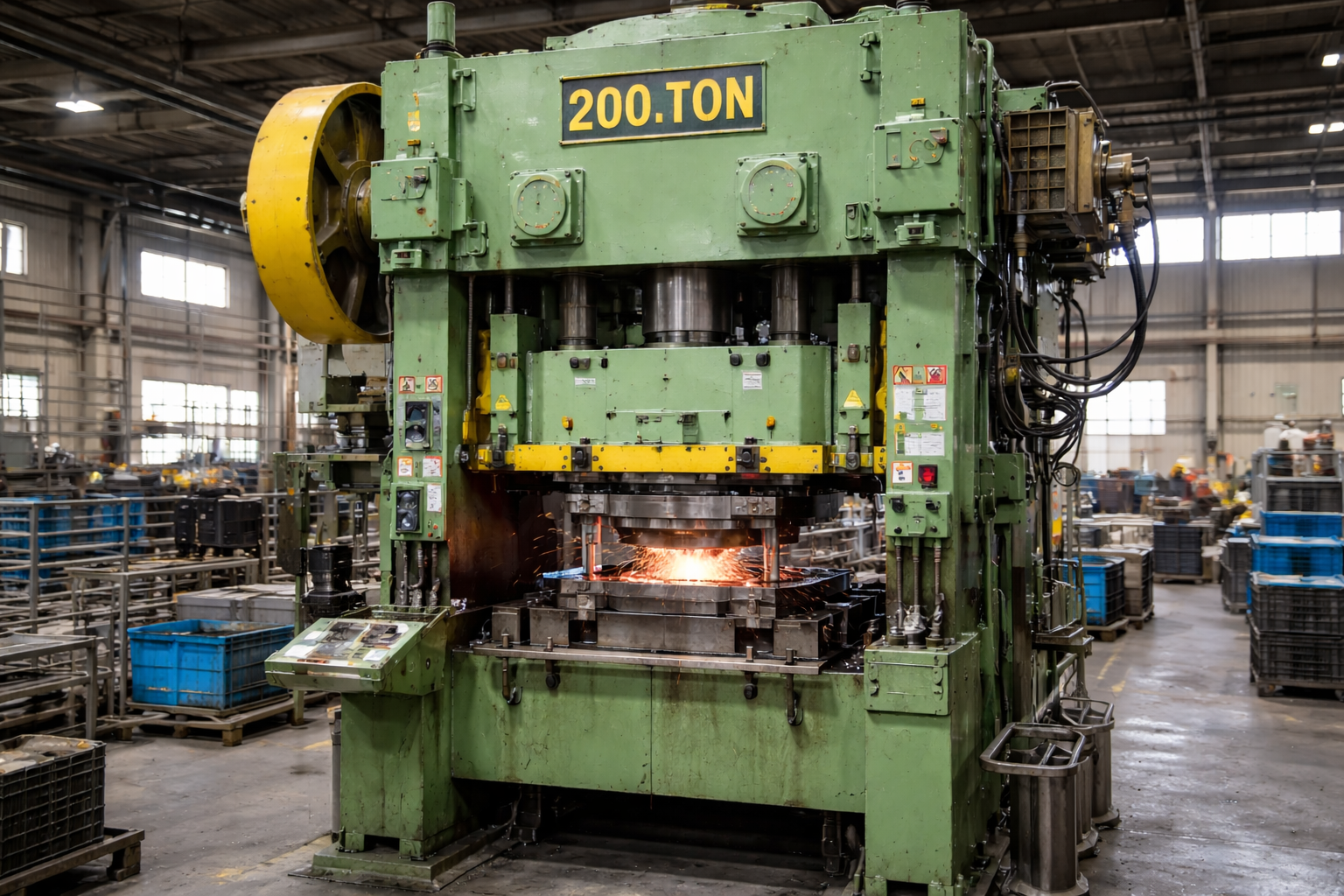
A mechanical press converts the rotational motion of a motor into vertical motion to press materials.
It operates at high speed and is ideal for mass production. In large-scale punching operations, mechanical presses are widely used as primary production equipment.
Hydraulic Press
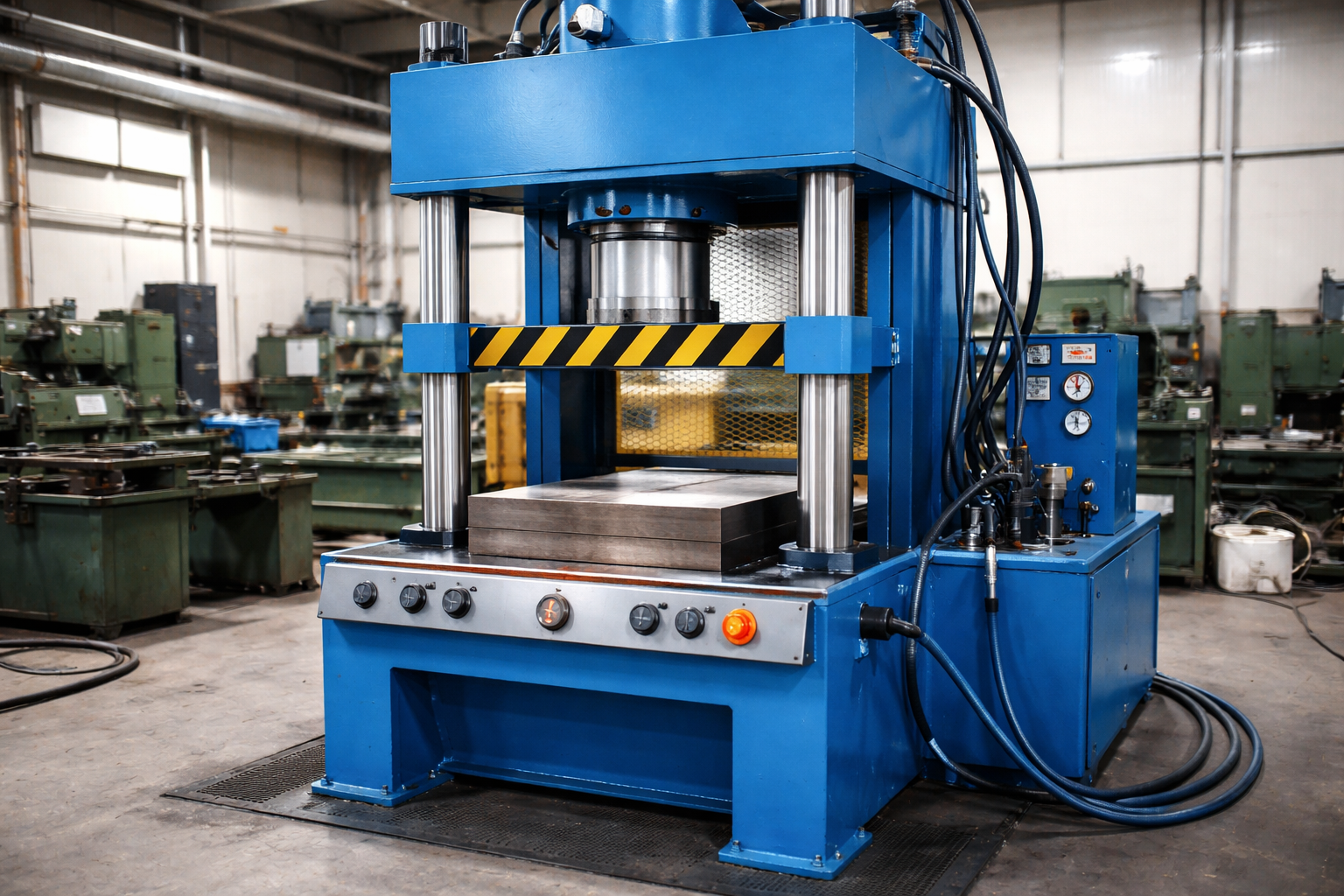
A hydraulic press uses oil to transform a small force into a much larger force.
A hydraulic pump applies pressure to hydraulic fluid, which drives a cylinder and moves the slide vertically to process the material. When the cylinder operates, it generates extremely large force.
By controlling the flow of oil, both pressure speed and force can be adjusted freely. After processing, the oil is returned to reset the slide to its original position.
Pneumatic Press
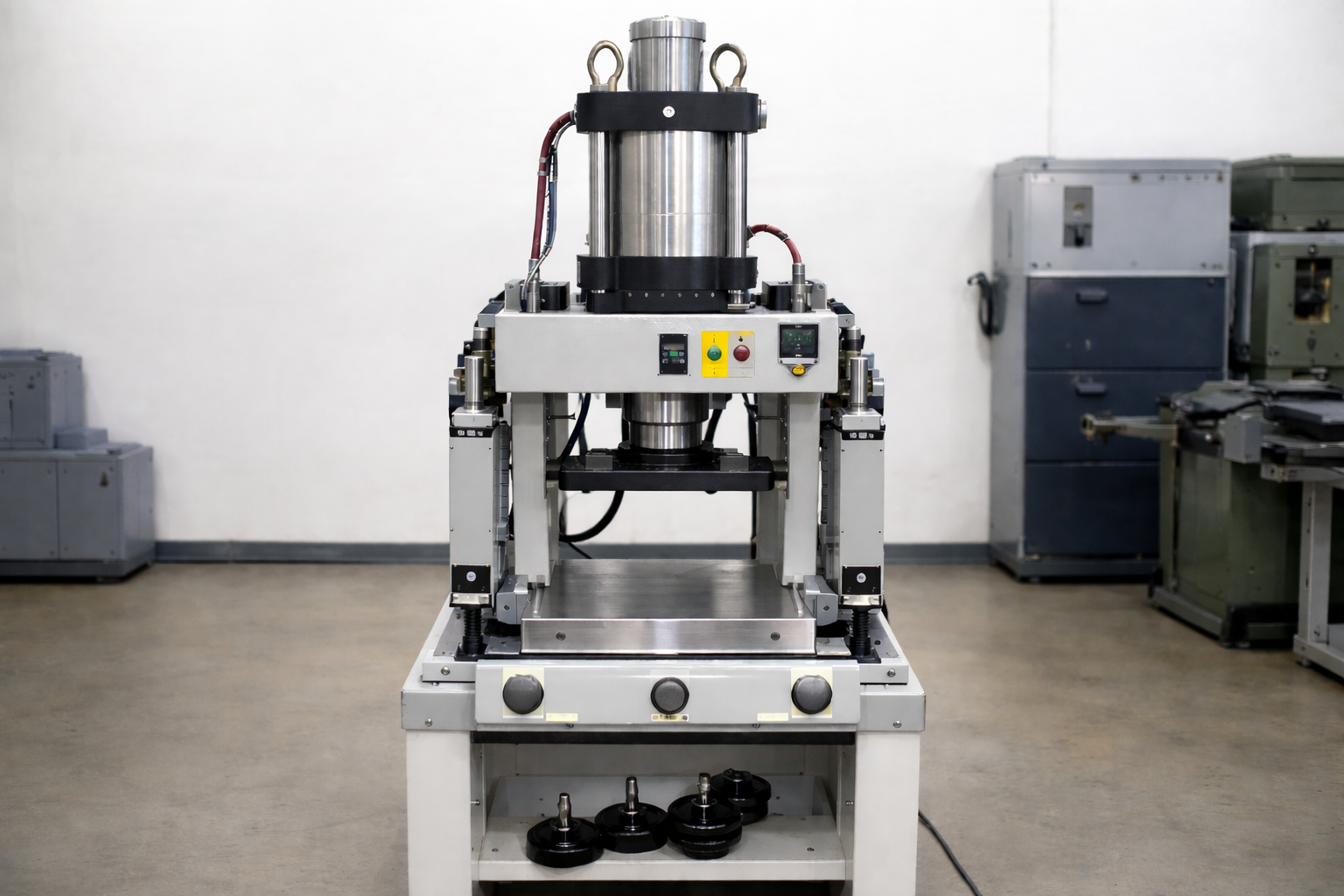
A pneumatic press uses compressed air to press materials.
Although it provides less force compared to hydraulic or mechanical presses, it features a simple structure and ease of operation. It is suitable for light-duty tasks and simple processing applications.
Servo Press
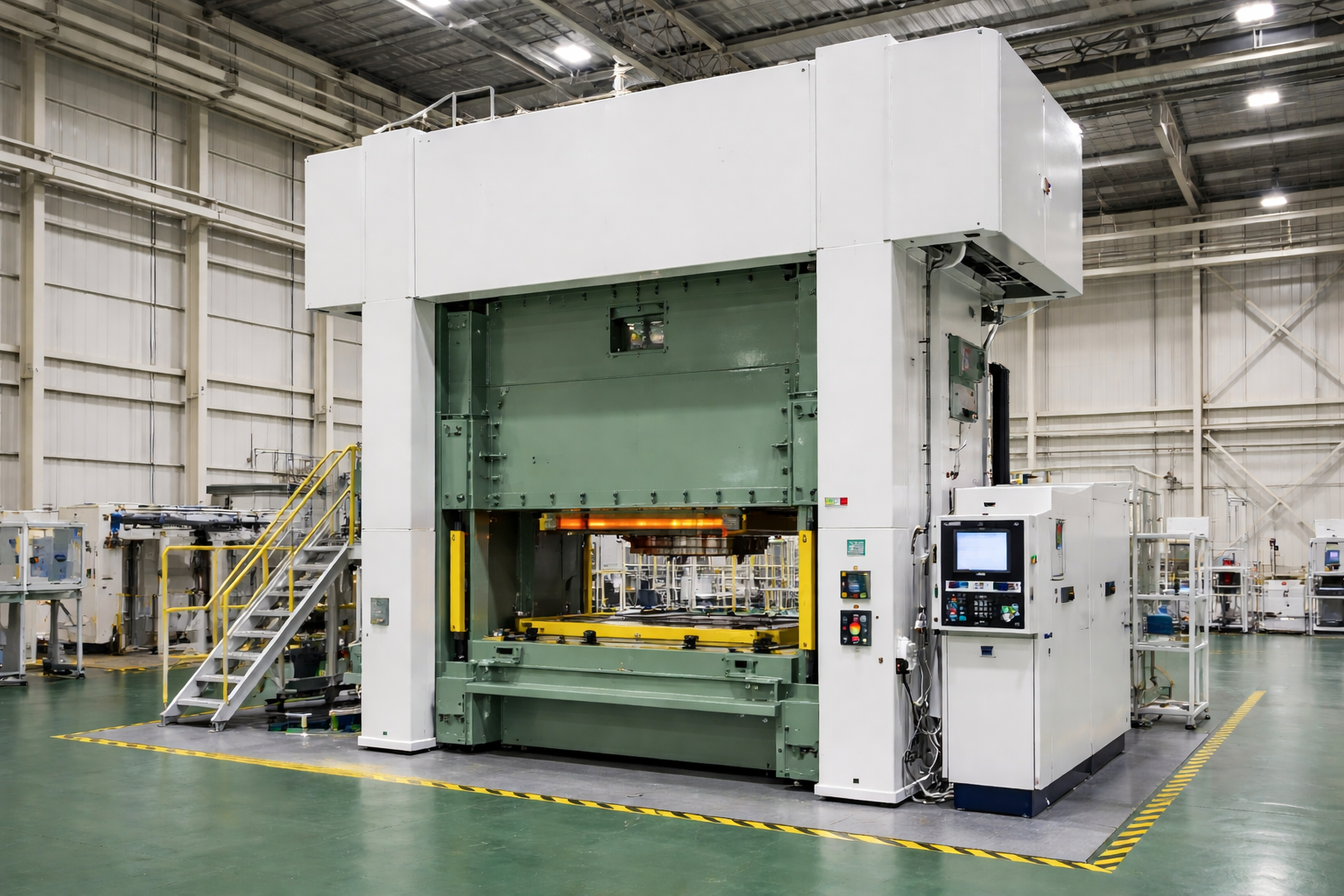
A servo press uses a servo motor to precisely control the movement of the slide.
Because processing timing and speed can be freely programmed, it enables stable and consistent product quality. It is widely used for precision components such as automotive and electronic parts.
Types of Press Machines by Frame Structure
Gap Frame Press (C-Frame Press)
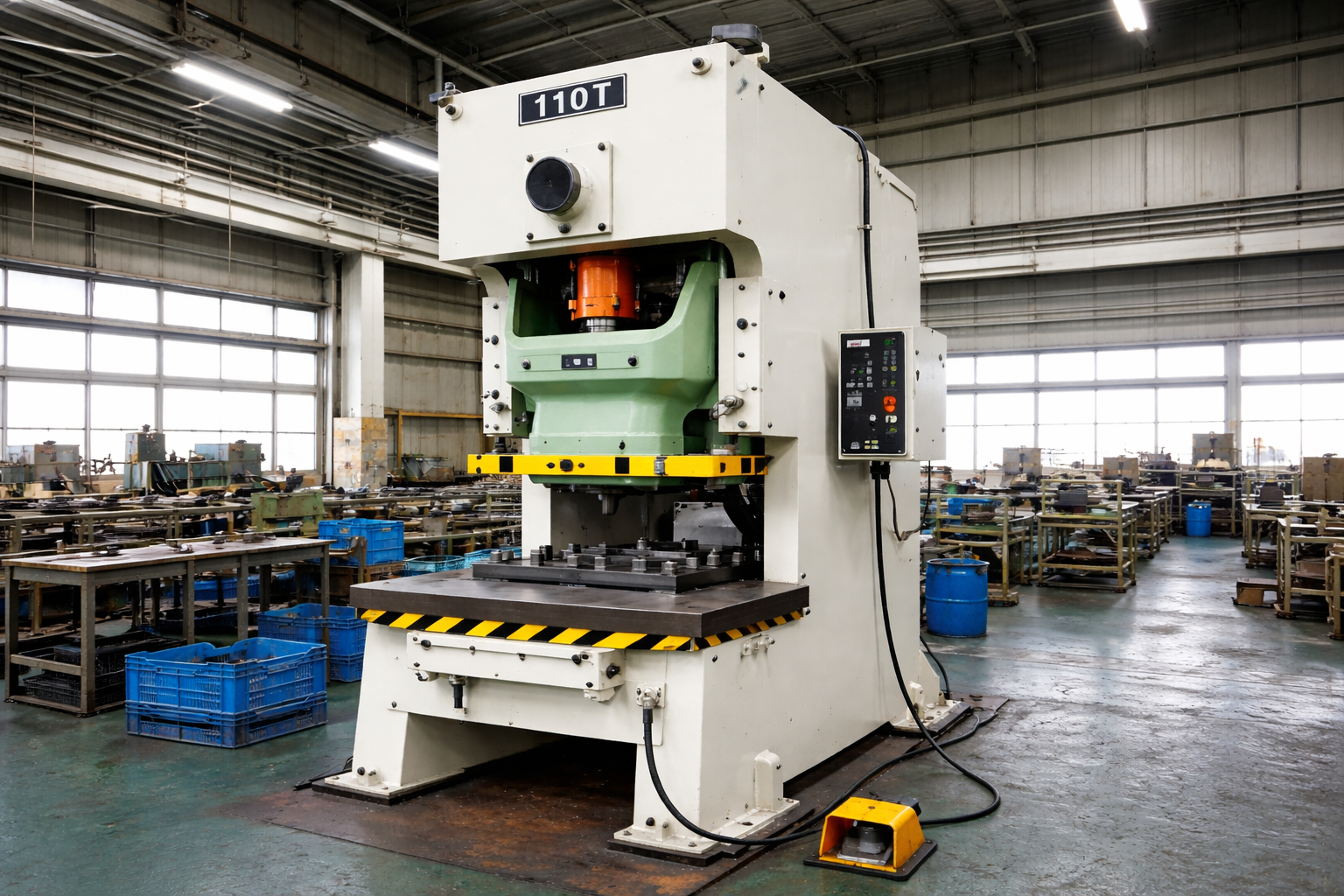
A gap frame press is called a “C-frame press” because its shape resembles the letter C.
Since the front and sides are open, die replacement and workpiece handling are easy, making it highly versatile for general applications.
Straight Side Press
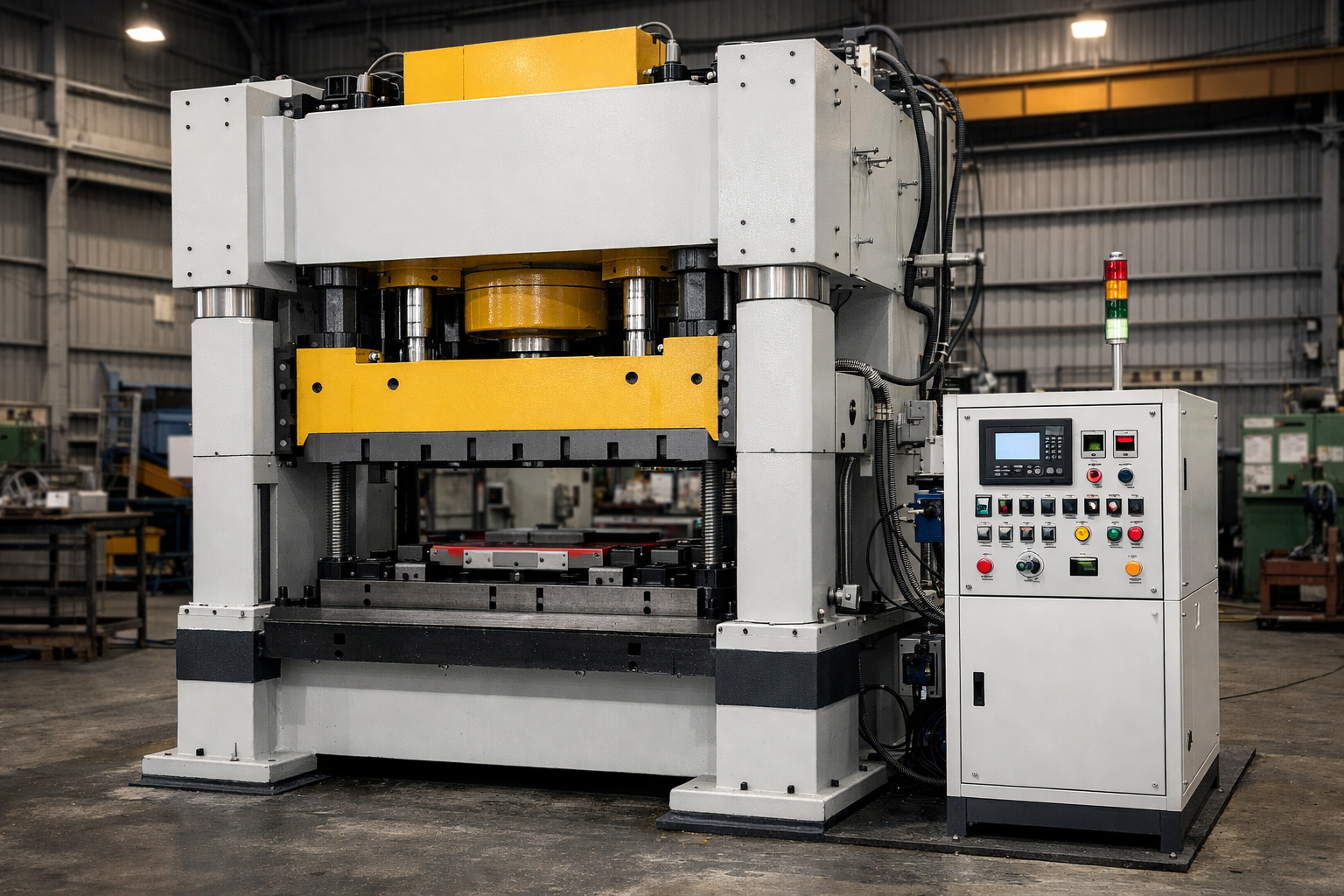
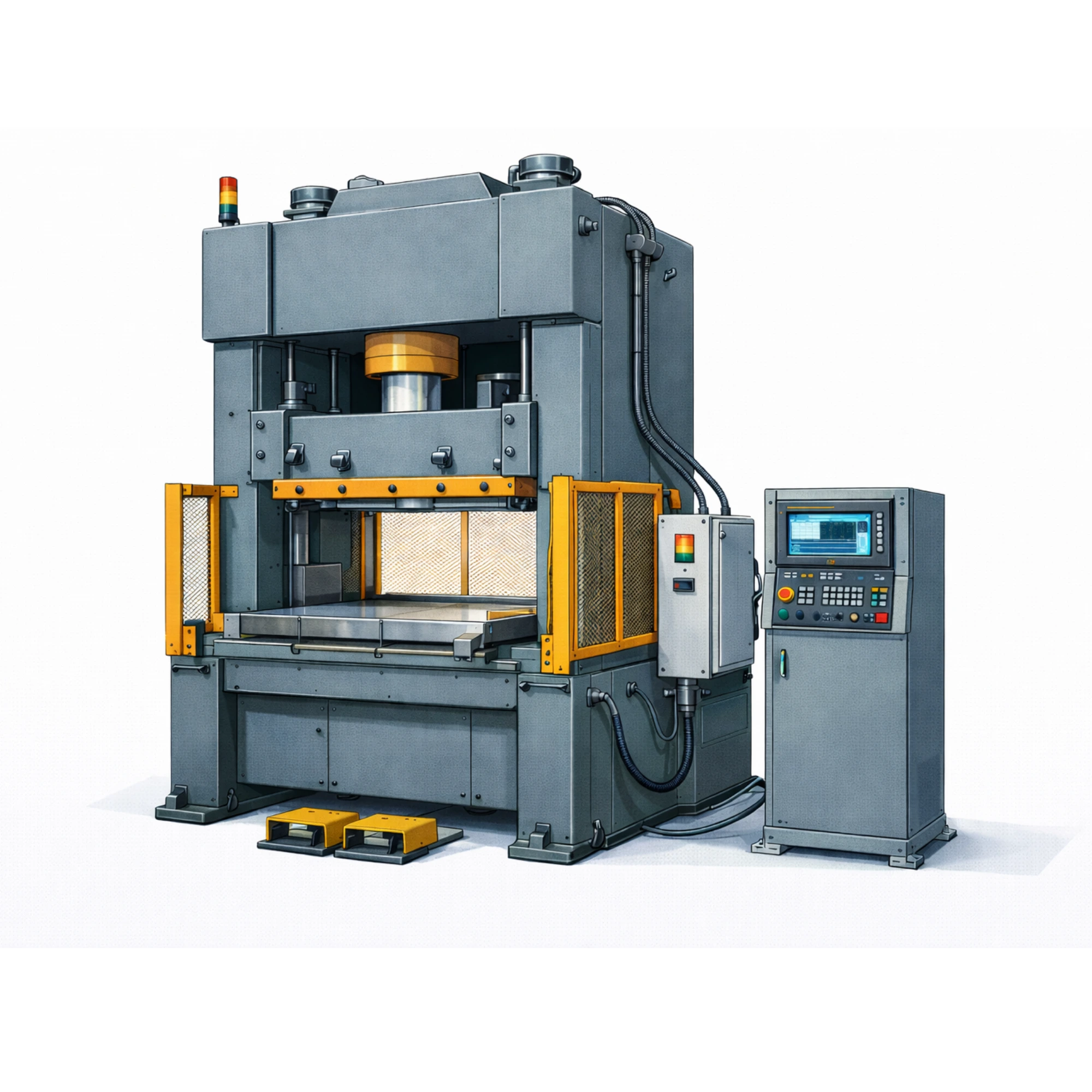
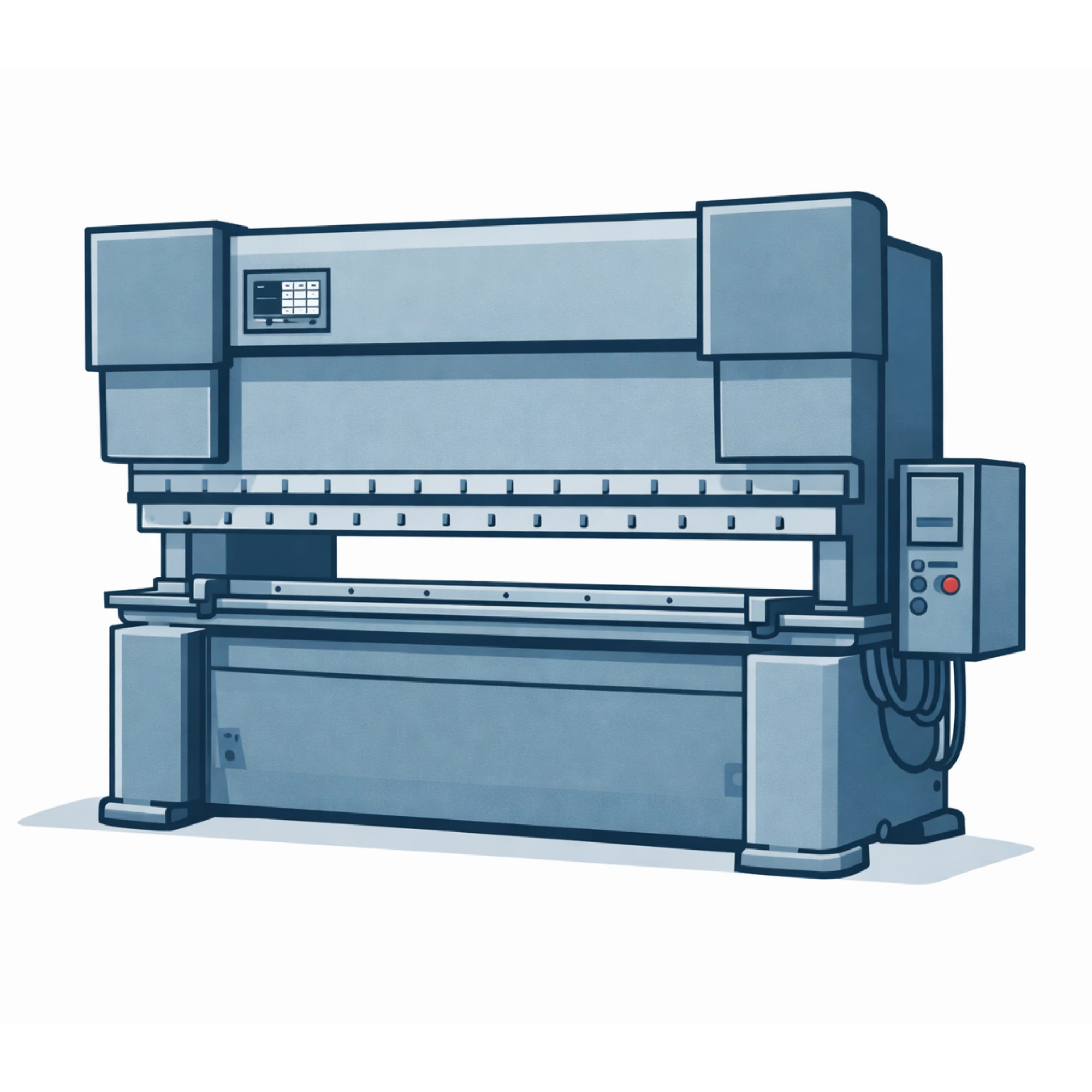
A straight side press features a gate-type structure in which the slide (the vertically moving component) is supported by two rigid columns.
Its robust frame structure minimizes deflection and twisting during pressing. Even when force is applied unevenly, the machine resists deformation, resulting in stable product dimensions and shapes.
It is commonly used for automotive parts, brackets, and frame components.
Types of Press Machines by Application
Forging Press
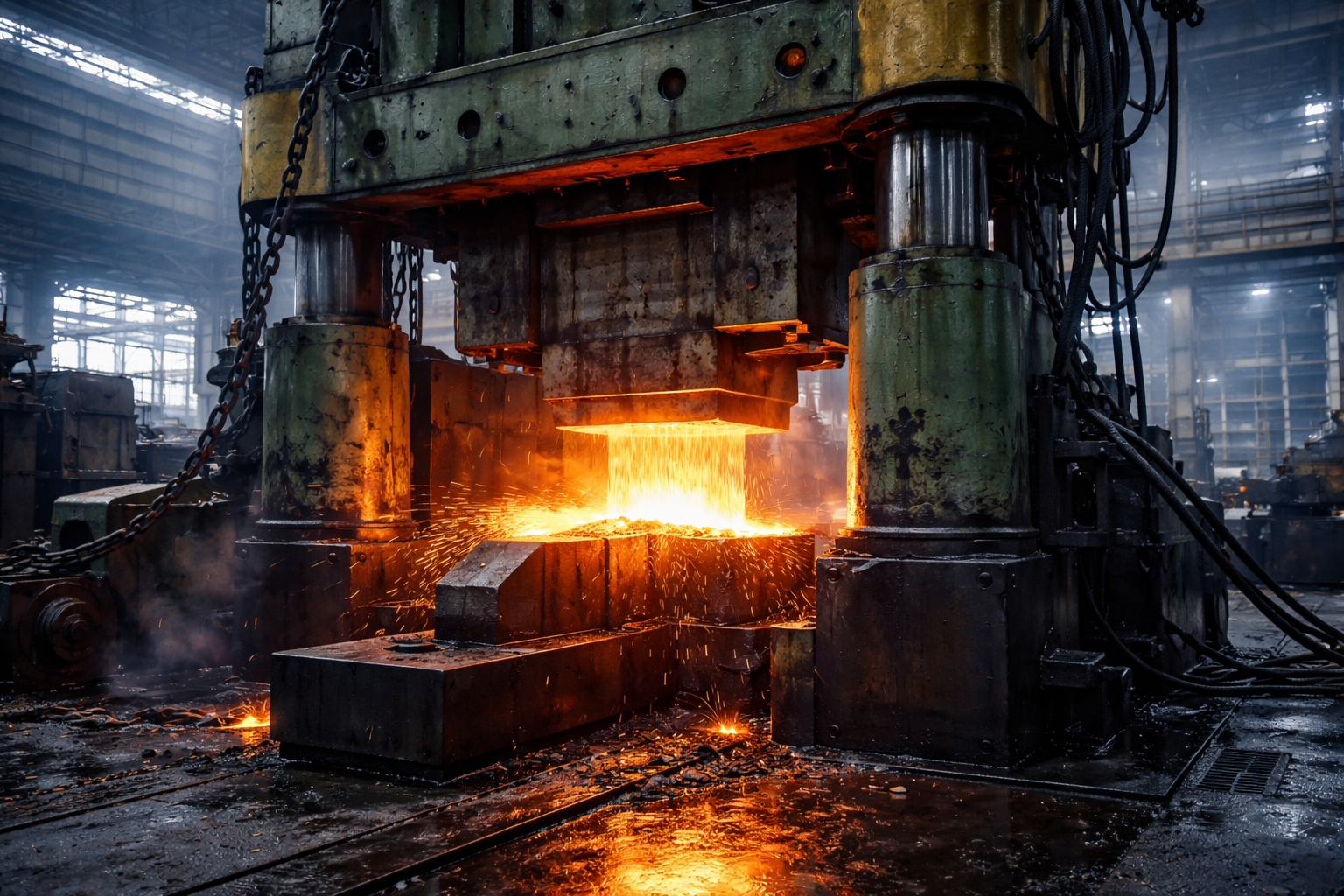
A forging press applies strong pressure to metal materials to deform them into a desired shape.
The material is compressed between upper and lower dies to form the product. Typical examples include automotive crankshafts, connecting rods, and gears.
Forging densifies the metal structure, improving strength and durability while reducing the need for subsequent machining processes. It can also be categorized by processing temperature: cold forging, warm forging, and hot forging.
Extrusion Press
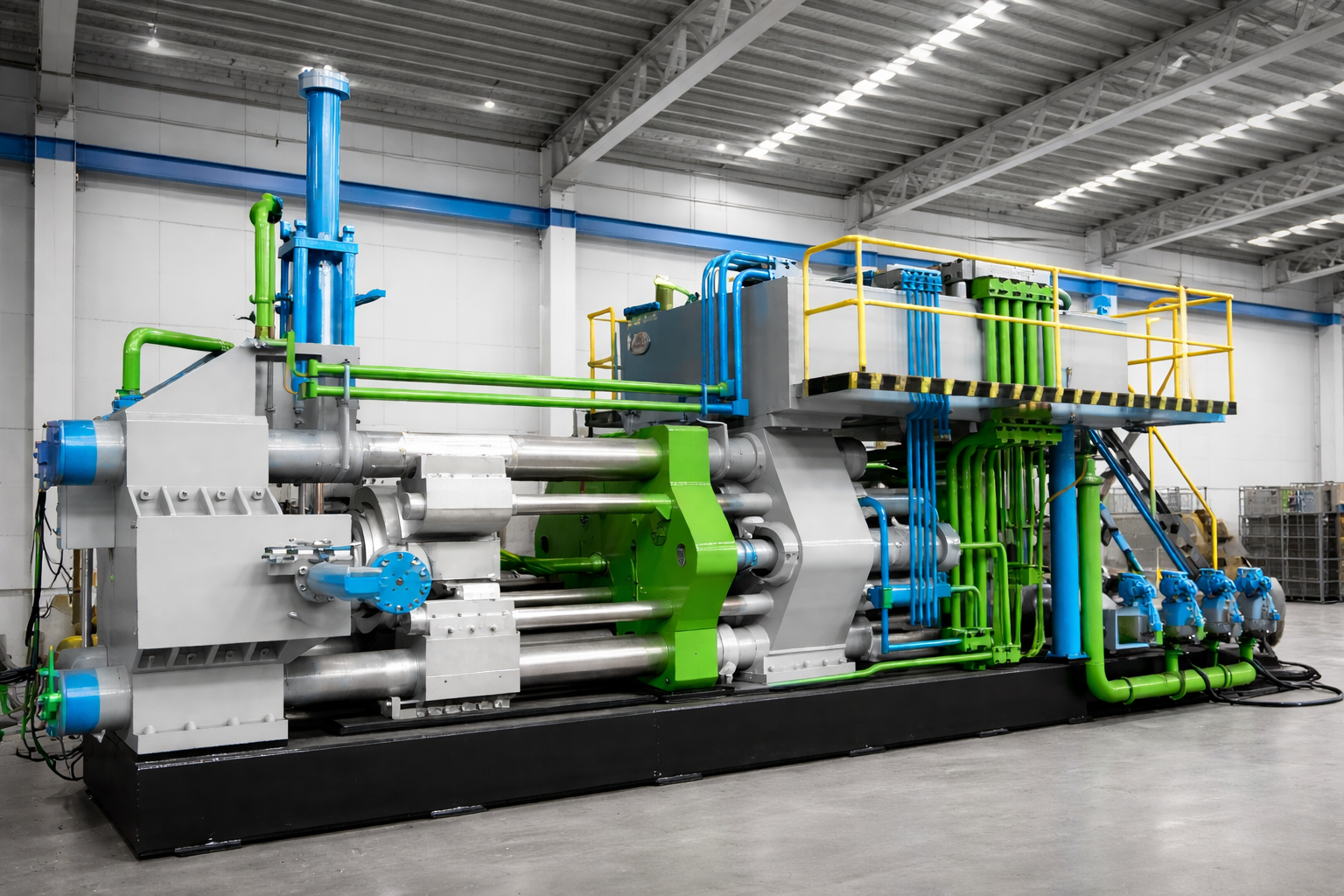
An extrusion press pushes solid metal material through a die to create long products such as bars or profiles.
This method is widely used in the production of aluminum window frames, construction materials, structural components for automobiles and railways, pipes, and rail materials.
Powder Compacting Press
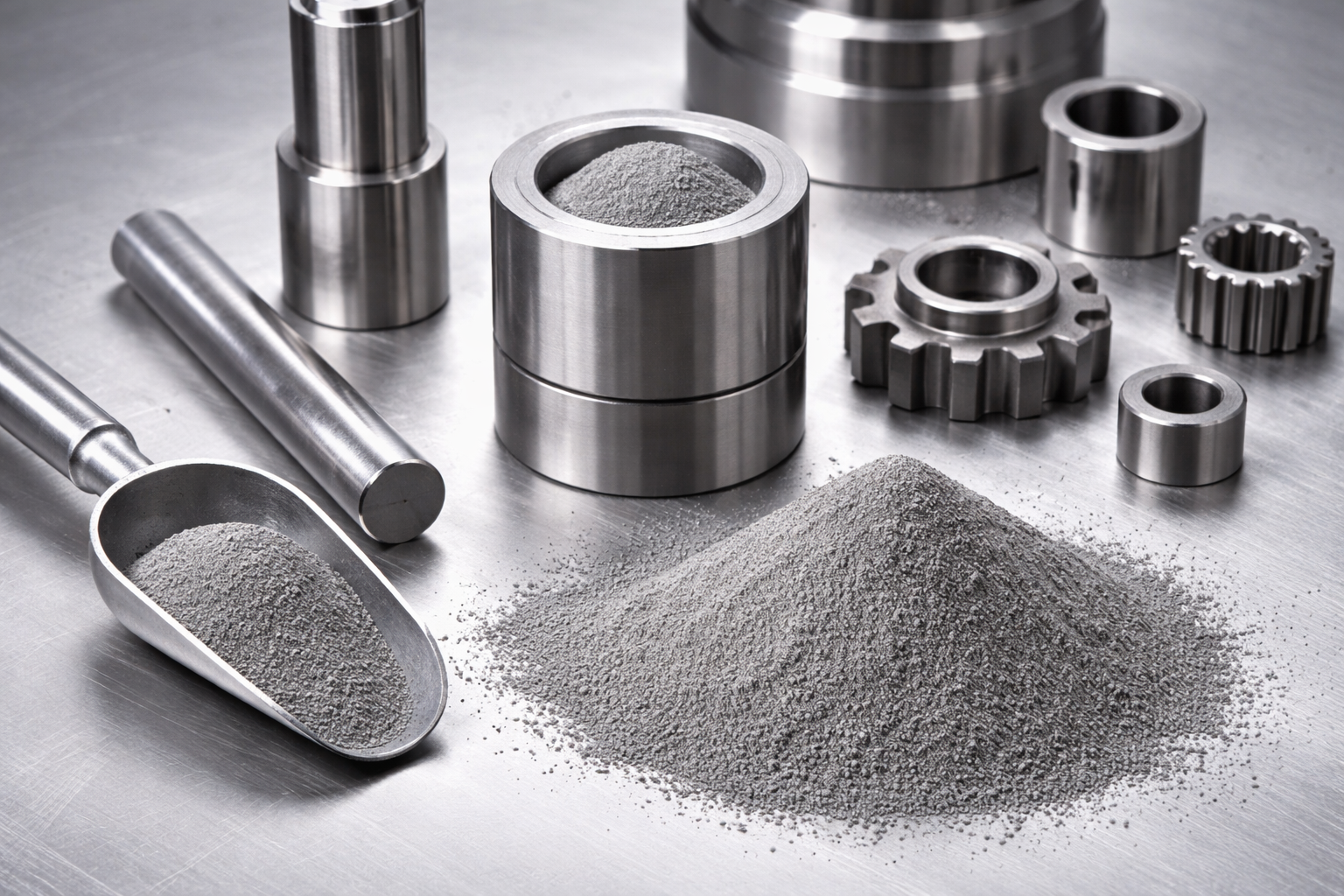
A powder compacting press compresses powdered materials in a die to form solid components.
The process involves filling the die with powder and applying pressure from one or both sides. Unlike machining or forging, it enables products to be formed directly from powder.
It is commonly used to manufacture bearings, motor components, and magnetic parts.
Baling Press
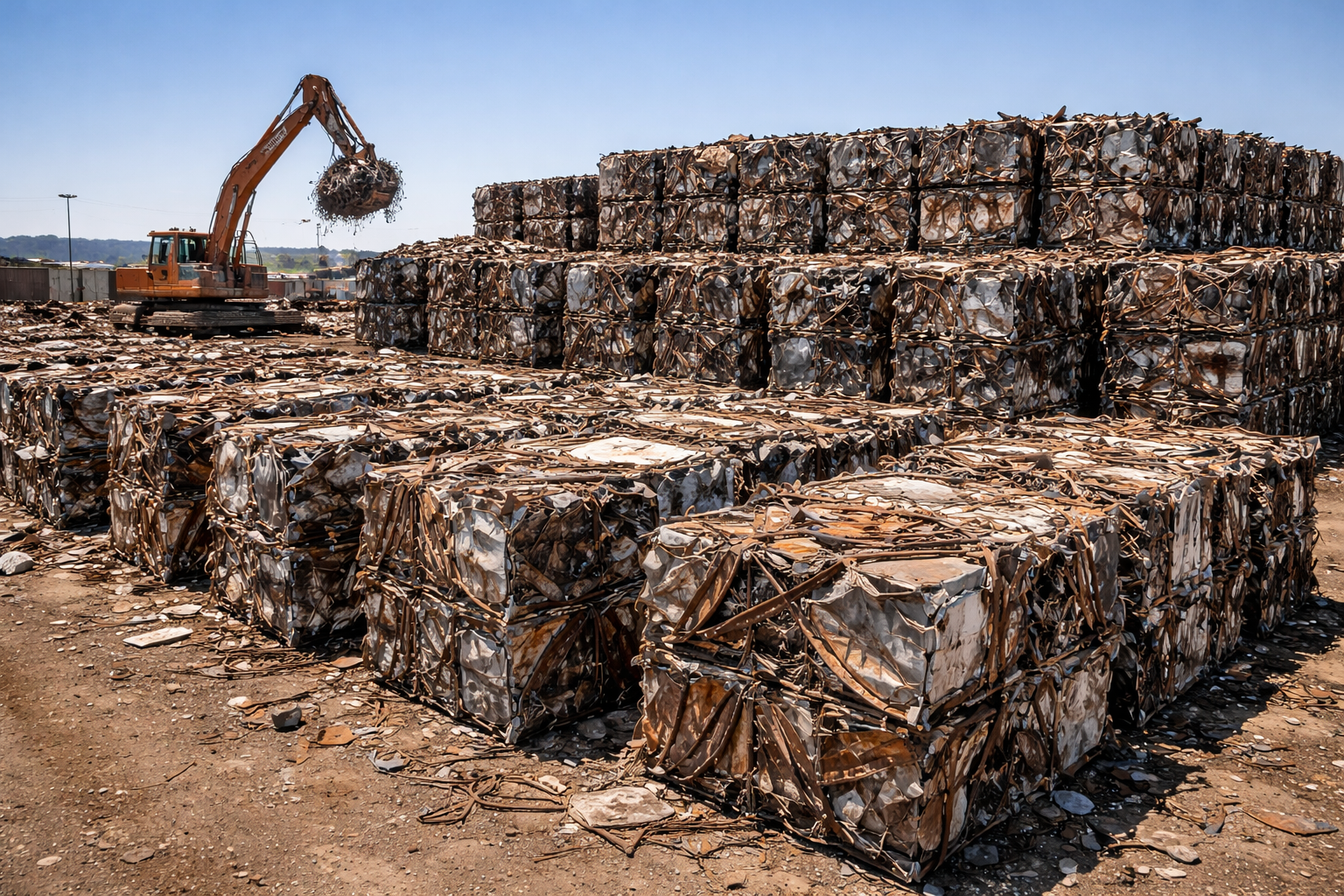
A baling press compresses metal scrap and waste materials.
It is mainly used by recycling companies, where scrap metal collected from manufacturing sites is compressed into compact rectangular blocks.
Summary | Choosing the Right Press Machine Is Essential
When selecting a press machine, it is important to clarify the following three points:
Required pressing force (tonnage)
Processing accuracy and stroke speed
Material type and thickness
By organizing these factors, the optimal operating mechanism and frame structure can be determined.
Before making a selection, it is necessary to clearly define what will be manufactured and what materials will be used. Some press machines are suited for mass production, others for high-precision processing, and some for light-duty tasks.
There are cases where a machine is purchased but ends up rarely used because it does not match the company’s manufacturing requirements. Therefore, consulting with manufacturers or industry specialists before introducing equipment is a highly effective option.
For Those Considering Buying or Selling Used Press Machines
Press machines can be introduced not only as new equipment but also as used machinery to reduce capital investment.
Our company provides support for buying and selling various types of used press machines, including mechanical presses, hydraulic presses, and servo presses.