What Is a CNC Lathe? Differences Between CNC Lates and Machining Centers Explained
Table of Contents
- What Is a CNC Lathe?
- What Is a Machining Center?
- The Decisive Differences Between CNC Lathes and Machining Centers
- Machining Center
- Differences Between NC Lathes, Turning Centers, and Conventional Lathes
- Turning Center (Multi-Tasking Machine)
- Conventional (Manual) Lathe
- Key Considerations for Equipment Investment and Machine Selection
- Summary
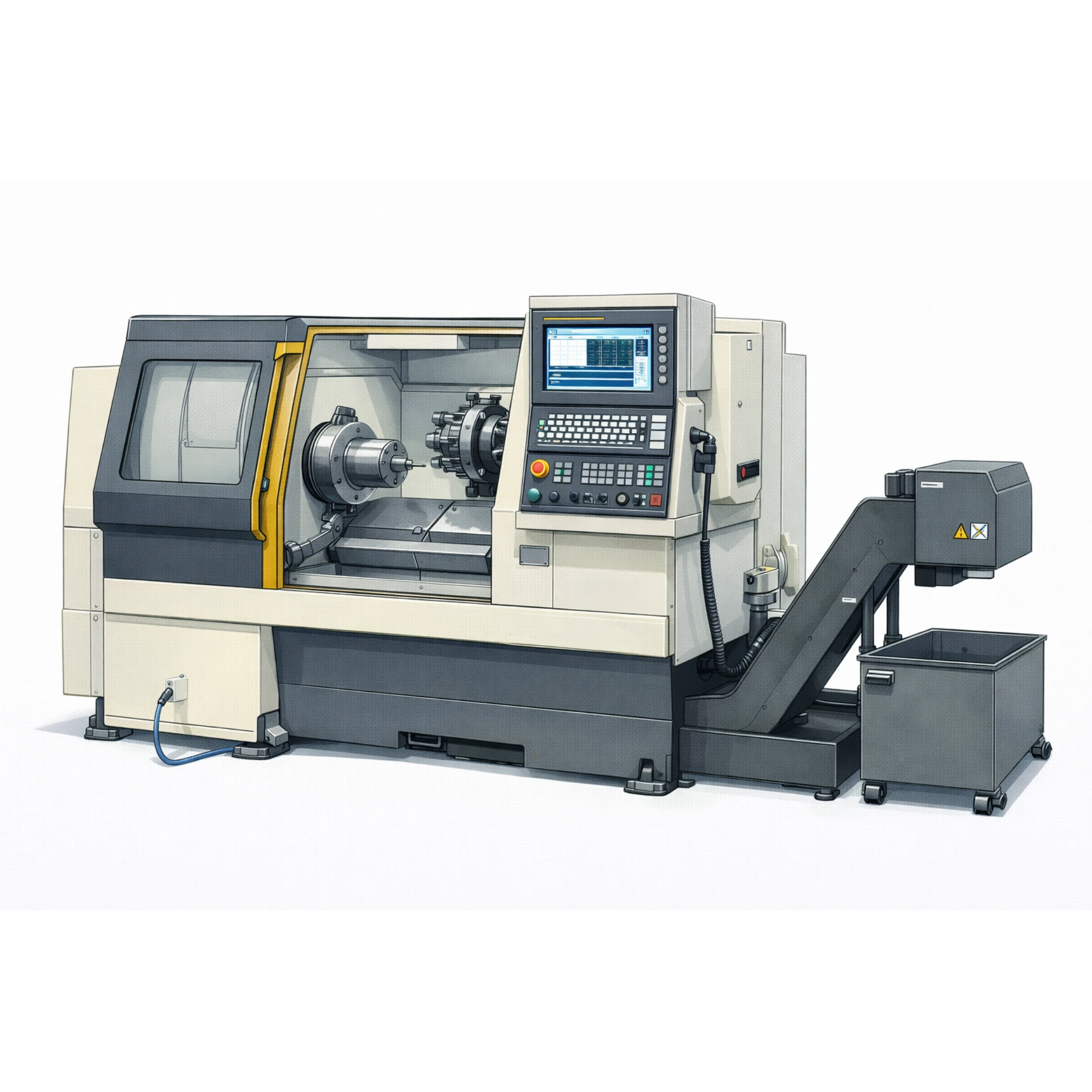
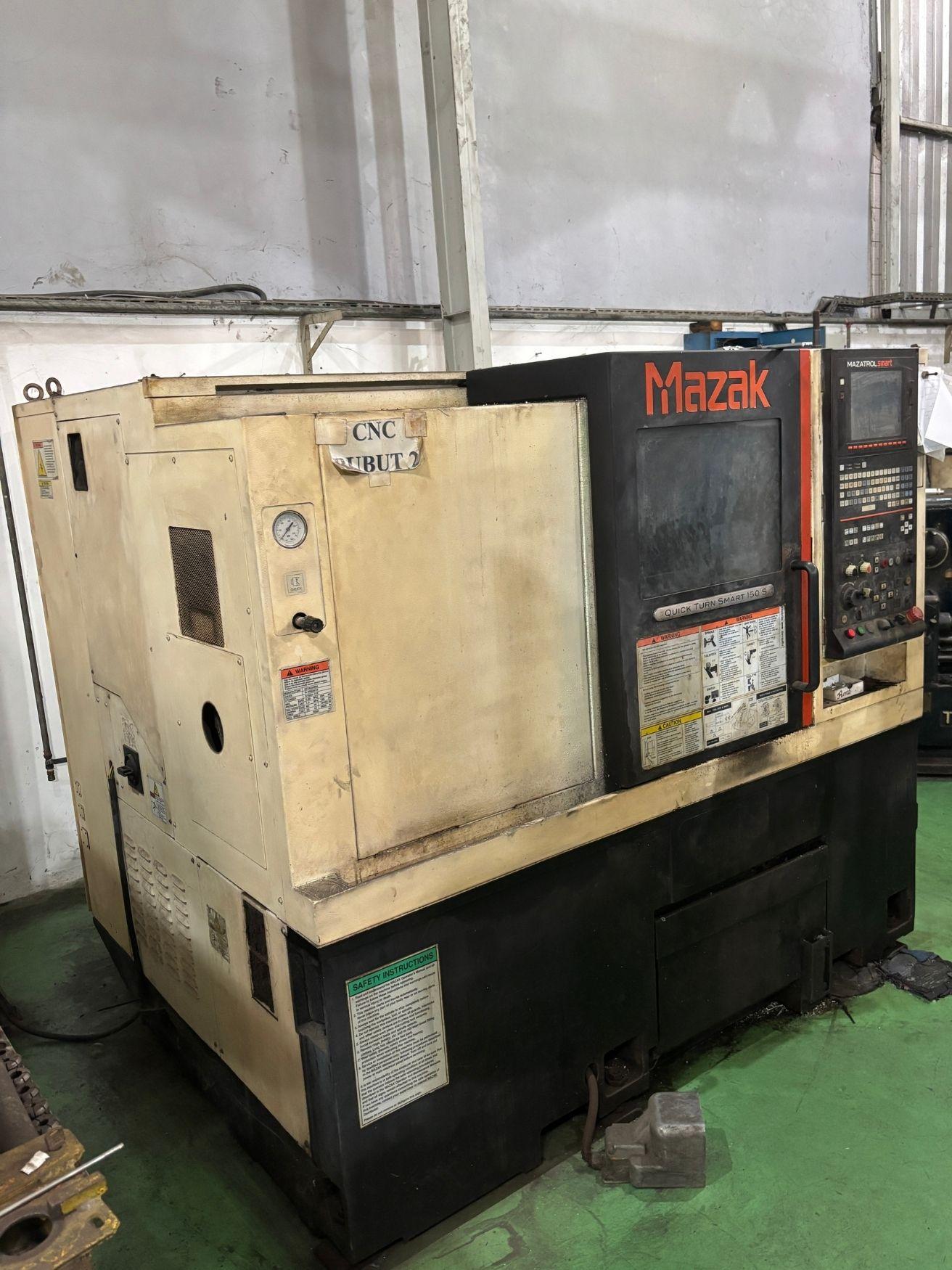
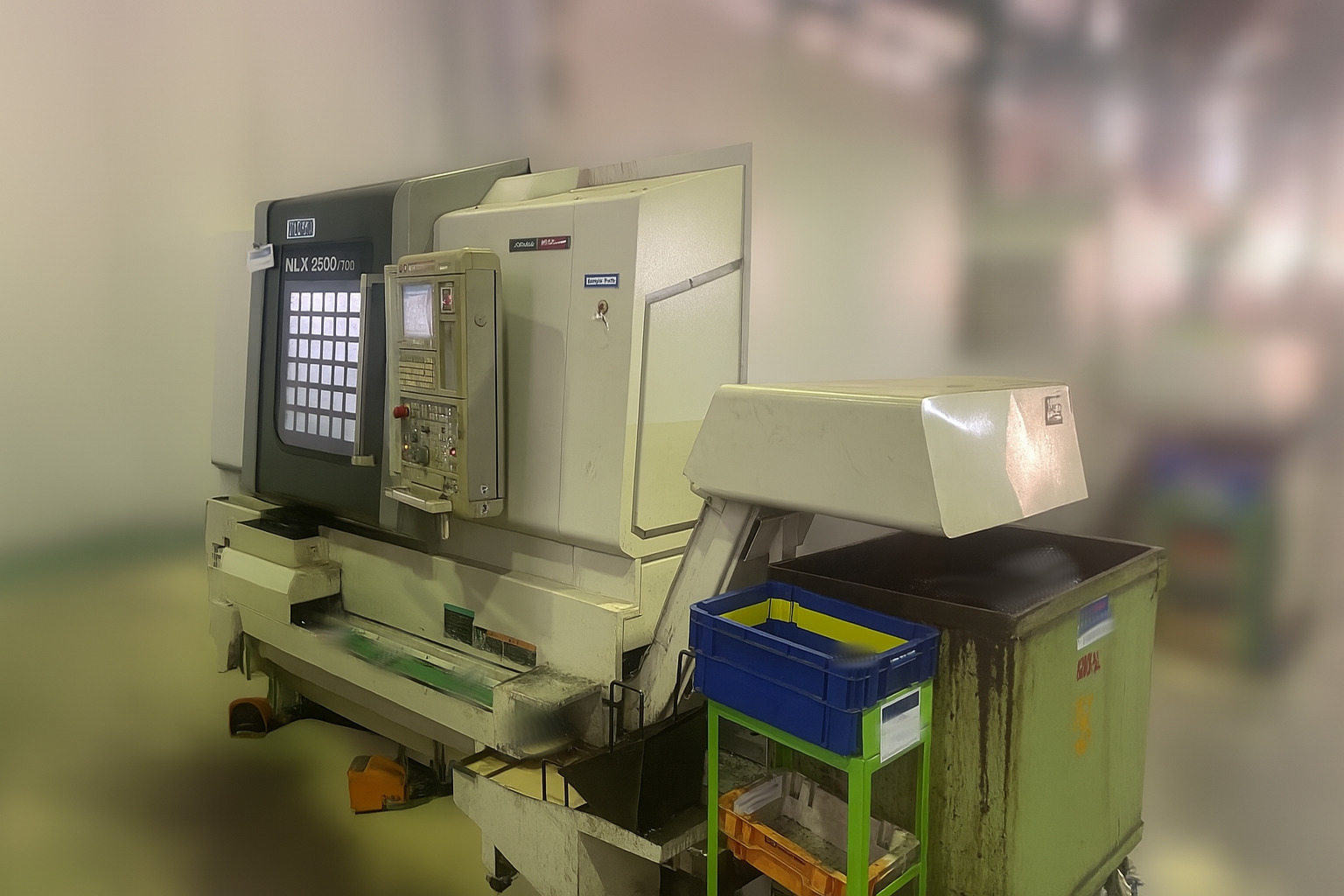
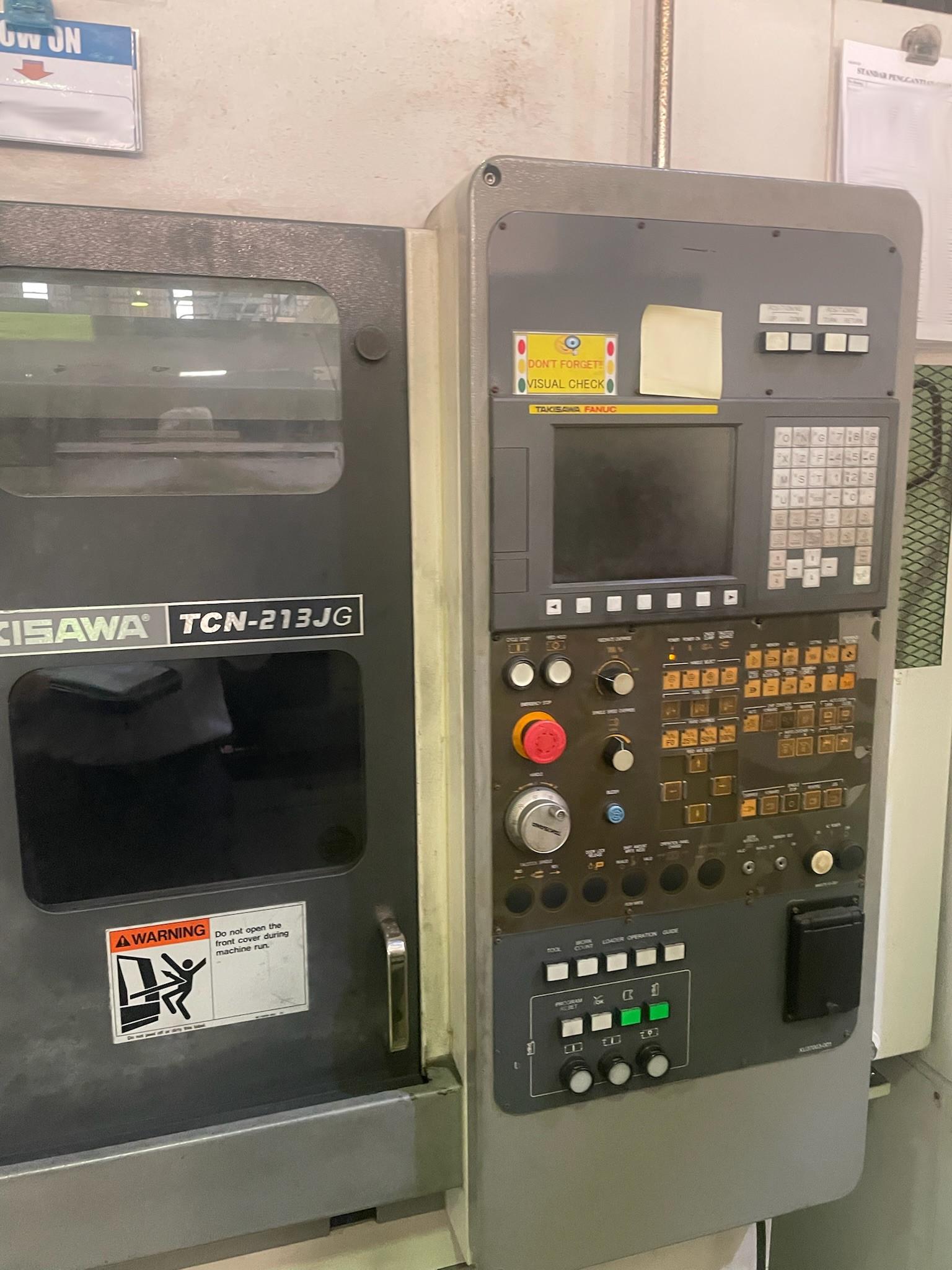
A CNC lathe is a core CNC machine tool widely used in manufacturing, particularly suitable for machining cylindrical shapes.
When companies consider equipment investment, CNC lathes and machining centers are two of the most commonly compared machines. Questions such as “Which part rotates?”, “Does the fixture rotate, or does the workpiece rotate?” often arise.
In this article, we clearly explain the fundamental structural differences, as well as practical decision-making points for equipment selection.
In addition, several machines have similar names and are often confused. We will also clarify the differences between these similar machine types and explain their features from a practical manufacturing perspective.
What Is a CNC Lathe?

CNC lathes are primarily used to manufacture cylindrical products such as shafts, bolts, and nuts.
In CNC lathe machining, the material (workpiece) rotates while a cutting tool is applied to remove material.
They are highly suitable for mass production and are mainstay machines in automotive and motorcycle parts manufacturing.
CNC lathes are widely used across many manufacturing industries and represent one of the most frequently handled machine types. In Indonesia, there is also strong demand for both buying and selling used CNC lathes.
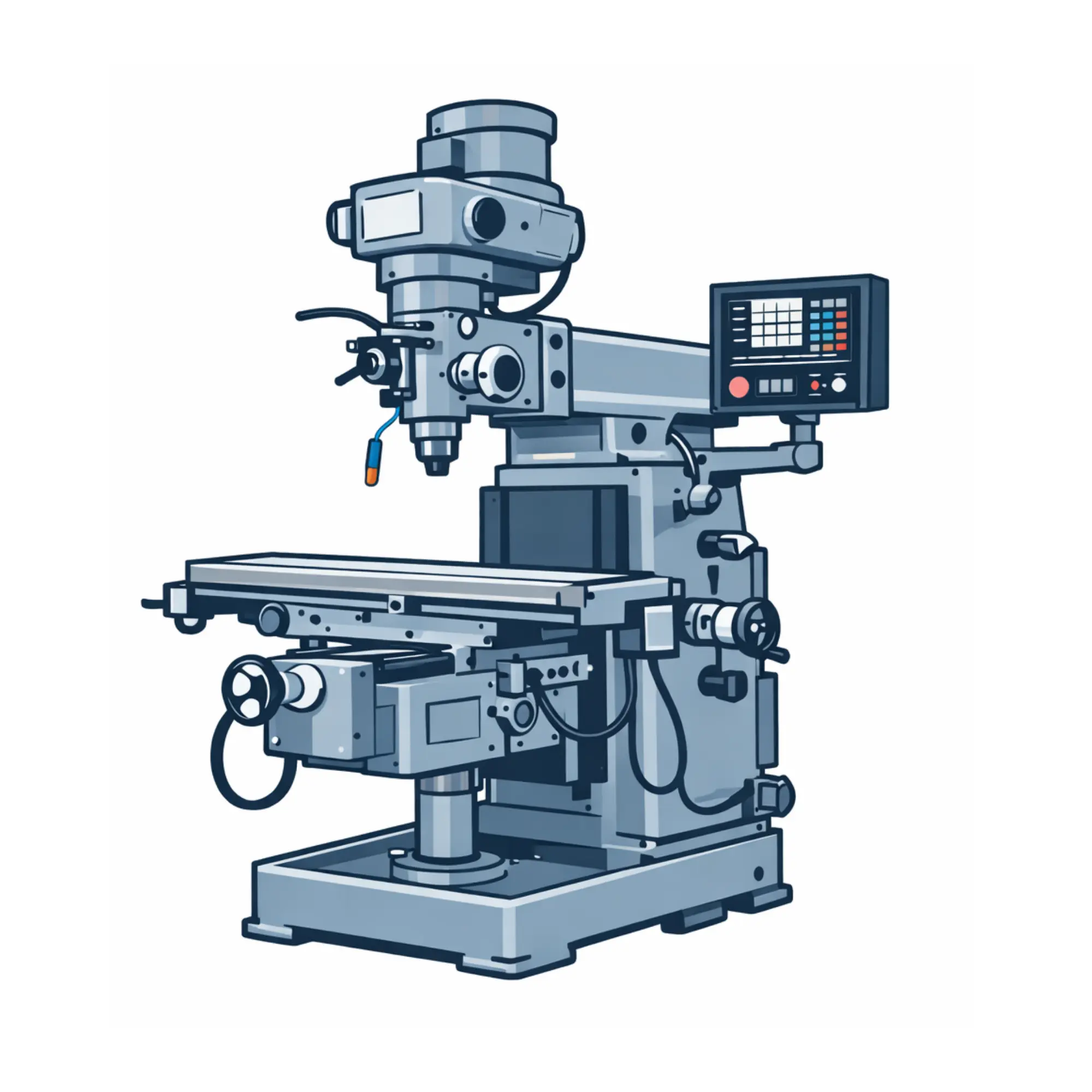
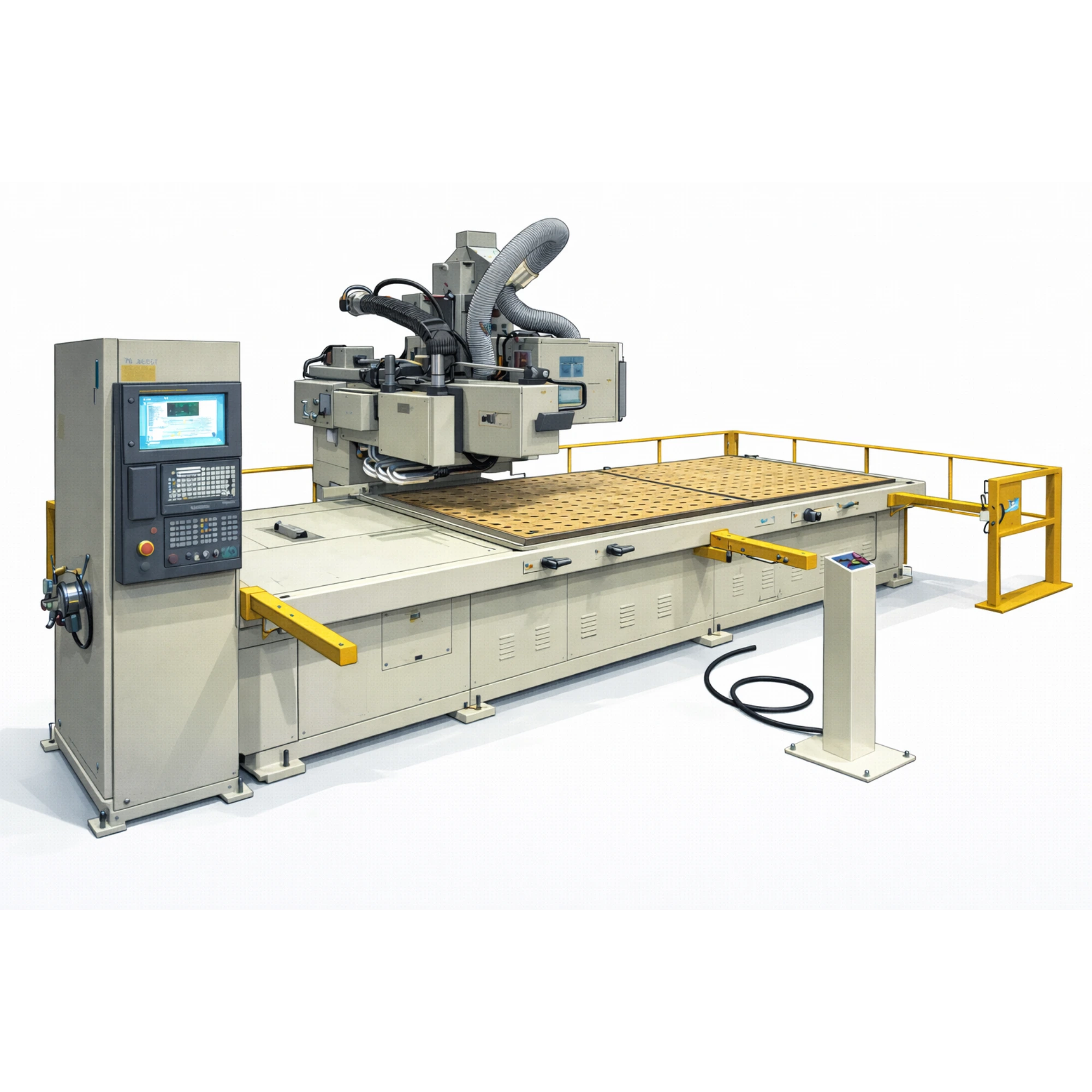
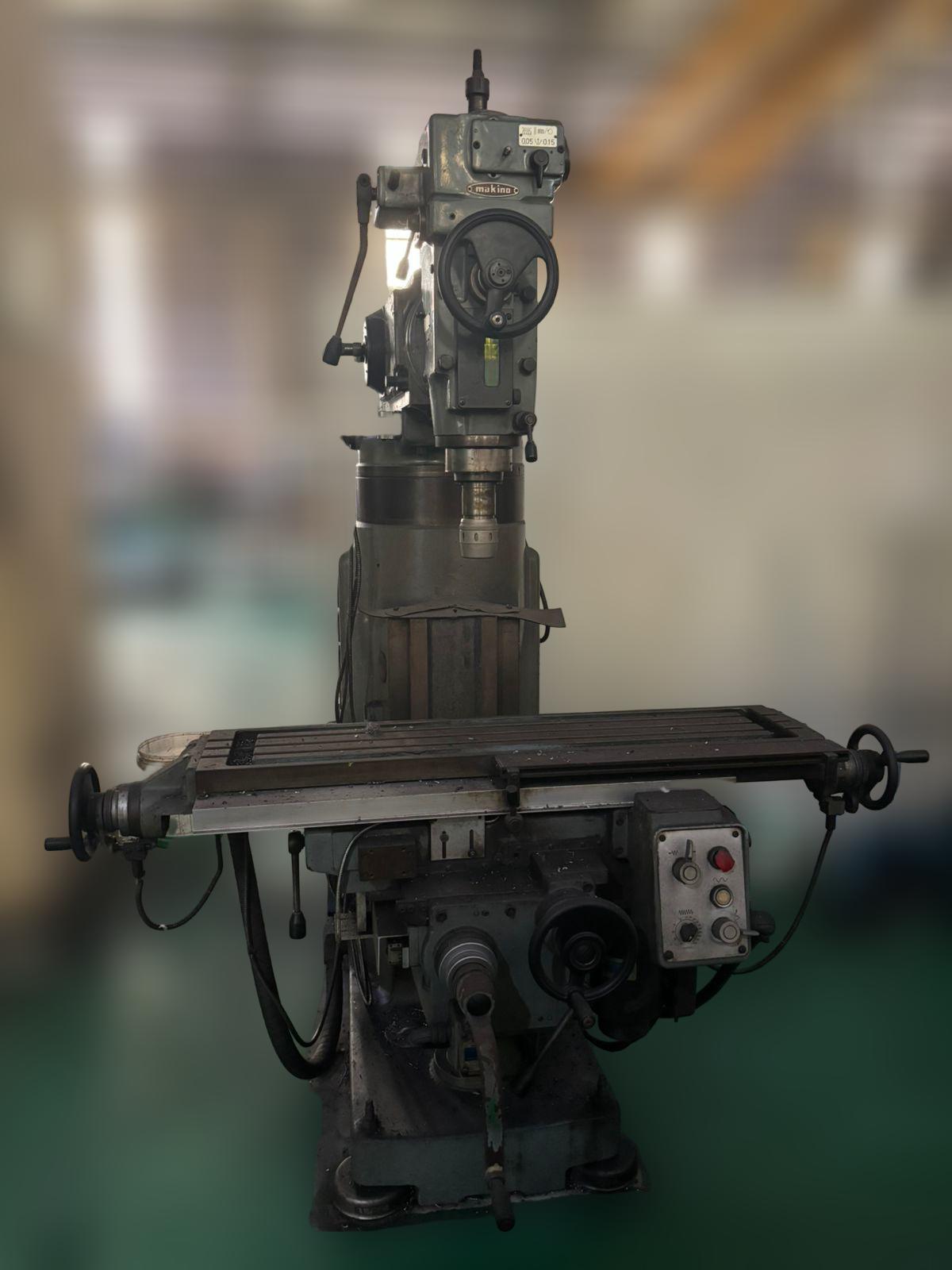
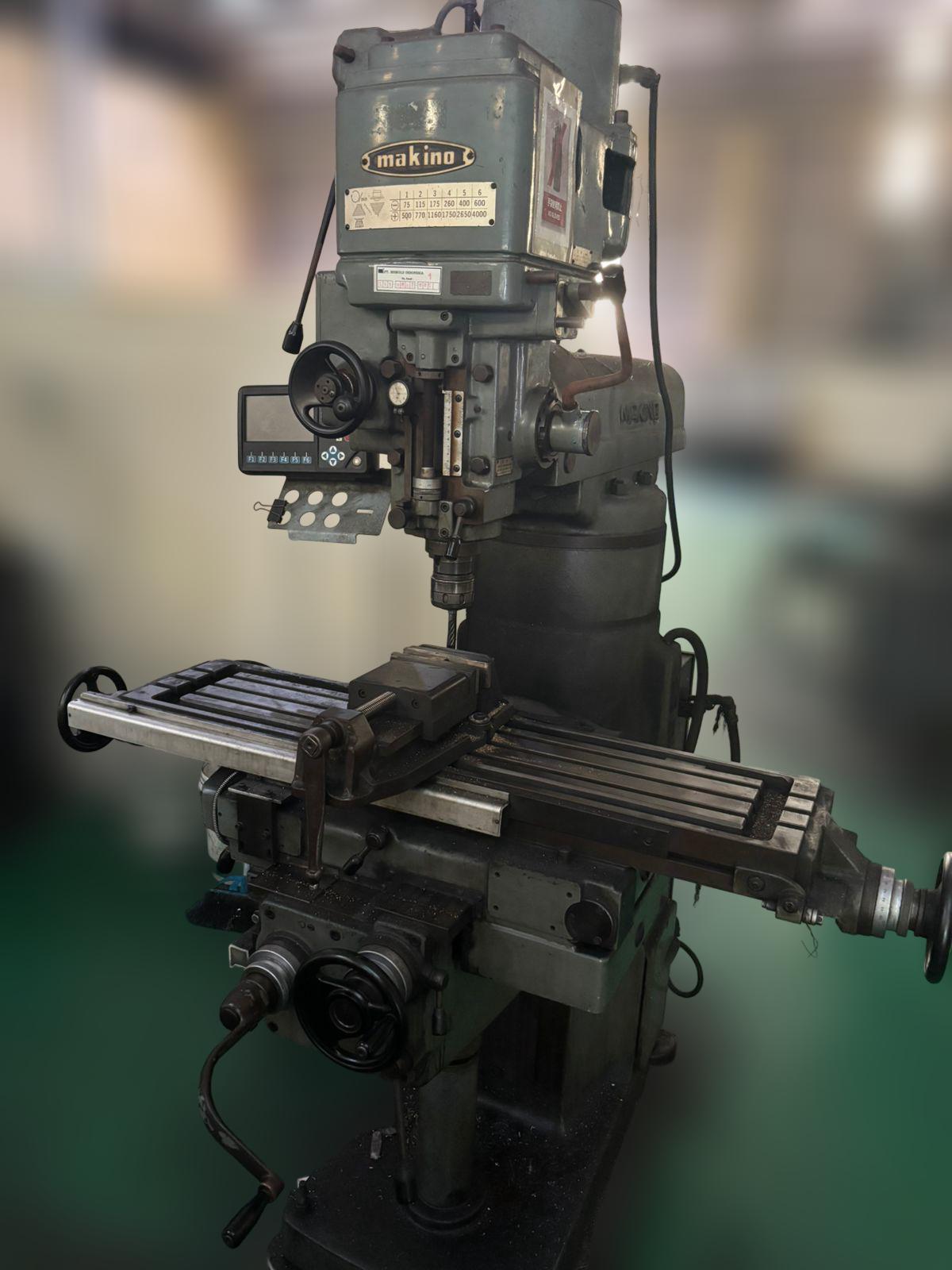
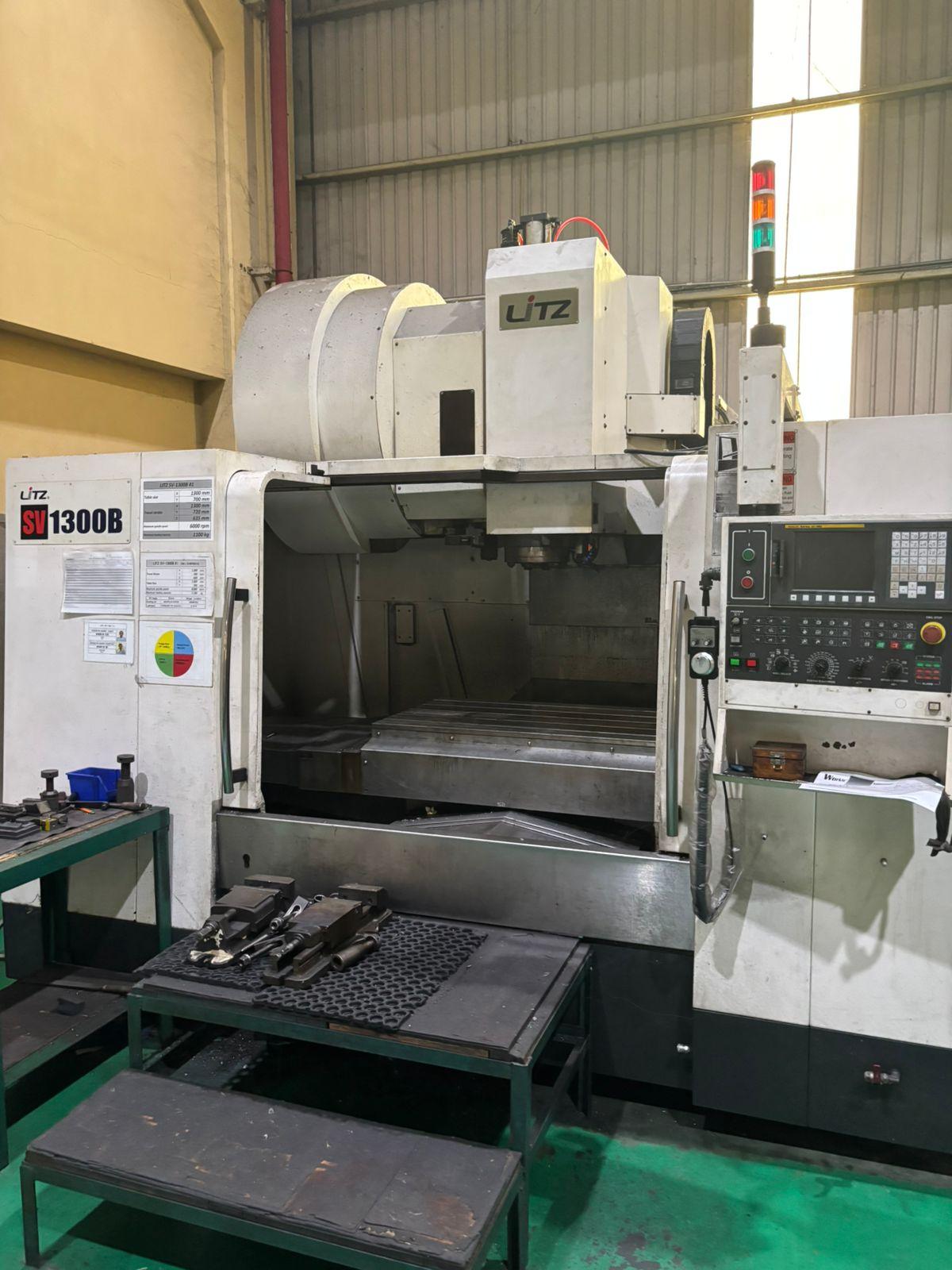
What Is a Machining Center?

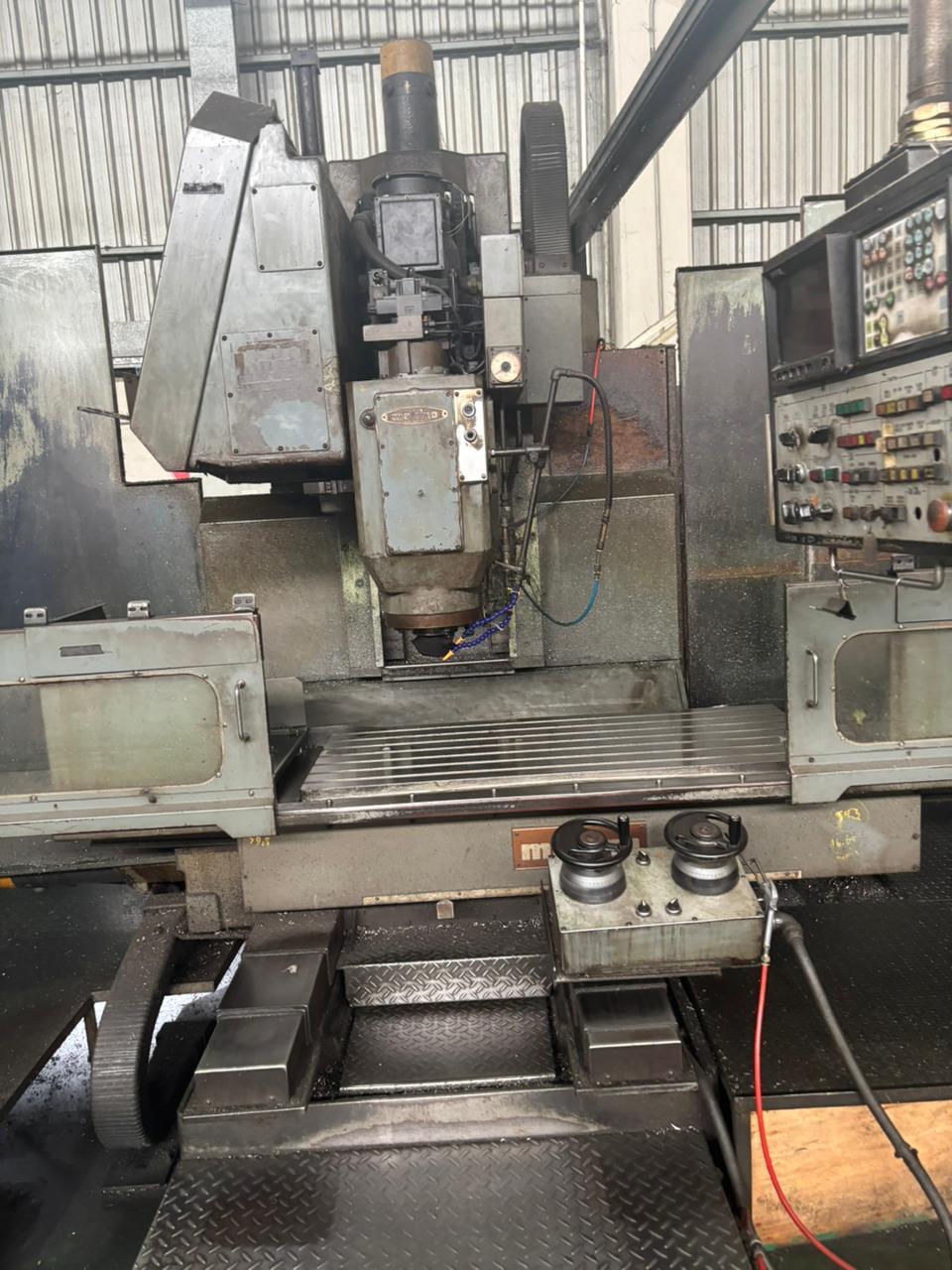
A machining center is a machine tool capable of automatically performing multiple processes, including:
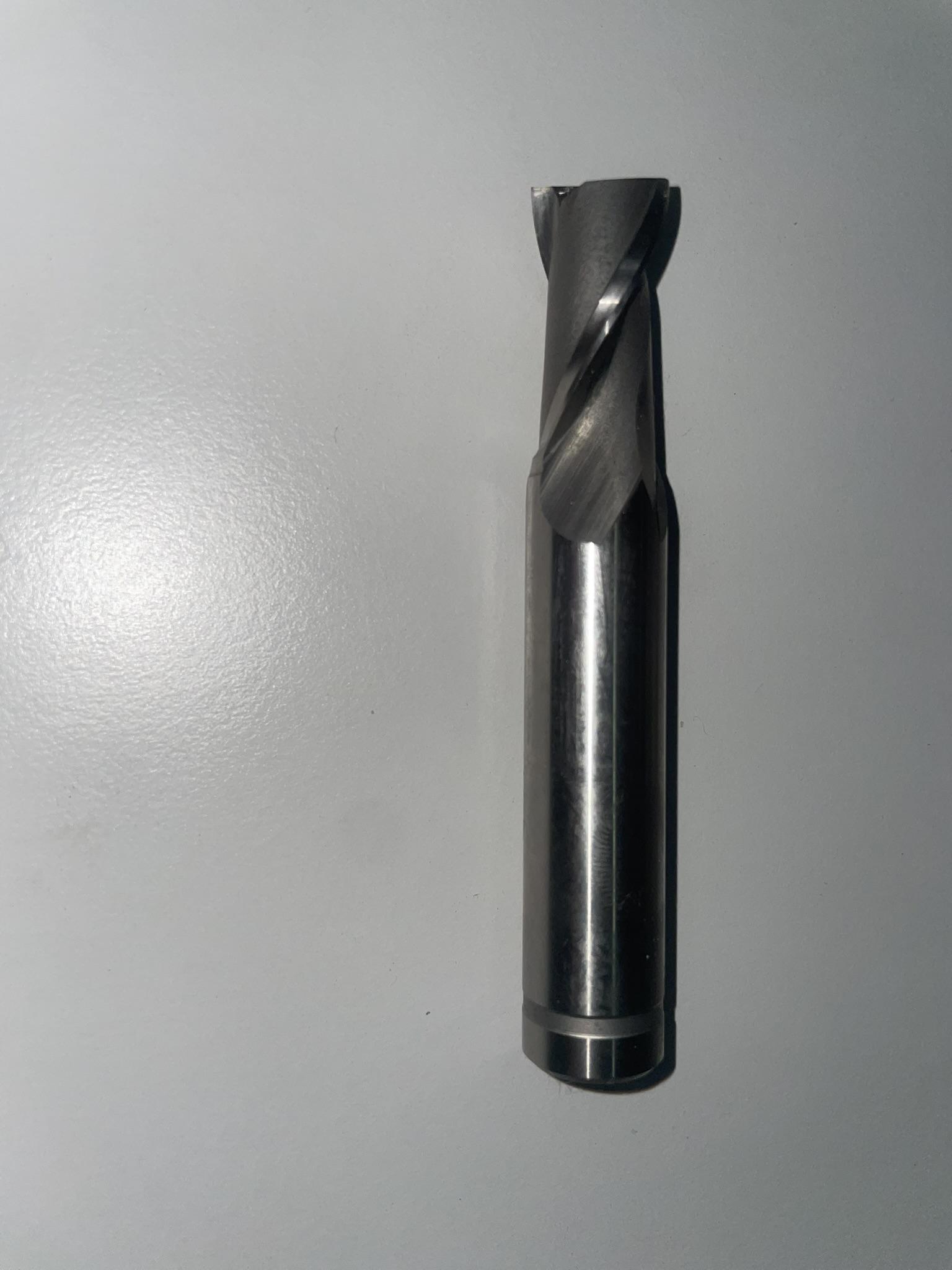
Milling (machining flat and side surfaces)
Drilling
Tapping (cutting threads)
Boring (precision enlargement of existing holes)
In a machining center, the tool rotates while the workpiece remains fixed.
Depending on the model, machining centers are equipped with an ATC (Automatic Tool Changer), enabling efficient multi-process machining within a single machine. This versatility is one of their greatest strengths.
The Decisive Differences Between CNC Lathes and Machining Centers

The most decisive difference lies in the shape of the products they are best suited to machine.
CNC lathes specialize in cylindrical components.
Machining centers are suitable for complex and irregular shapes.
CNC Lathe
Strengths
High-precision cylindrical machining
→ Since the workpiece itself rotates, it is easier to achieve stable and accurate circular finishes.
Outer diameter, inner diameter, and threading operations
→ Synchronization of spindle rotation and feed enables stable thread cutting and internal machining.
Weaknesses
Not suitable for large flat surface machining
→ Because the structure assumes workpiece rotation, wide face milling is inefficient.
Complex 3D shapes
→ Primarily designed for rotationally symmetric machining along X and Z axes.
Machining Center
Strengths
Surface and pocket machining
→ The rotating tool and fixed workpiece structure is ideal for flat surface cutting.
Multi-face machining
→ 3-axis, 4-axis, and 5-axis control allows machining from multiple directions.
Weaknesses
Long cylindrical parts
→ Since the workpiece does not rotate, maintaining coaxial precision can be difficult.
Mass production of round parts
→ Cycle times are typically longer than dedicated turning machines.
Structural Summary
CNC Lathe = Workpiece-rotation structure
Machining Center = Tool-rotation structure
This structural difference directly determines their respective strengths and weaknesses.
Differences Between NC Lathes, Turning Centers, and Conventional Lathes
NC Lathe

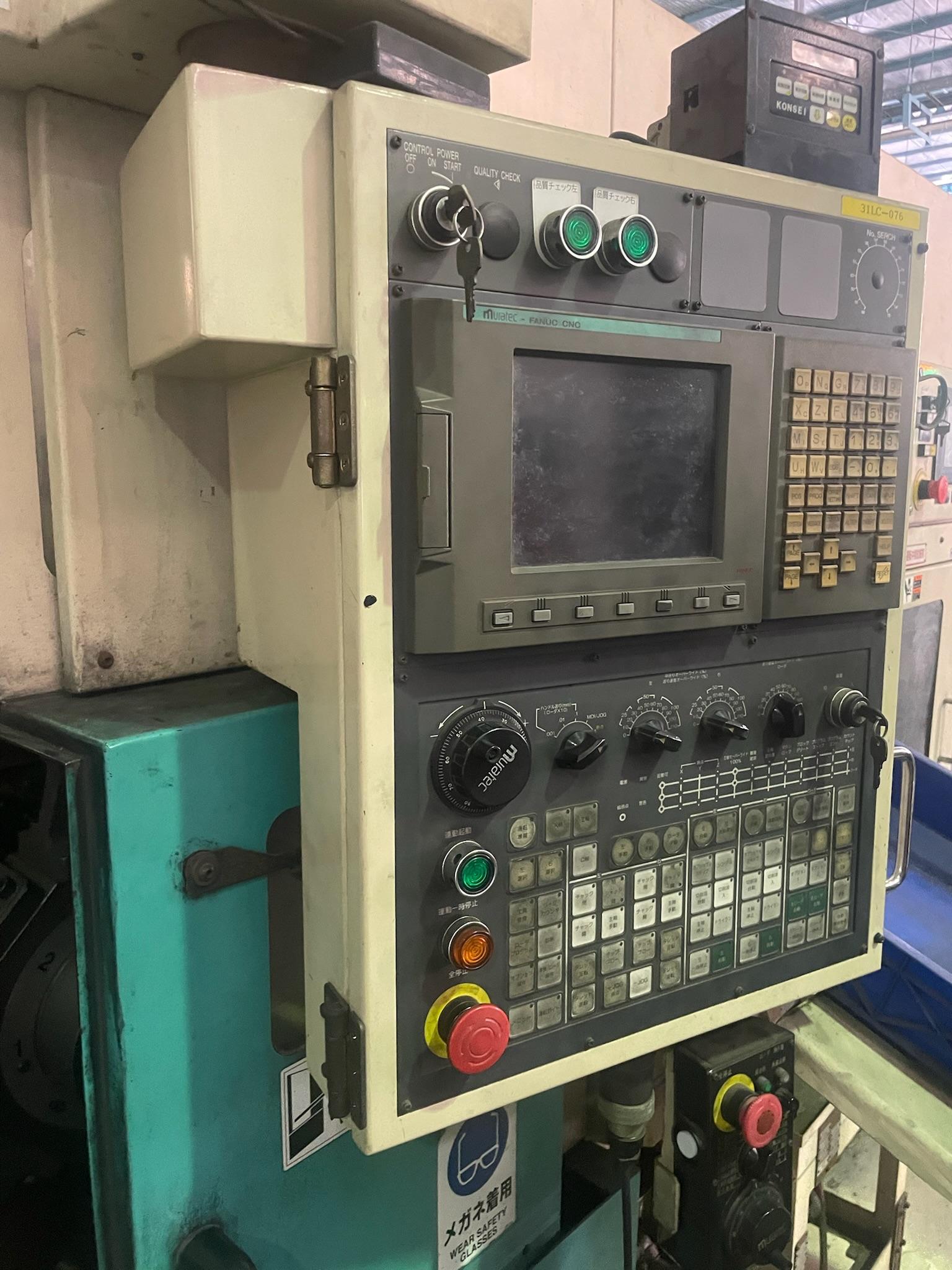
While NC lathes and CNC lathes perform nearly identical machining operations, their control systems differ.
CNC lathes use computer-based control, storing and calculating programs digitally.
NC lathes operate using fixed numerical control based on preset numerical data.
CNC lathes allow easier program editing, support more complex machining, and provide greater flexibility in setup changes.
NC lathes, on the other hand, are more limited when modifying machining processes and are less flexible overall.
Differences in the Causes of Errors
The causes of machining errors differ between NC and CNC lathes.
NC Lathe
Machining accuracy depends heavily on the operator’s skill level.
For example, when the instruction is an outer diameter of φ50, it may mistakenly be cut to φ49.6. Operators must manually compensate for tool wear and machine characteristics.
Because the process relies significantly on experience and intuition, differences in skill directly affect product quality.
CNC Lathe
Machining conditions and compensation values are entered numerically.
For example, if a Z-axis compensation should be entered as +10 mm but is mistakenly entered as 100 mm, the machine will accurately execute the incorrect command.
Because CNC machines operate with extremely high precision, human input errors are also reproduced precisely.
In short:
NC lathe quality depends on operator skill.
CNC lathe quality depends on the accuracy of data input.
Turning Center (Multi-Tasking Machine)

A turning center is a multi-tasking machine based on a CNC lathe with added rotating tool functionality.
Simply put, it combines the capabilities of a lathe and a machining center.
In addition to conventional turning, it can perform side drilling and milling operations.
This enables multi-process machining of round components within a single machine.
Conventional (Manual) Lathe

A conventional lathe is manually operated using handles and levers to move the cutting tool against a rotating workpiece.
Unlike NC or CNC lathes, it does not use numerical control systems.
Machining precision depends heavily on operator skill.
However, compared to NC and CNC lathes, conventional lathes offer significantly lower initial investment costs.
Key Considerations for Equipment Investment and Machine Selection
When introducing new equipment, companies must evaluate:
The shape of the products to be manufactured
Expected production volume
Available investment budget
If production focuses on cylindrical shapes and mass production, a CNC lathe is appropriate.
If products involve complex shapes or multi-face machining, a machining center is more suitable.
If consolidating multiple processes into one machine is desired, a turning center should also be considered.
Summary
CNC Lathe
Specialized in cylindrical machining.
The workpiece-rotation structure enables stable and precise circular machining.
Strong in mass production of shafts, bolts, and similar components.
Machining Center
Uses a rotating tool structure.
Suitable for surface machining, pocket machining, complex 3D shapes, and multi-face processing.
Highly flexible for block and prismatic components.
The decisive differences lie in rotational structure and target product shape.
For round parts plus side machining in one machine → Turning Center
For cost-focused and prototype production → Conventional Lathe
For lower cost with skilled operators available → NC Lathe
Ultimately, the optimal choice depends on balancing machining requirements, production volume, and return on investment.
CNC lathes are not limited to new machine purchases. Utilizing used equipment is also an effective way to significantly reduce capital investment.
Our company supports the buying and selling of used machinery, including:
CNC Lathes
Machining Centers
Turning Centers and Conventional Lathes
Other machine tools
Please feel free to contact us for more information.
▶ View our list of used CNC lathes here
Asset
Bank