 Asset
Bank
Asset
Bank

What Is a Laser Cutter? Explaining Its Mechanism and Types (CO₂ Lasers and Fiber Lasers)
Table of Contents
A laser cutter is a machine tool that uses high-energy laser beams to irradiate a material, melting or vaporizing it with heat to perform cutting and processing.
One of its major advantages is the ability to process a wide range of materials—such as metals, plastics, and wood—with high precision.
Laser processing is a non-contact method, meaning the tool does not physically touch the material. As a result, there is no tool wear, making it suitable for fine details and complex contours.
Laser-cut products are widely used in our daily lives. For example, they are commonly used in manufacturing stainless steel panels inside elevators and metal components in automobiles. Although we may not notice it, many metal and plastic products are produced using laser processing.
In this article, we will explain the basic mechanism of laser cutters, processing principles, compatible materials, and differences in processing methods.
How Laser Cutting Works
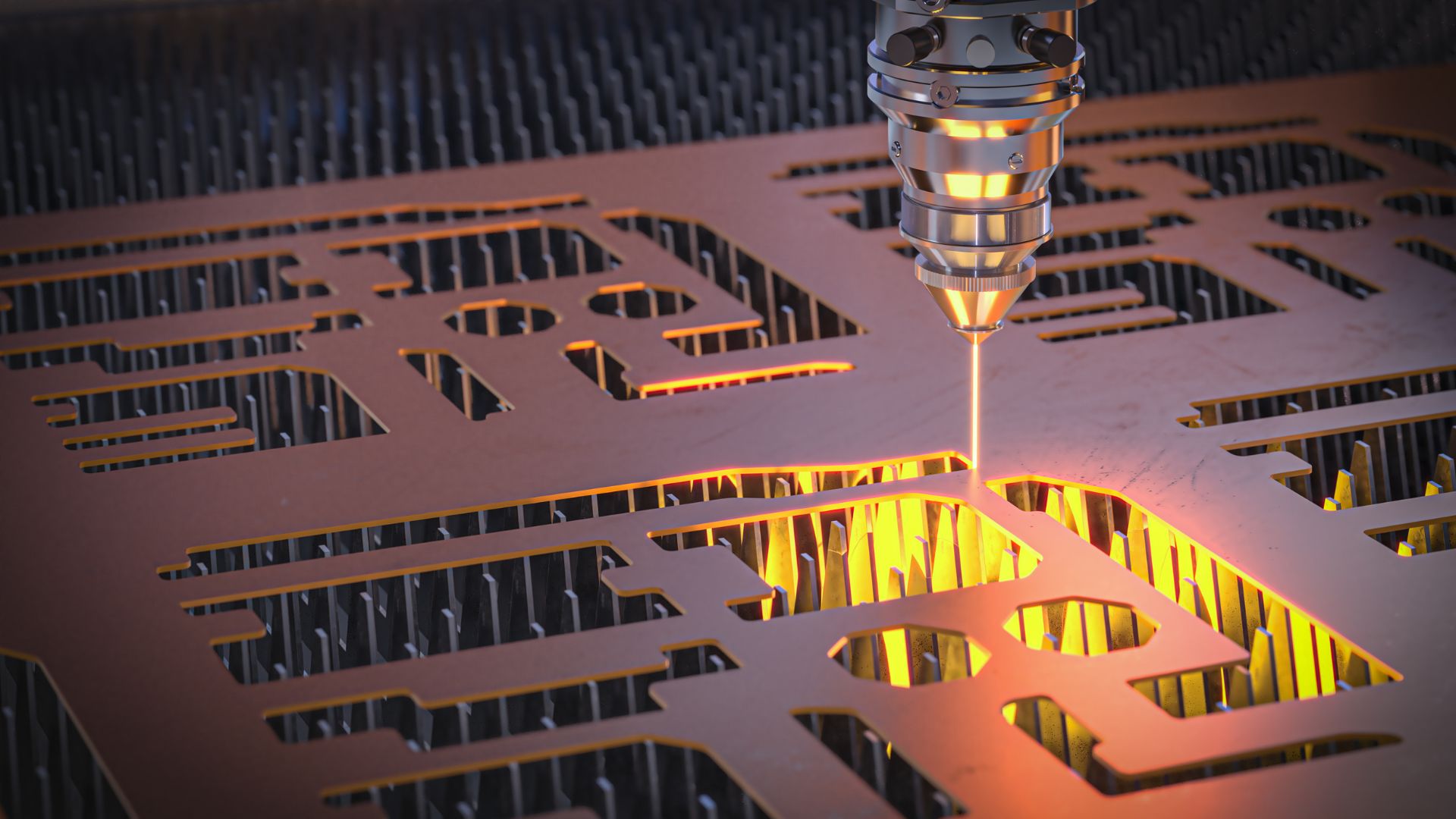
Laser cutting focuses a laser beam onto a single point, using its intense thermal energy to instantly melt the material. The molten material is then blown away using assist gases (such as oxygen, nitrogen, or air) to achieve cutting.
The process generally follows these steps:
Generate laser light using a laser oscillator
Transmit the beam to the processing head via mirrors or optical fibers
Focus the beam with a lens and irradiate the material surface
Remove molten material with assist gas while cutting
Since the cutting path is controlled by numerical control (NC/CNC), even complex shapes can be reproduced with high precision.
Applications of Laser Cutters
Laser cutters are widely used in the production of the following products and components:
Automotive parts (brackets, covers, frame components, etc.)
Exterior covers for industrial machinery
Architectural metal panels
Sheet metal components for control panels and distribution boards
They serve as key equipment in sheet material cutting processes.
Functions of Laser Cutting
Drilling
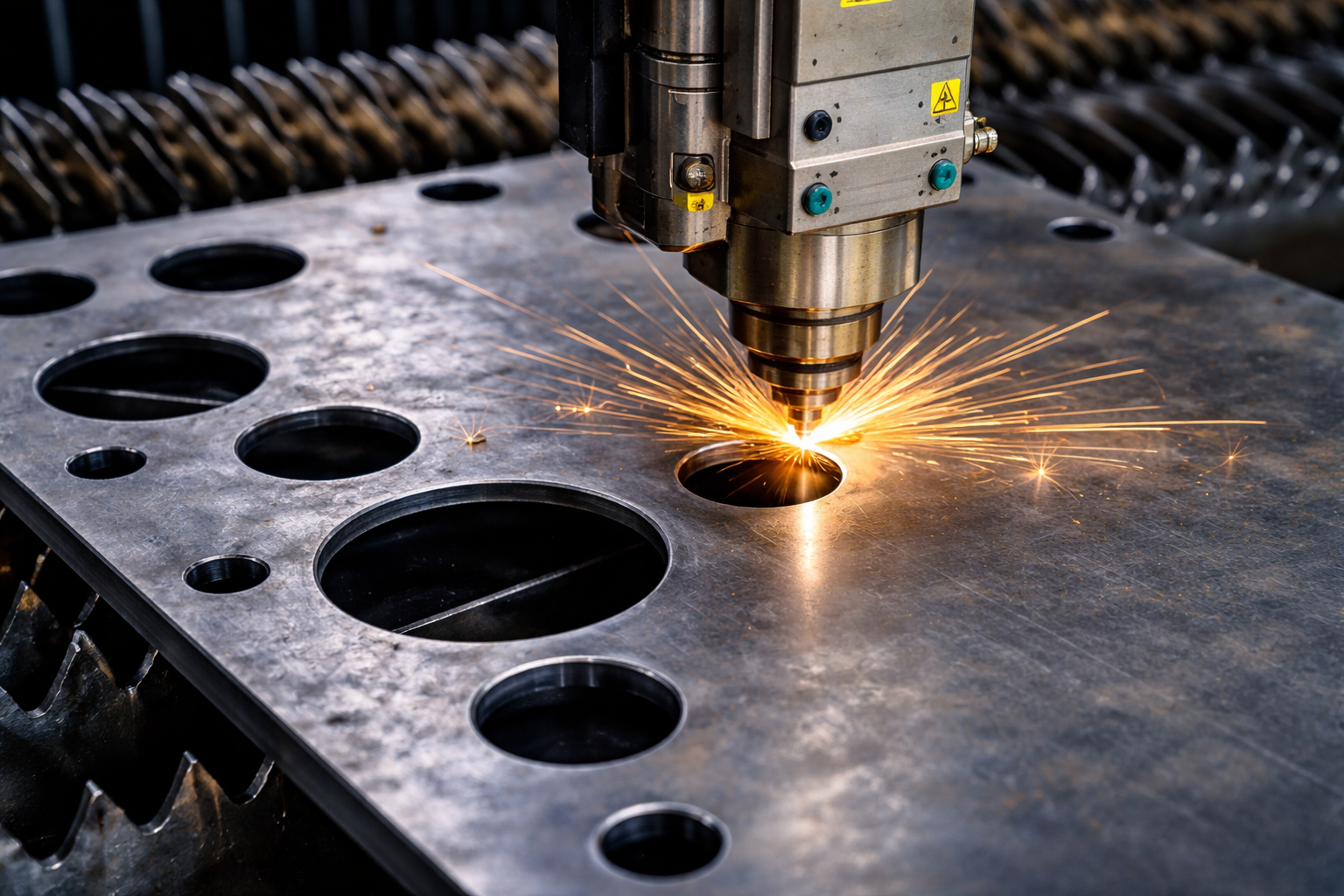
By focusing the laser on a single point, the material is locally melted or vaporized to form holes.
Since there is no physical contact like drilling, it enables high-precision machining of small-diameter holes or multiple holes.
Applications include bolt holes in metal sheets, ventilation holes, and micro-hole processing in films.
Cutting
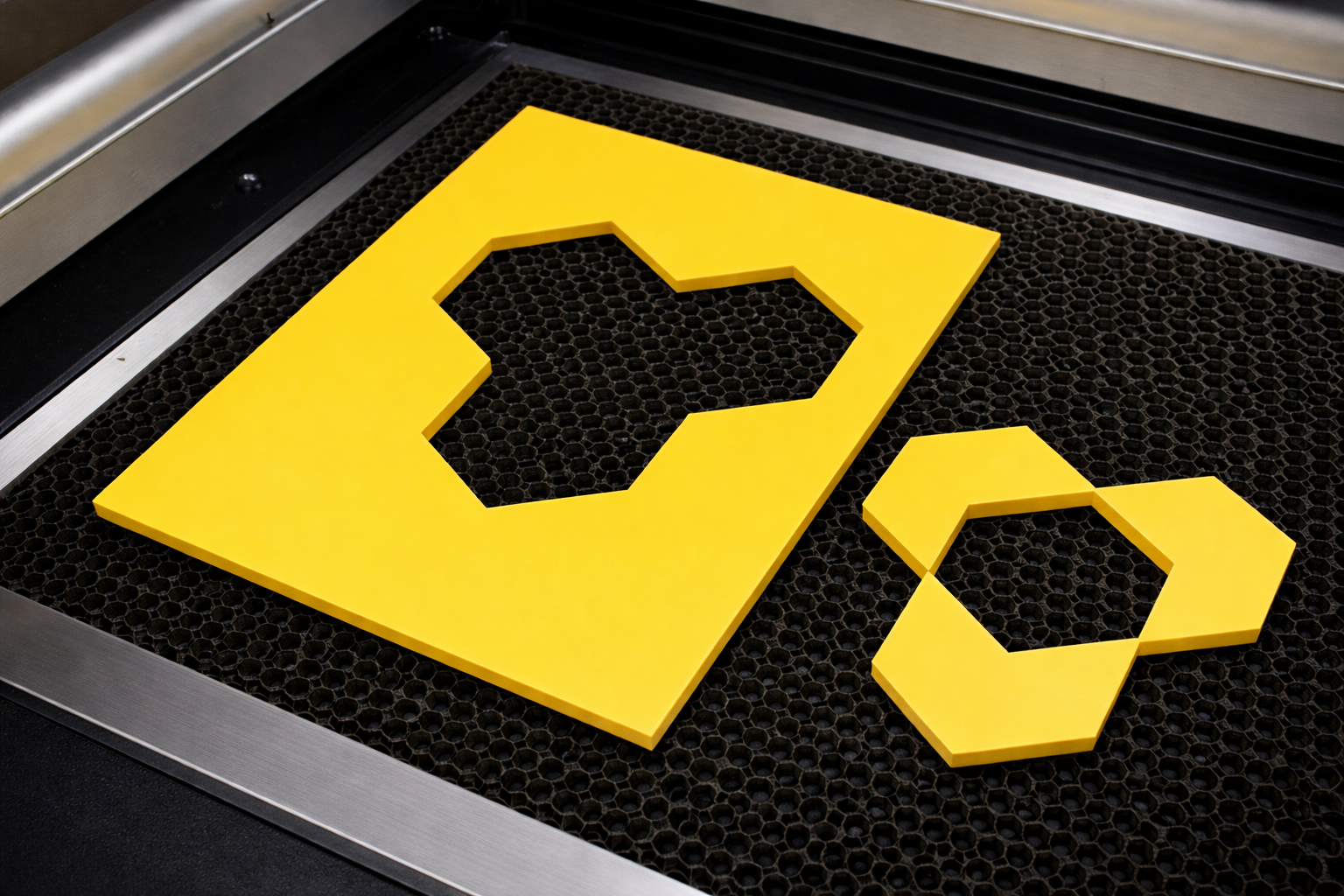
This process completely separates the material.
The laser melts the material while assist gas removes it, forming the desired contour.
It is used for outer shape processing of metal sheets, part cutting, and also for cutting thin materials such as paper, fabric, and film.
A key advantage is that no molds are required, and shapes can be flexibly changed based on design data.
Marking
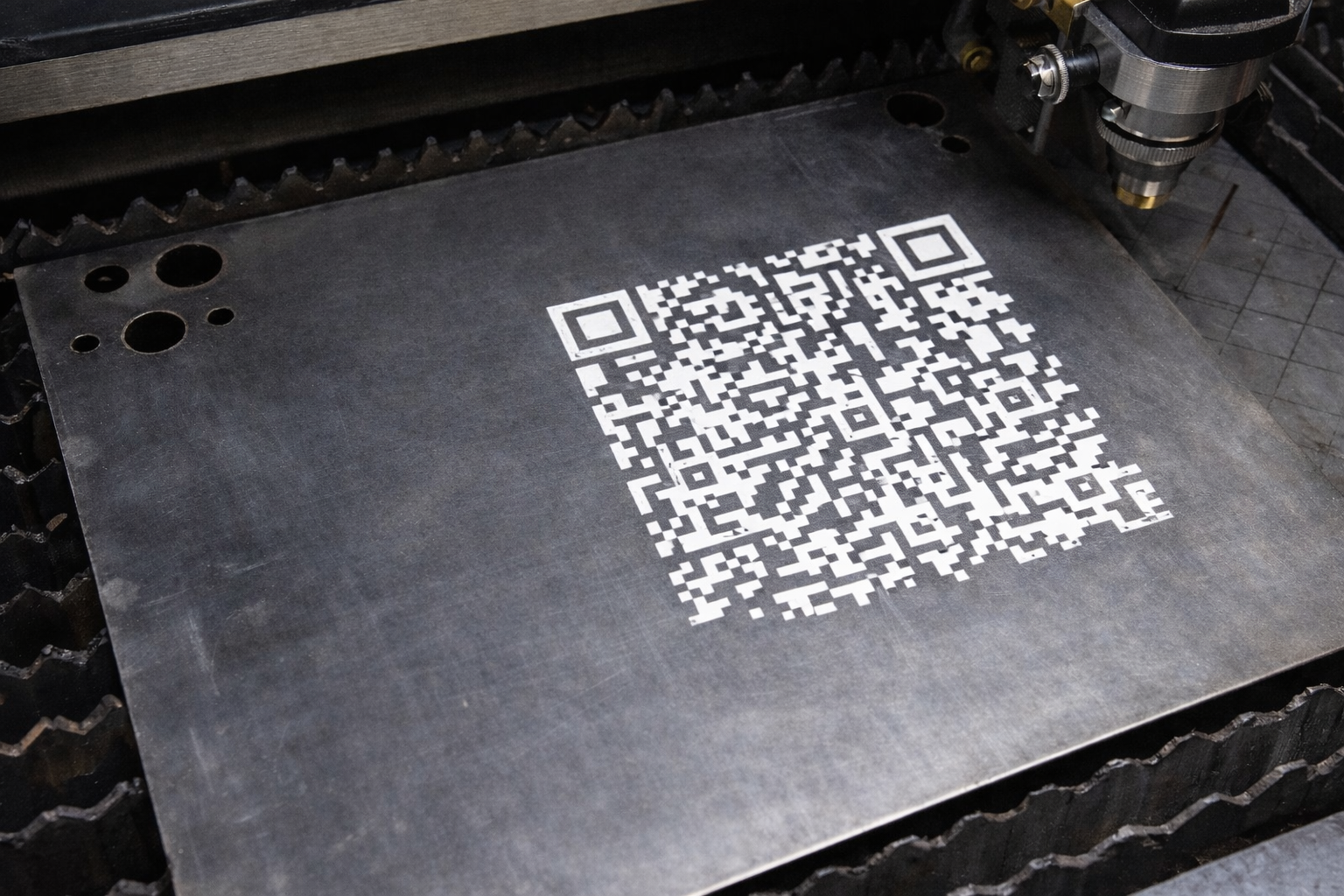
This process does not penetrate the material but processes only the surface to display text, logos, or identification numbers.
By adjusting output and irradiation time, it can achieve discoloration, oxidation, or shallow engraving.
It is commonly used for serial numbers, QR codes, and nameplates.
Types of Laser Cutters
Laser cutters are classified based on their oscillation method and application.
CO₂ Laser
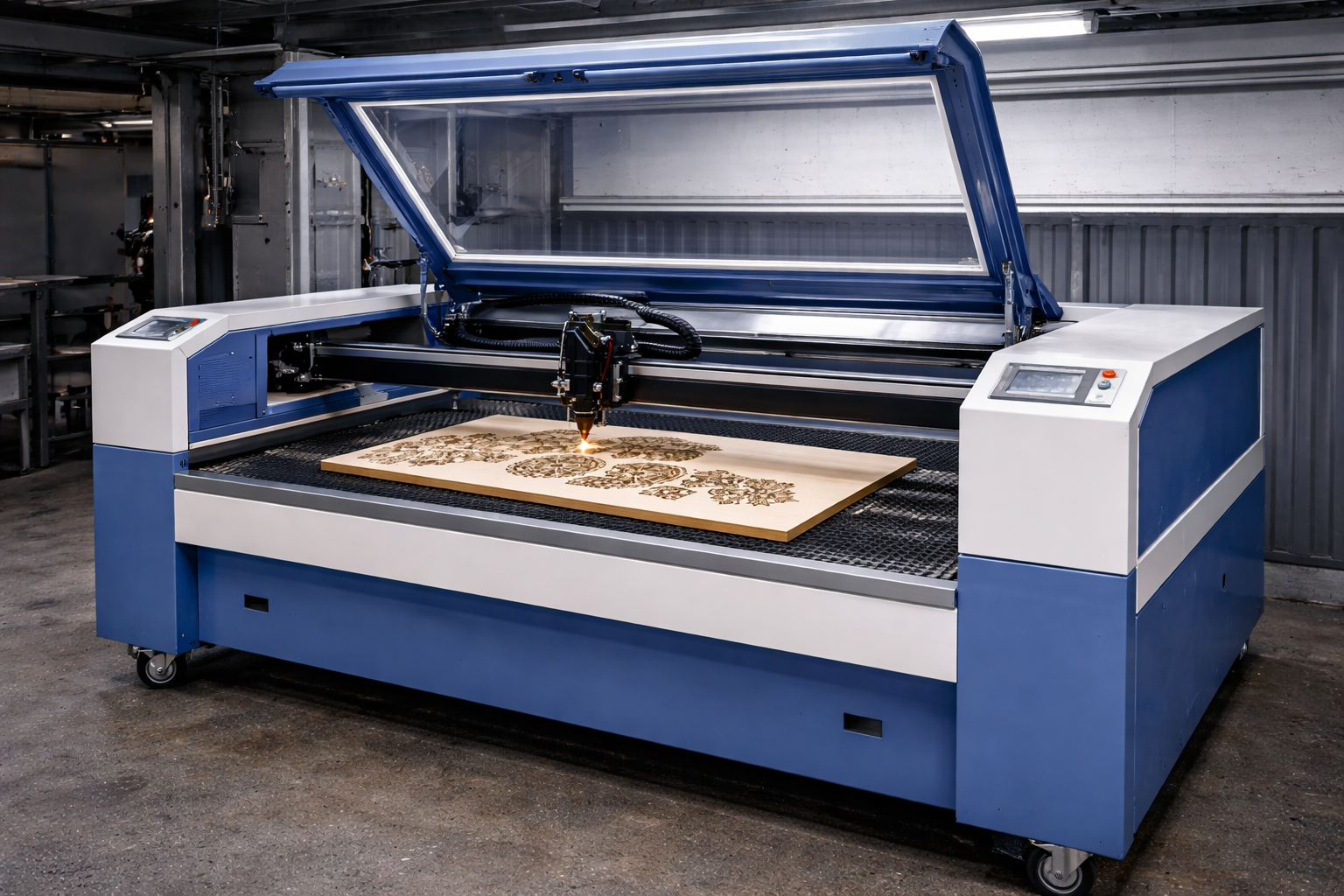
A CO₂ laser uses carbon dioxide gas to generate laser light.
With a wavelength of 10.6 μm in the infrared range, it is easily absorbed by non-metal materials, making it well-suited for processing wood, acrylic, paper, and fabric.
The laser beam is focused onto a point using a lens, instantly generating high temperatures that melt or vaporize the material for cutting or engraving.
During processing, gas is blown to remove molten material. Even materials like wood or paper, which might seem flammable, do not easily catch fire under proper conditions because the laser irradiation is localized and momentary, and air assist removes heat and combustion byproducts.
Fiber Laser
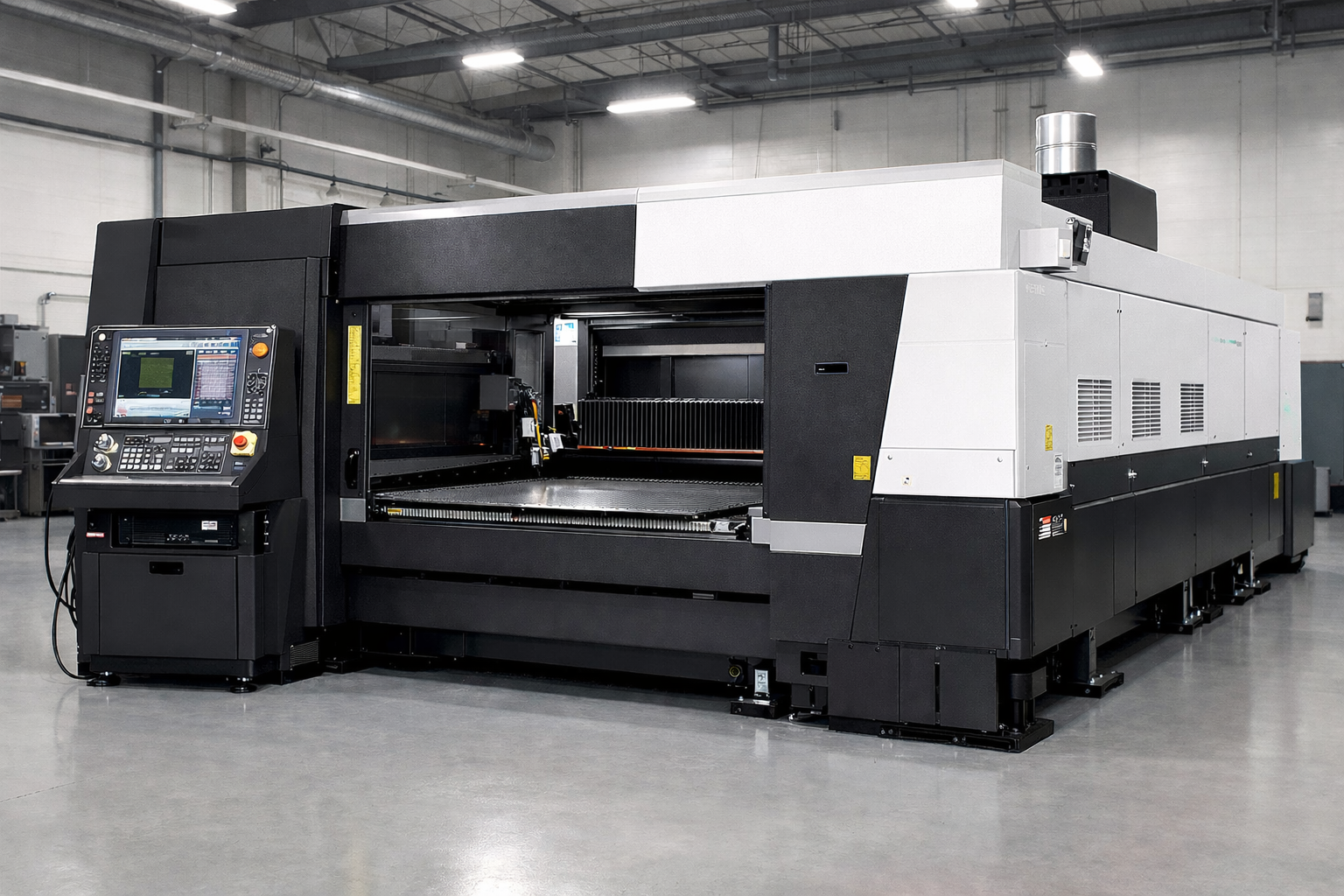
A fiber laser amplifies laser light within an optical fiber to generate the beam.
This infrared laser is highly absorbed by metals, making it ideal for processing steel, stainless steel, aluminum, brass, and other metals.
The laser generated by the oscillator is transmitted through optical fiber to the processing head, focused by a lens, and irradiated onto the material. The irradiated area becomes extremely hot, melting the metal.
Assist gases such as nitrogen or oxygen are used to remove the molten metal during cutting.
Some models also include marking functions, allowing direct engraving of nameplate information or model numbers on metal materials.
Typical output ranges are in the kilowatt class, capable of handling thin to medium-thickness plates.
YAG Laser Processing Machine
A YAG laser processing machine uses a solid-state laser with YAG (Yttrium Aluminum Garnet) as the medium. By doping this artificial crystal with neodymium, laser oscillation becomes possible.
It emits near-infrared light with high absorption in metals, making it suitable for processing materials like steel and stainless steel.
It is widely used in metal processing fields such as precision welding, thin sheet cutting, and marking.
However, YAG lasers are becoming less common today due to the widespread adoption of fiber lasers. That said, they are not completely interchangeable, so it is important to verify specifications and conduct prior testing based on processing requirements.
Advantages of Laser Cutters
No tool wear due to non-contact processing
High precision for complex shapes
Suitable for high-mix, low-volume production without molds
Easy shape changes by modifying data
Disadvantages of Laser Cutters
High initial investment cost
Reflection issues depending on the material
Specifications and Scale
Laser cutters vary significantly in size and output depending on their application:
Small machines: Desktop size (for acrylic and wood processing)
Medium machines: For sheet metal processing (1 kW–6 kW class)
Large machines: For thick plates and large materials (10 kW+ high-power machines available)
Conclusion
A laser cutter is a non-contact processing machine that uses the thermal energy of a laser to cut materials.
It supports a wide range of materials—from sheet metal to plastics and wood—and plays an essential role in modern manufacturing.
Choosing the appropriate type, such as CO₂ or fiber laser, based on application, material, and thickness is crucial.
Careful evaluation of investment costs and processing targets will lead to improved production efficiency.
Used Laser Cutter Solutions
Laser cutters can be introduced not only as new equipment but also as used machinery to significantly reduce capital investment.
At our company, we support the buying and selling of various used equipment, including:
CO₂ lasers
Fiber lasers
Other machine tools
Feel free to contact us for more information.