 Asset
Bank
Asset
Bank

What Is an Injection Molding Machine? Understanding Drive System Differences and the Features of Major Plastic Processing Machines
Table of Contents
An injection molding machine is a machine used to manufacture plastic products. Many everyday plastic items—such as cups and containers, automotive bumpers, headlights, and dashboards—are produced using injection molding machines.
In this article, we explain how these machines operate, why pressure differs depending on the machine type, and what other types of machines are used to manufacture plastic products.
What Is an Injection Molding Machine?
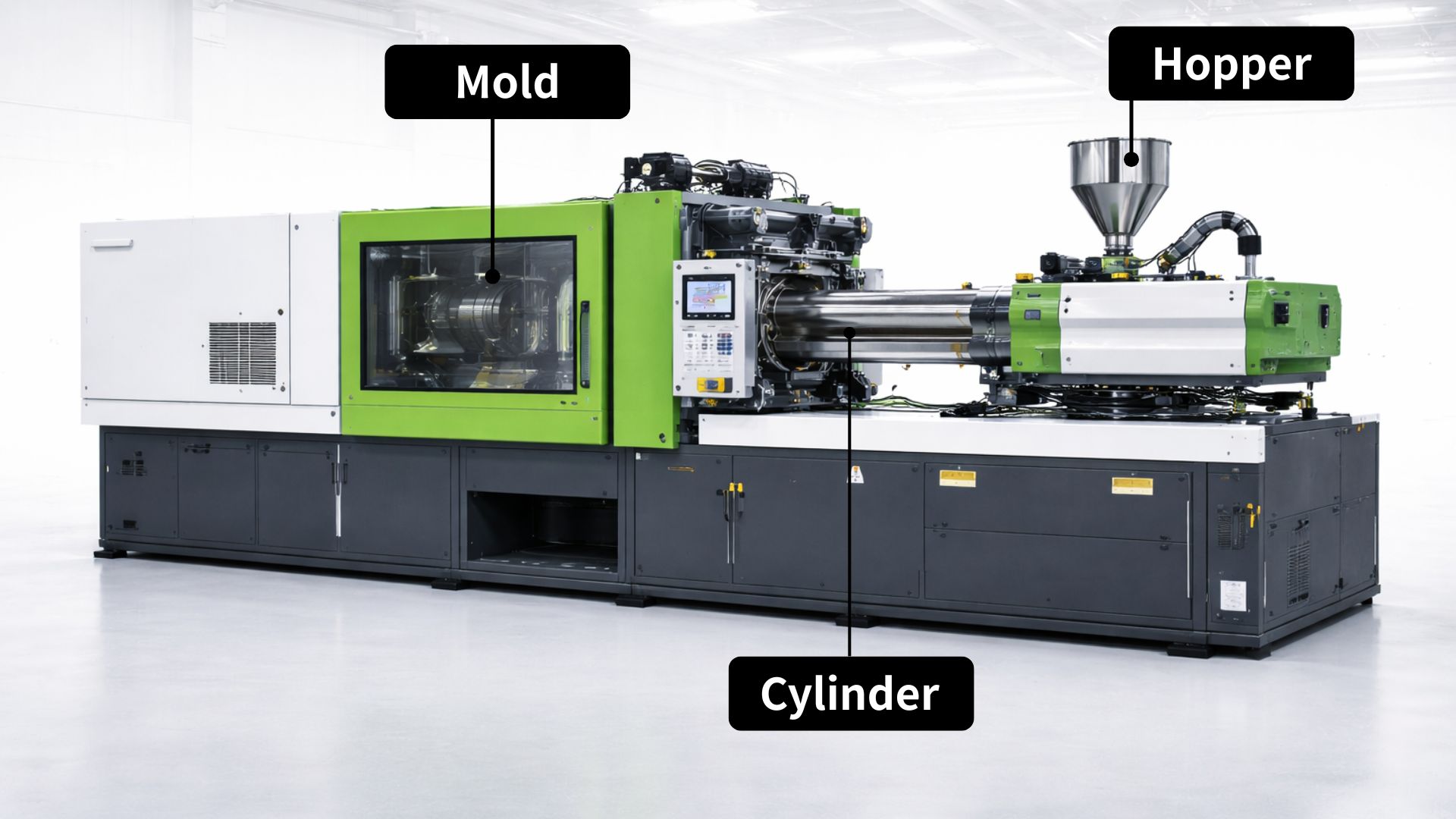
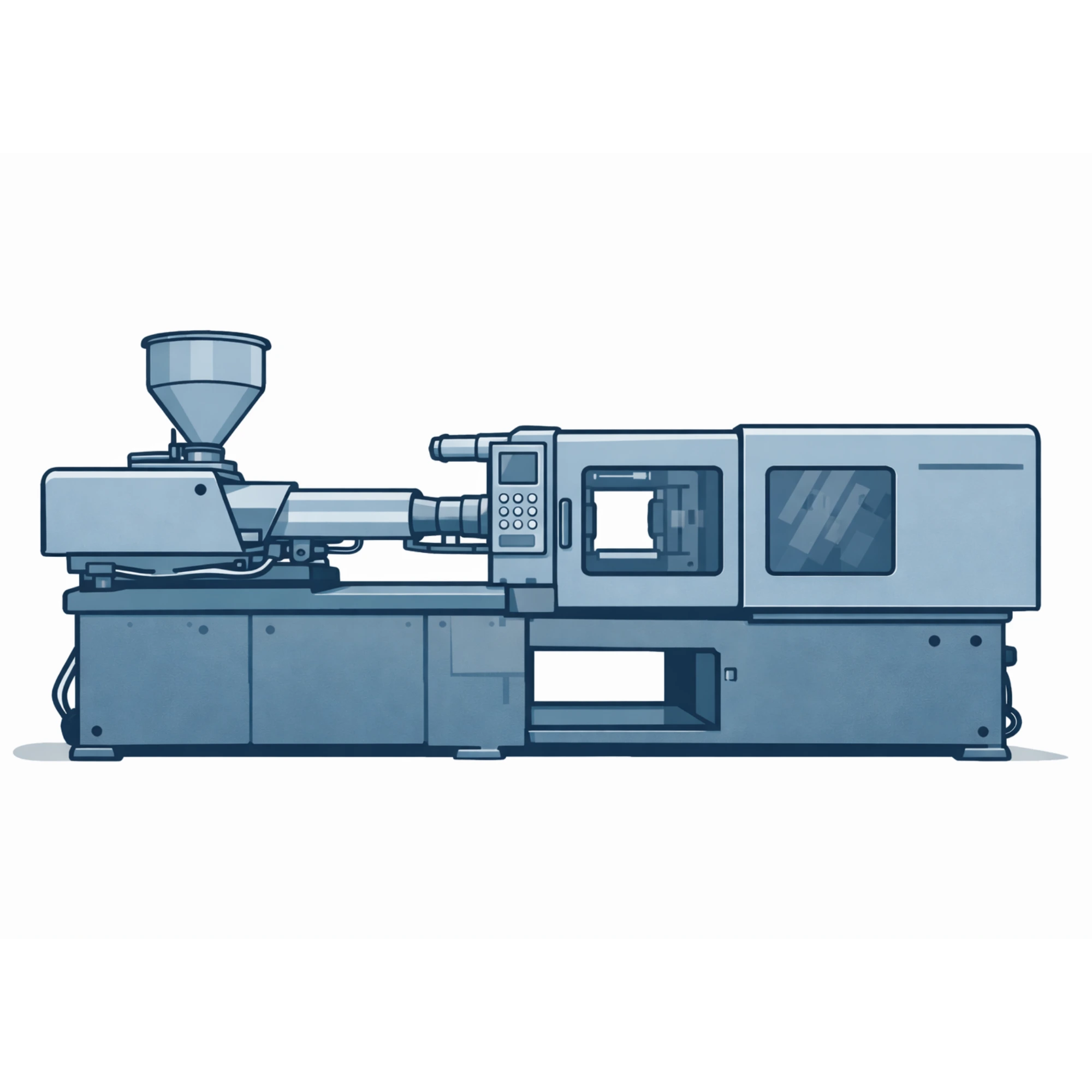
An injection molding machine is used to process plastic products. The basic process flow is as follows:
Pellets (plastic raw material) are fed into a hopper
The pellets are mixed and melted inside a heated cylinder
The molten resin is injected into a mold
The injected resin fills the mold cavity and takes shape
The product is cooled and solidified
Compared to 3D printers, which have recently become more widespread, injection molding machines are capable of producing high-strength products at high speed, making them ideal for stable mass production.
Two key factors in injection molding are injection pressure and clamping force (tonnage).
During molding, molten resin is injected into the mold at high pressure. If the clamping force holding the mold closed is insufficient, the mold may slightly open under pressure, causing resin to leak out (flash).
Therefore, the mold must be tightly secured with sufficient force. As the size of the product increases, the force applied to the mold also increases, requiring higher tonnage.
Types of Injection Molding Machines
Hydraulic Type
Hydraulic injection molding machines operate using hydraulic pressure and are known for their strong power output. They are well suited for producing large products, such as automotive bumpers.
Large products require high injection pressure to distribute molten resin evenly throughout the mold. This generates significant internal pressure inside the mold, which must be counteracted with sufficient clamping force.
Hydraulic machines are capable of generating high clamping force consistently, preventing mold opening even when producing large components.
Additionally, equipment costs tend to be relatively lower compared to electric types. However, disadvantages include higher power consumption and greater dependence on operator skill and experience to maintain consistent quality.
Hydraulic machines are ideal for applications requiring high power and large-scale production.
Electric Type
Electric injection molding machines use servo motors to control all machine movements.
Unlike hydraulic systems, electric machines allow precise control of position, speed, and pressure, making them suitable for high-precision molding.
In precision components, even small differences in pressure or speed can significantly affect dimensional accuracy and appearance quality. Electric machines offer excellent repeatability, enabling consistent molding conditions for every shot. They are commonly used for connectors, medical components, and electronic parts.
Electric machines also consume less power. Hydraulic machines continuously run pumps to generate pressure—even during standby—whereas electric machines only operate motors when needed.
Hybrid Type
Hybrid injection molding machines combine both hydraulic and electric systems.
Key movements such as injection and mold opening/closing are controlled by servo motors, while hydraulic mechanisms are used where high pressure is required.
This configuration leverages the strengths of both systems. It provides a balanced combination of power and precision, making it suitable for a wide range of products.
Other Plastic Processing Machines
Blow Molding Machine
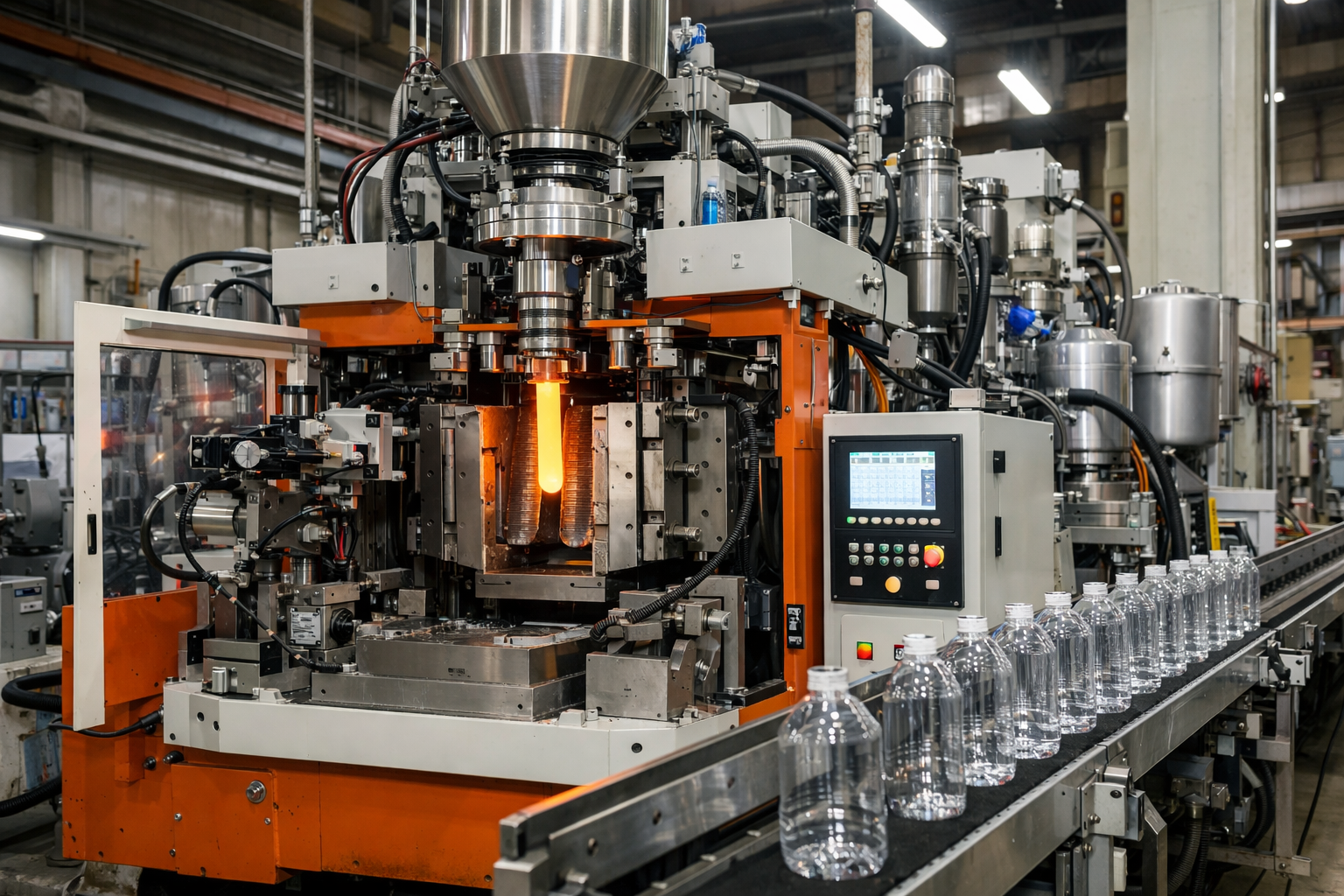
A blow molding machine forms hollow products by inflating molten resin with air.
It is used to manufacture PET bottles and various containers. Molten resin in a tube shape is placed inside a mold and inflated like a balloon.
Blow molding enables efficient mass production of lightweight containers with minimal seams. Unlike injection molding, it is specialized for hollow products.
Extrusion Molding Machine
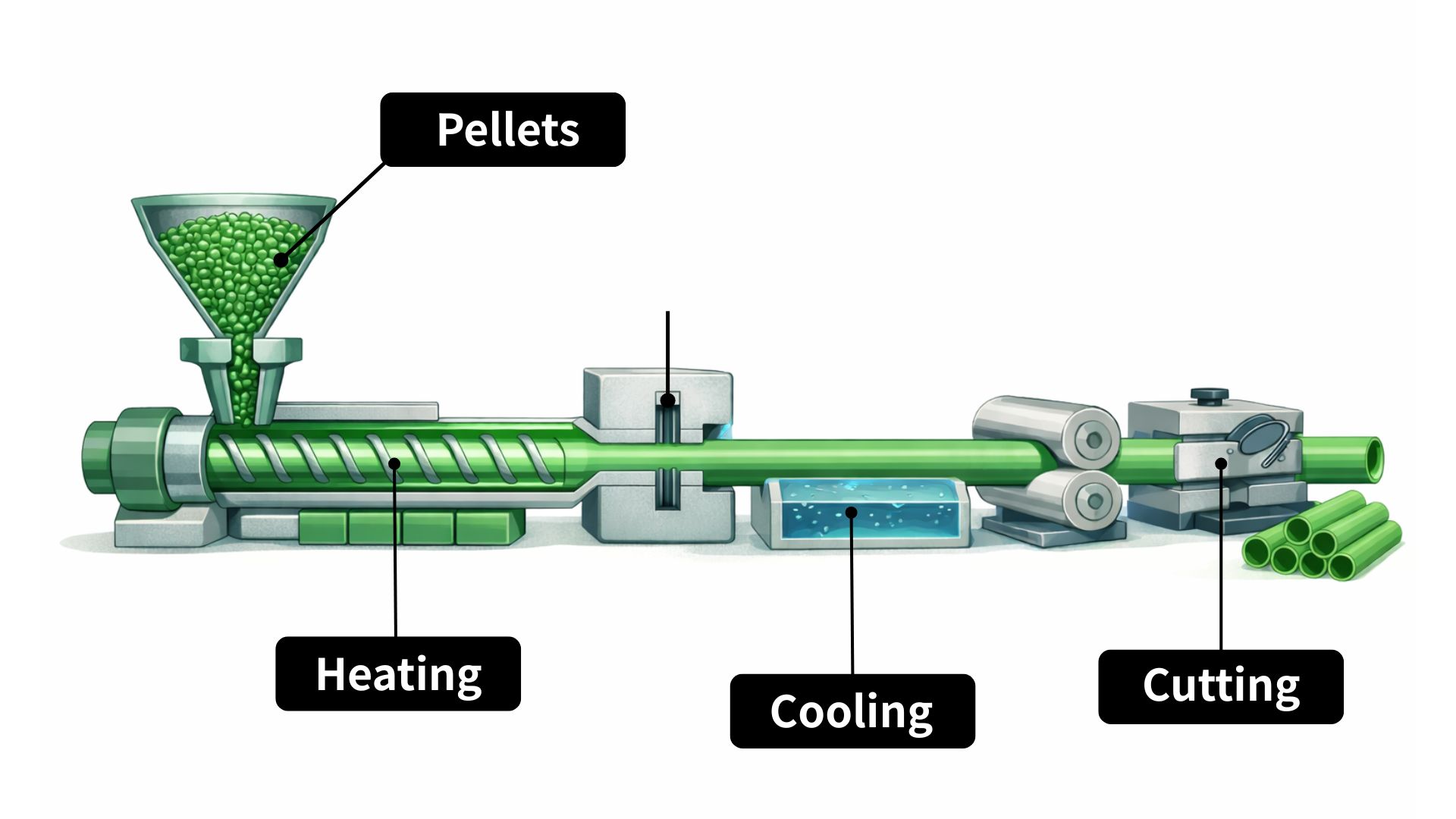
An extrusion molding machine pushes molten plastic through a die to create products with a consistent cross-sectional shape.
It is used to manufacture drainage pipes, plastic pipes, cable ducts, and similar products.
Unlike injection molding, which forms products shot by shot, extrusion allows continuous production of long products.
Thermoforming Machine
A thermoforming machine heats plastic sheets until they become soft, then presses them against a mold or uses vacuum suction to shape them.
The heated sheet conforms to the mold shape and is then cooled to solidify.
Thermoforming is commonly used to produce lunch containers and food trays.
Rotational Molding Machine
A rotational molding machine places plastic powder inside a mold and rotates it while heating. The resin melts and coats the interior surface, forming a hollow product.
It is mainly used for manufacturing large hollow products such as water tanks, trash bins, and storage tanks. One key advantage is seamless one-piece molding.
Compared to injection and blow molding, rotational molding does not require high pressure and uses relatively simple mold structures. However, molding time tends to be longer.
Summary
The selection of an injection molding machine largely depends on what kind of product will be manufactured and at what production scale.
As product size and projected area increase, sufficient clamping force (tonnage) is required to withstand the internal pressure. For example, molding large automotive bumpers requires machines capable of handling high tonnage.
On the other hand, if precision and flexibility for future multi-product production are priorities, selecting a machine with excellent operability and control performance is important. Hybrid machines, in particular, provide a good balance between power and precision while reducing excessive dependence on operator skill.
Injection molding machines can be introduced not only as new equipment but also as used machinery to significantly reduce capital investment.
Our company supports the buying and selling of used:
Injection molding machines
Blow molding machines
Extrusion molding machines
Please feel free to contact us.