 Asset
Bank
Asset
Bank

What Is a Welding Machine? | Its Uses and Types Explained
Table of Contents
- ・Where welding machines are commonly used
- ・What types of welding machines exist and how they differ
- What Is a Welding Machine?
- Where Are Welding Machines Used?
- Manufacturing / Factories
- Construction, Steel Structures, and Plants
- Main Types of Welding Machines and Their Characteristics
- 1. Arc Welding Machine
- 2. CO₂ Welding Machine
- 3. MIG Welding Machine
- 4. TIG Welding Machine
- 5. Spot Welding Machine
- Summary|Choosing the Right Welding Machine for Your Application
- ・Arc Welding: Outdoor work and repair operations
- ・CO₂ Welding: Mass production of steel products
- ・MIG Welding: Aluminum and stainless steel products requiring good appearance
- ・TIG Welding: High-precision, high-quality, low-volume production
- ・Spot Welding: High-speed mass production of thin sheet assemblies
A welding machine is one of the essential pieces of equipment used daily in manufacturing plants and construction sites.
Welding is a fundamental technology for fixing components together and ensuring the structural strength of buildings and products.
In this article, we will clearly explain:
・Where welding machines are commonly used
・What types of welding machines exist and how they differ
What Is a Welding Machine?
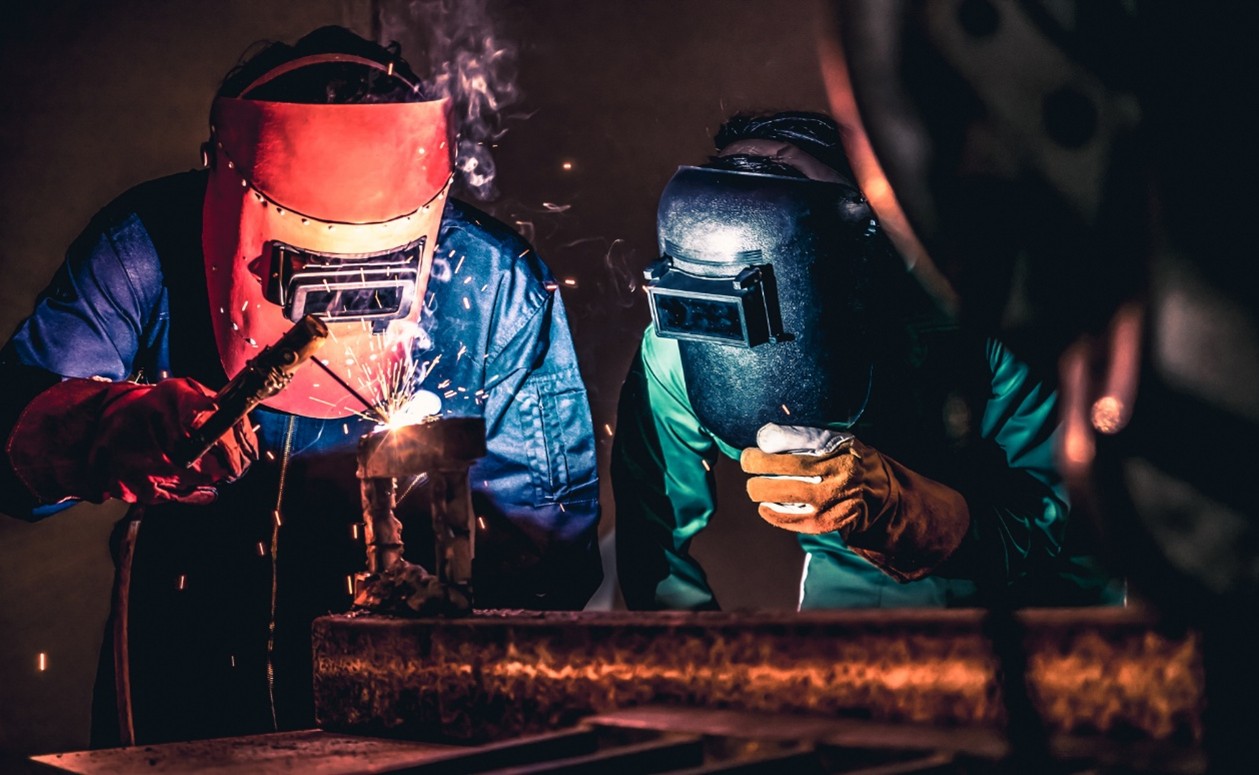
A welding machine is a device used to join metals by melting them with heat and fusing them into a single component.
Unlike bolts or adhesives, welding integrates the metal itself, resulting in superior strength and durability.
For example, in the automotive industry, welding machines are used to assemble vehicle frames and brackets. Welding enables structures to withstand vibrations during driving and impact loads during collisions.
For this reason, welding machines are indispensable in manufacturing, construction, infrastructure, and repair industries.
Where Are Welding Machines Used?
Manufacturing / Factories
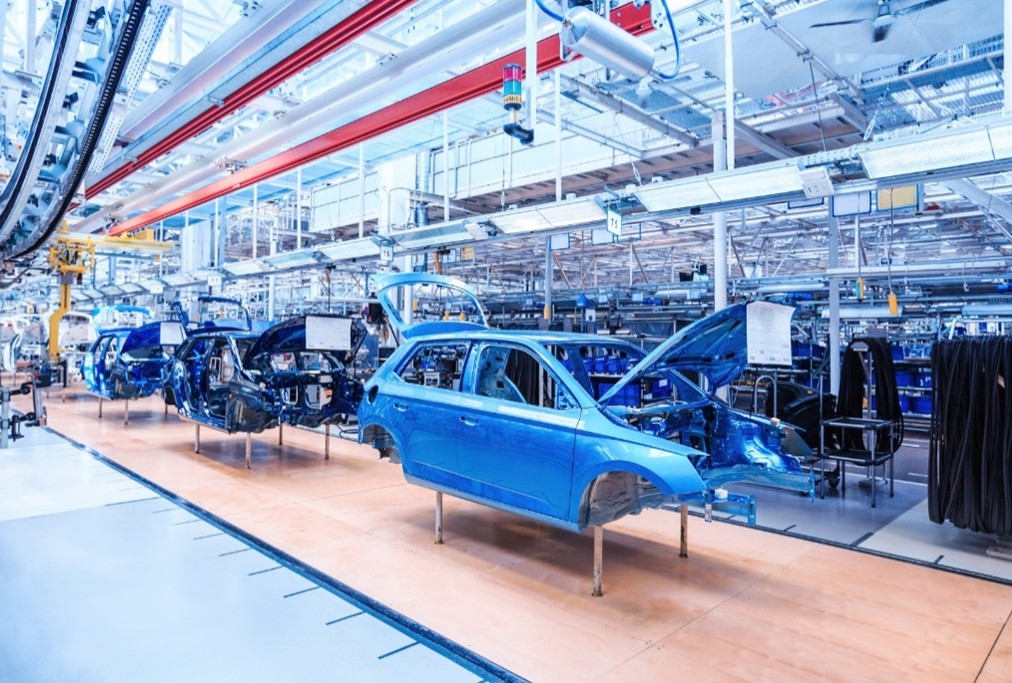
・Manufacturing and assembly of machine parts
・Fabrication of frames, housings, and mounting stands
・Welding of automotive, motorcycle, and industrial machinery components
In environments where mass production and consistent quality are required, the performance of welding machines directly affects productivity.
Construction, Steel Structures, and Plants
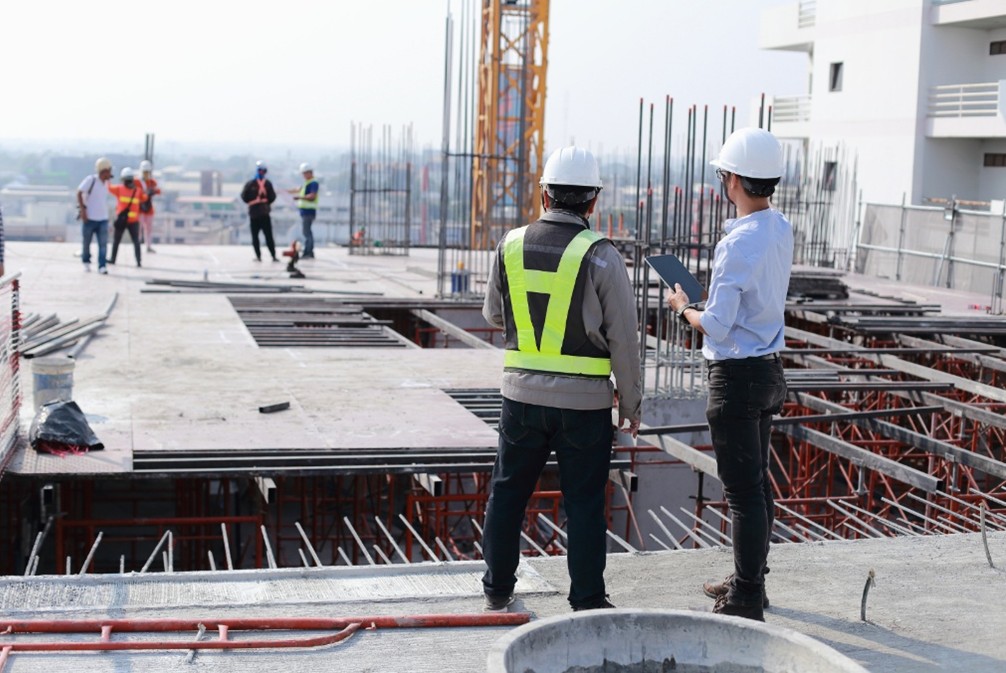
・Joining structural steel for buildings
・Fabrication of piping, tanks, and structures
・Installation and repair of plant facilities
In fields where strength and reliability are the highest priorities, welding methods with strong on-site adaptability are highly valued.
Repair and Maintenance
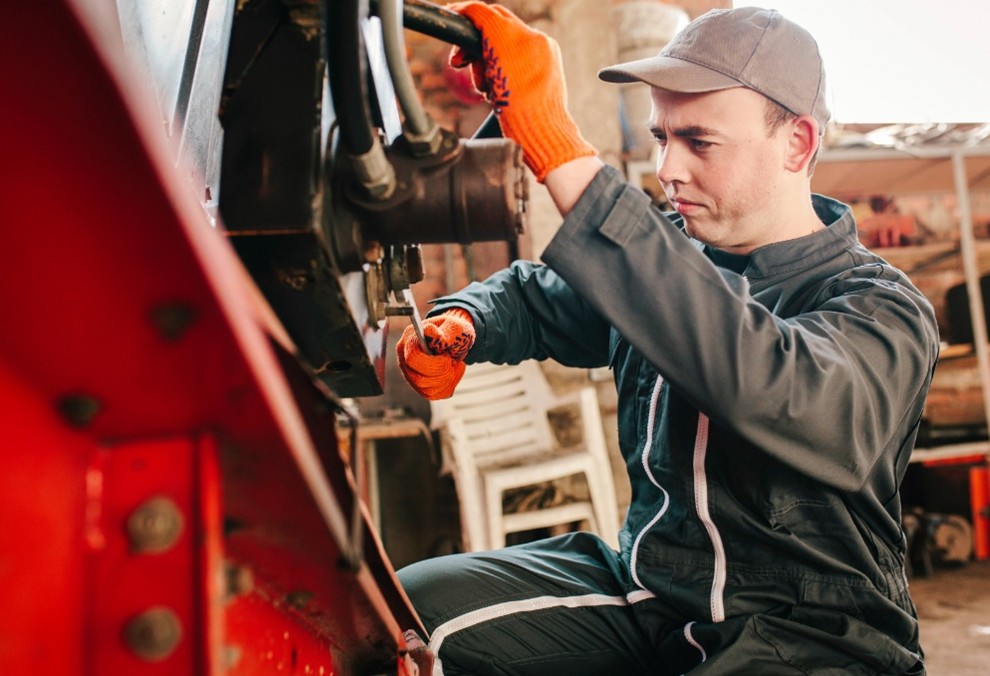
・Repair welding of machines and equipment
・Build-up welding and reinforcement of damaged parts
・Repair of agricultural and construction machinery
In “repair-and-reuse” environments, welding machines are truly indispensable tools.
Main Types of Welding Machines and Their Characteristics
Welding machines can be classified into several types depending on the welding method.
Below are five representative types commonly used in the field.
1. Arc Welding Machine
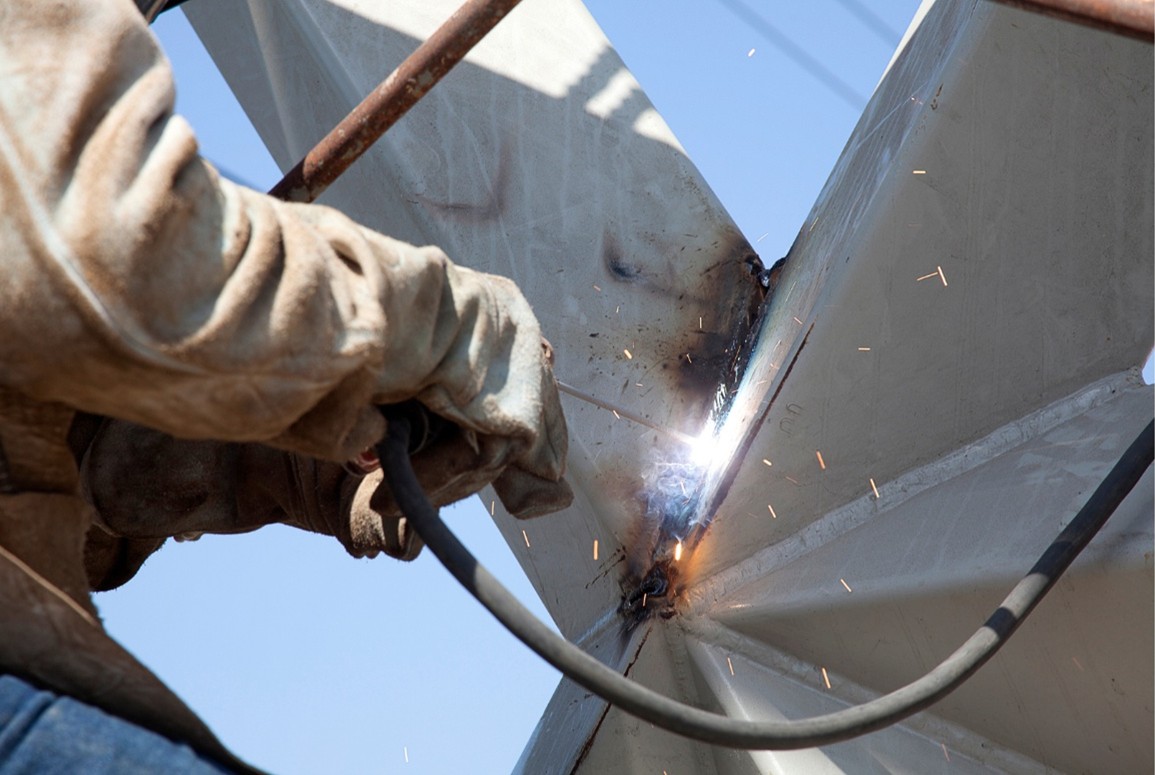
Arc welding is the most basic welding method, using stick-shaped electrodes.
An electric current flows between the electrode (welding rod or wire) and the base metal, generating an arc discharge (a strong electrical spark). The heat from this arc melts the metal and joins it together.
How It Works
1.Electric current is supplied from the power source
2.An arc (high-temperature discharge) is generated between the electrode and the metal
3.The metal melts and solidifies as it cools, forming a joint
Features
・Simple structure and high durability
・Resistant to wind, suitable for outdoor work
・Ideal for construction, repair, and on-site operations
Arc welding machines are easy to handle due to their simple structure. Since no external shielding gas is required and the electrode coating protects the weld pool, they are less affected by wind and well suited for outdoor work.
Their simple configuration also makes them less prone to failure and easy to transport, making them widely used at construction sites and for repair work in unstable environments.
Typical Applications
Arc welding machines are mainly used at construction sites and outdoor work locations, such as steel structure assembly, equipment installation, and repair work. They are well suited for flexible on-site operations.
2. CO₂ Welding Machine
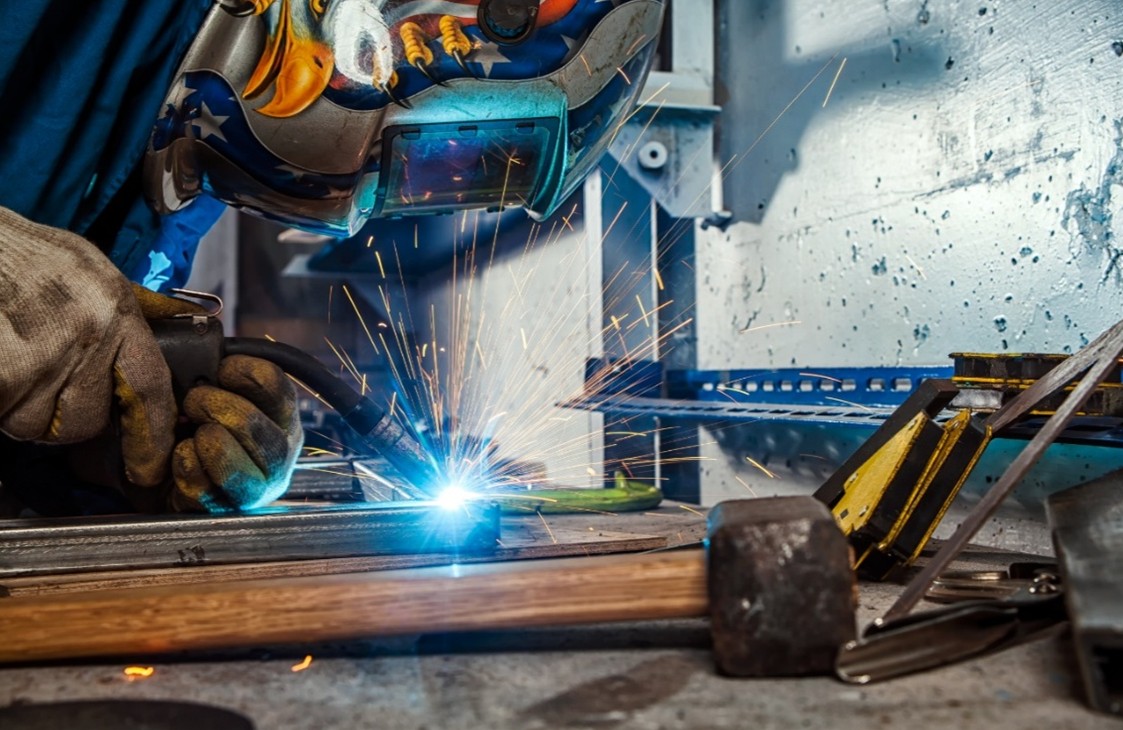
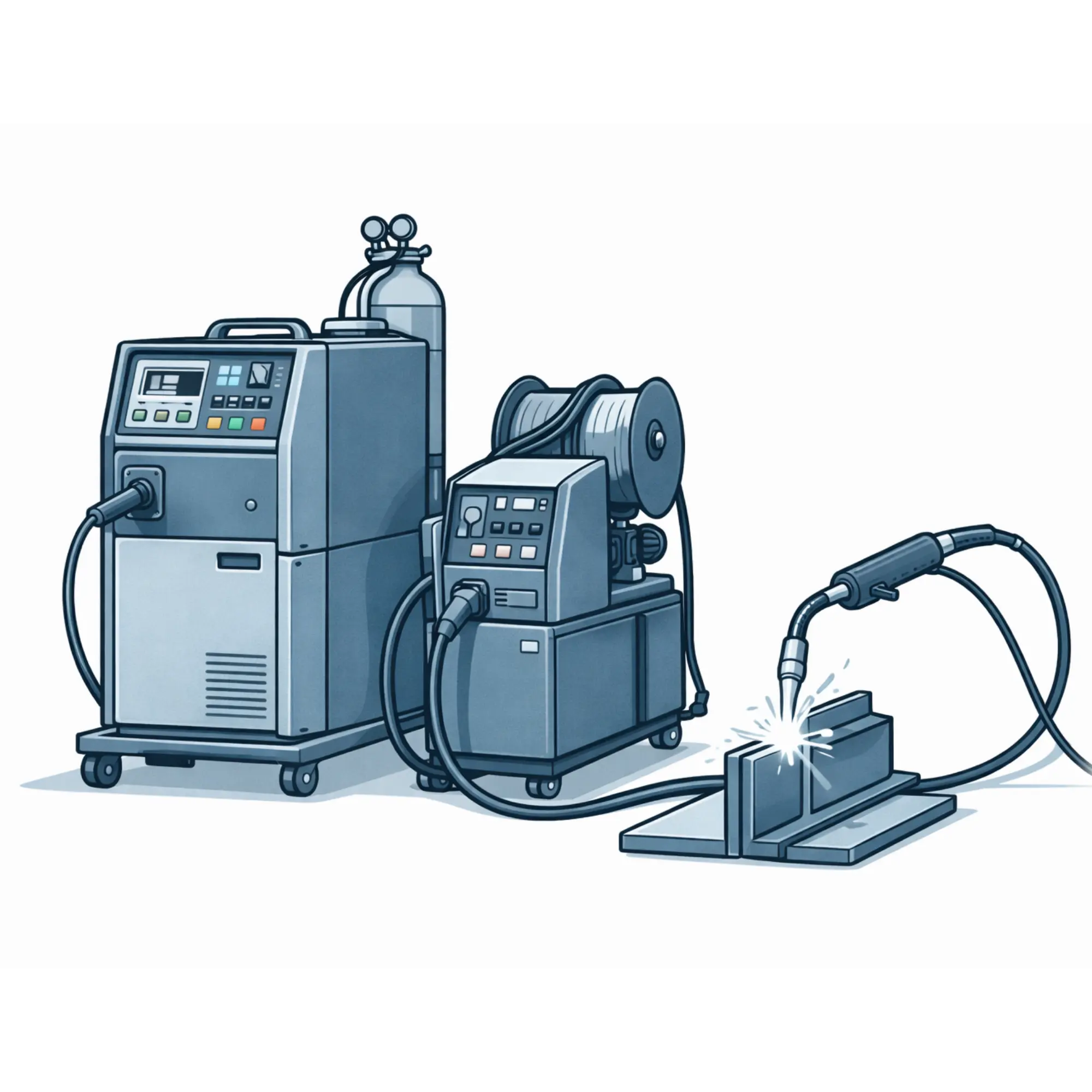
A CO₂ welding machine (carbon dioxide welding machine) uses carbon dioxide gas to shield the weld area from air while joining metal.
It is classified as GMAW (Gas Metal Arc Welding) and is one of the most widely used welding methods.
It is suitable for welding steel and iron, and is commonly used in factories for mass production due to its high efficiency and stable quality.
How It Works
In CO₂ welding, a welding wire is automatically fed from the torch tip. An electric current flows between the wire and the base metal, generating an arc that melts both materials.
This method is easy to semi-automate or automate and produces consistent quality.
Features
・Low operating cost
・Excellent for welding steel and iron
・High work efficiency
・Relatively high spatter
Because the wire is continuously fed, long welds and repetitive operations can be performed smoothly. Stable current and wire feed speed help reduce variations in weld quality, which is a major advantage in mass production lines.
Typical Applications
CO₂ welding machines are mainly used in factories for welding steel products such as automotive parts, machine frames, and enclosures. They are ideal for indoor environments with stable working conditions.
3. MIG Welding Machine
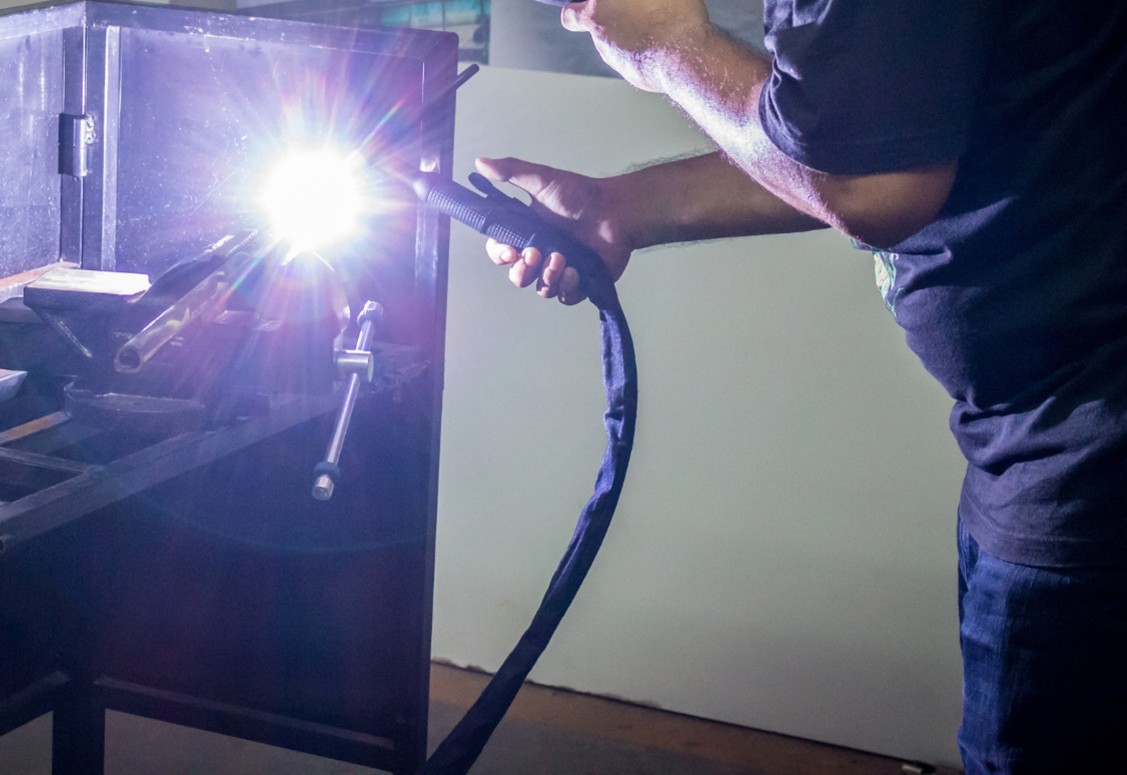
A MIG welding machine uses inert gases such as argon to shield the weld area from air while joining metal.
It is also classified as GMAW, similar to CO₂ welding, but differs in the shielding gas used.
Compared to CO₂ welding, MIG welding produces less spatter and cleaner weld beads, making it suitable for aluminum and stainless steel where appearance quality is important.
How It Works
A welding wire is automatically fed from the torch tip, creating an arc between the wire and the base metal.
At the same time, inert gas (mainly argon) flows around the weld area, preventing oxidation and ensuring clean, stable welds.
Features
・Clean and smooth weld bead
・Low spatter, ideal for appearance-focused products
・Suitable for aluminum and stainless steel (thin to medium thickness)
・Sensitive to wind; mainly used indoors
MIG welding offers high efficiency and excellent appearance quality, making it popular in precision manufacturing environments.
Typical Applications
Used for aluminum and stainless steel products, precision equipment, enclosures, automotive and motorcycle parts, as well as food and medical equipment manufacturing.
4. TIG Welding Machine
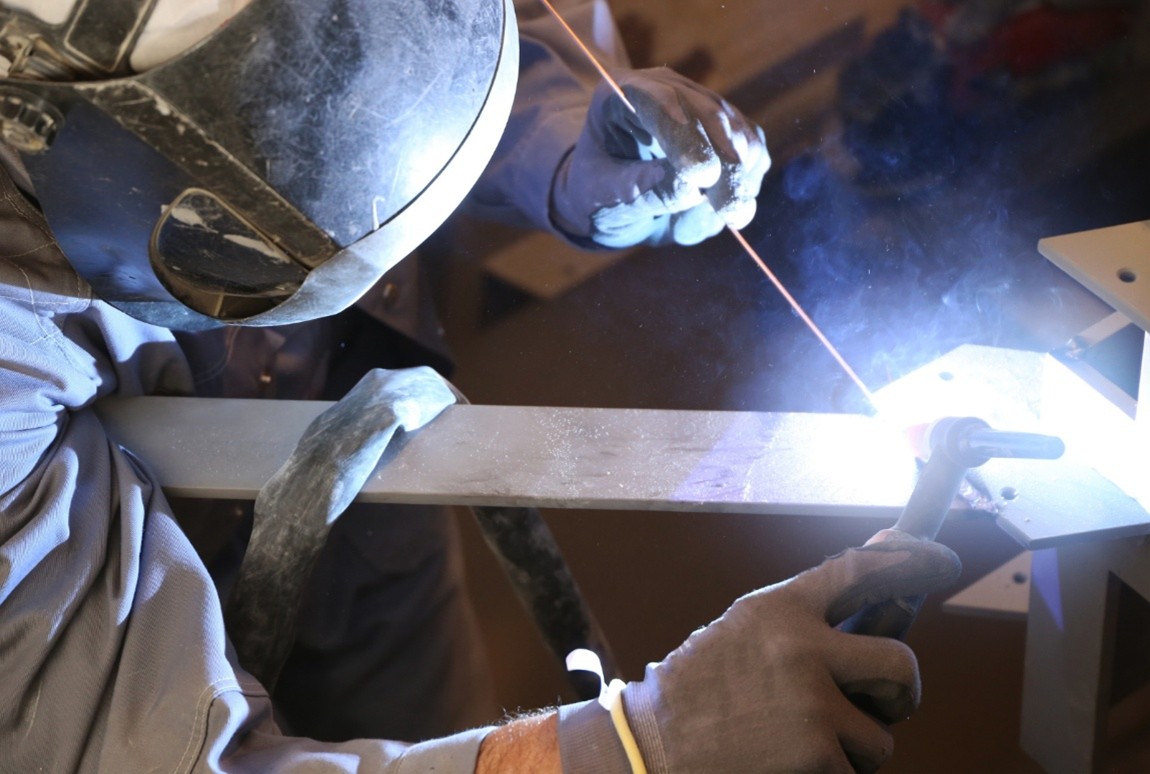
A TIG welding machine uses a tungsten electrode and inert gas (mainly argon) to produce highly precise and clean welds.
The operator melts the metal with the torch while manually adding filler rod, requiring high skill and careful control.
Formally known as GTAW (Gas Tungsten Arc Welding), TIG welding is chosen when weld quality and appearance are critical.
How It Works
An arc is generated between the tungsten electrode and the base metal. The electrode itself does not melt, allowing very stable welding.
Filler rod is added as needed, while argon gas fully shields the weld area from air, preventing oxidation.
Features
・Extremely clean and stable weld quality
・Almost no spatter, minimal post-processing
・Ideal for aluminum, stainless steel, and titanium
・Slower process requiring high skill; suitable for high-quality, low-volume production
Typical Applications
Used for stainless steel piping, tanks, food and medical equipment, high-precision automotive and motorcycle parts, and aluminum products.
5. Spot Welding Machine
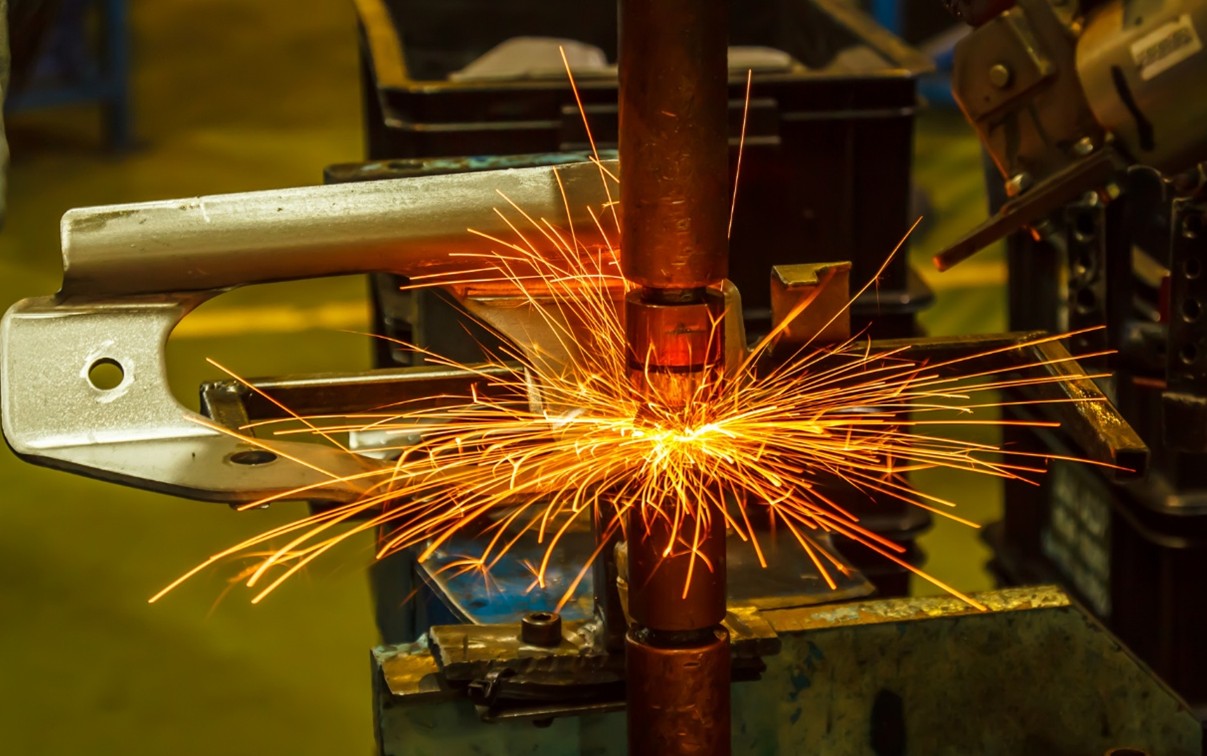
A spot welding machine joins overlapping metal sheets by clamping them between electrodes and applying a strong electric current for a very short time.
Because welding is done at “spots,” it is called spot welding.
It is mainly used for thin steel sheets and is indispensable in mass production industries such as automotive and home appliances.
How It Works
Metal sheets are overlapped and clamped between electrodes. A brief, high current generates heat due to electrical resistance at the contact point, melting the metal locally.
When the current stops, the molten metal solidifies, forming a strong joint.
Features
・Extremely fast welding speed
・No welding wire or gas required
・Easy to control welding conditions with consistent quality
・Limited to thin sheet overlap welding
Typical Applications
Widely used in automotive body manufacturing, as well as home appliances, steel furniture, metal cabinets, and office equipment production.
Summary|Choosing the Right Welding Machine for Your Application
Recommended welding methods by application:
・Arc Welding: Outdoor work and repair operations
・CO₂ Welding: Mass production of steel products
・MIG Welding: Aluminum and stainless steel products requiring good appearance
・TIG Welding: High-precision, high-quality, low-volume production
・Spot Welding: High-speed mass production of thin sheet assemblies
Welding machines should not be chosen based on which is “the best,” but on the application, material, working environment, and required quality.
Understanding each method’s characteristics and selecting based on actual production needs is the key to choosing the right welding machine.
When selecting a welding machine, considering used equipment instead of focusing only on new machines can also be an effective option.
At Asset Bank, which we operate, used welding machines such as arc and CO₂ welding machines may be listed depending on availability. If you are looking to reduce costs while finding equipment that fits your operation, please check our listings regularly.
If you are also considering selling welding machines, feel free to contact us.