 Asset
Bank
Asset
Bank

What Is a Milling Machine? Strengths, Limitations, and Types Explained
Table of Contents
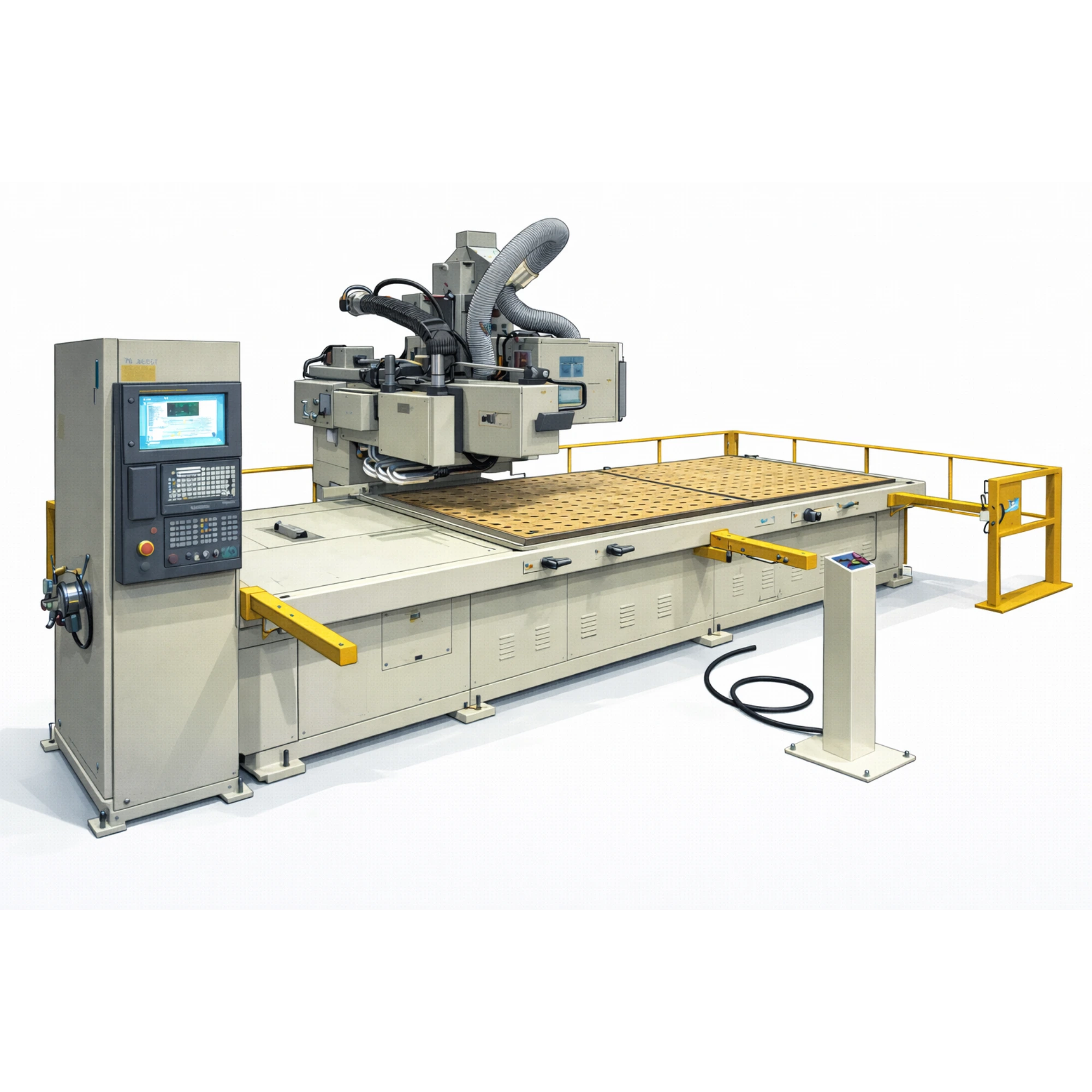
A milling machine is a machine tool that removes material by rotating a cutting tool while feeding the workpiece. It is commonly used to manufacture mechanical components, grooved parts, and molds.
This article clearly explains the basic structure of milling machines, what they are good at and not good at, and their different types.
What Is a Milling Machine?
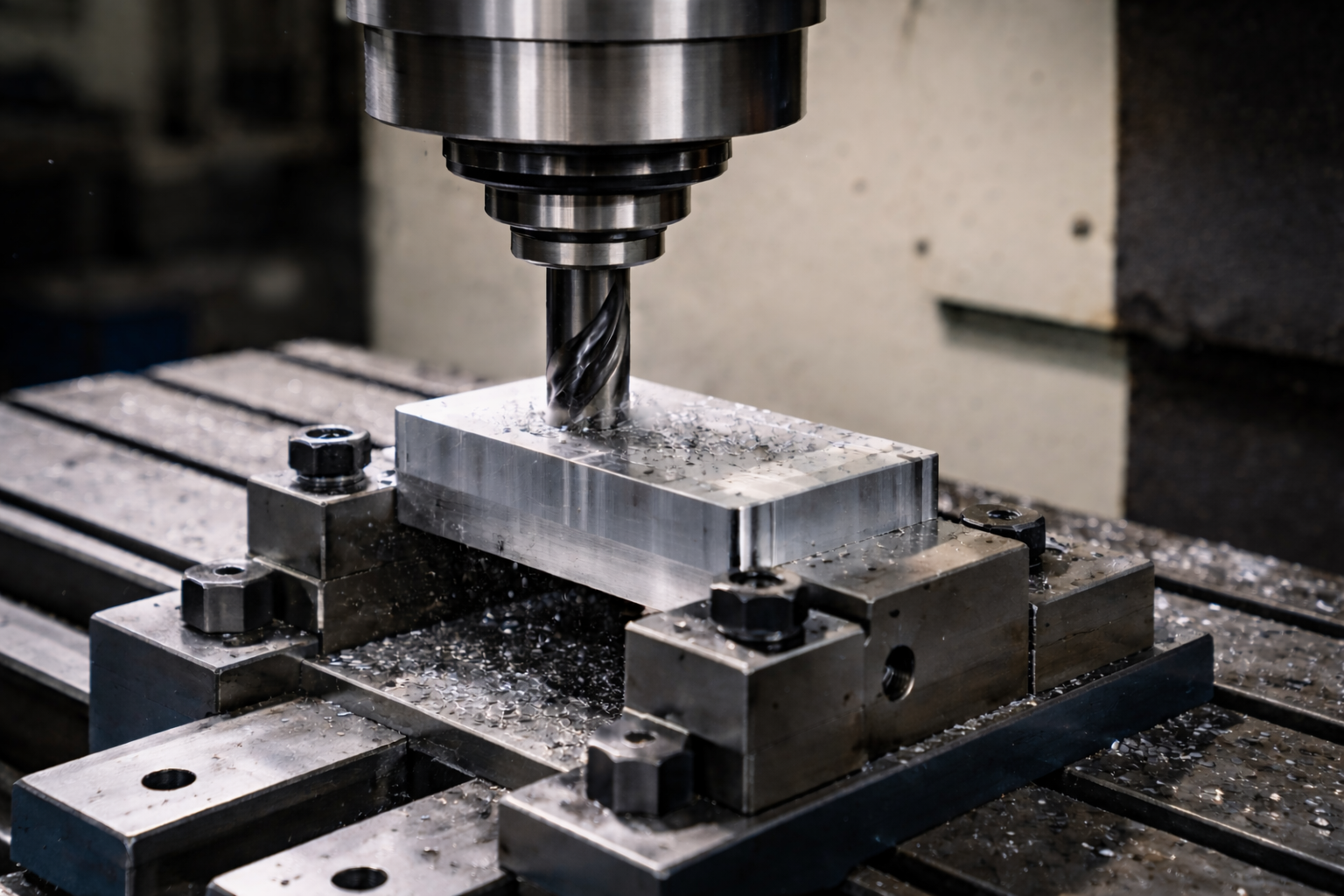
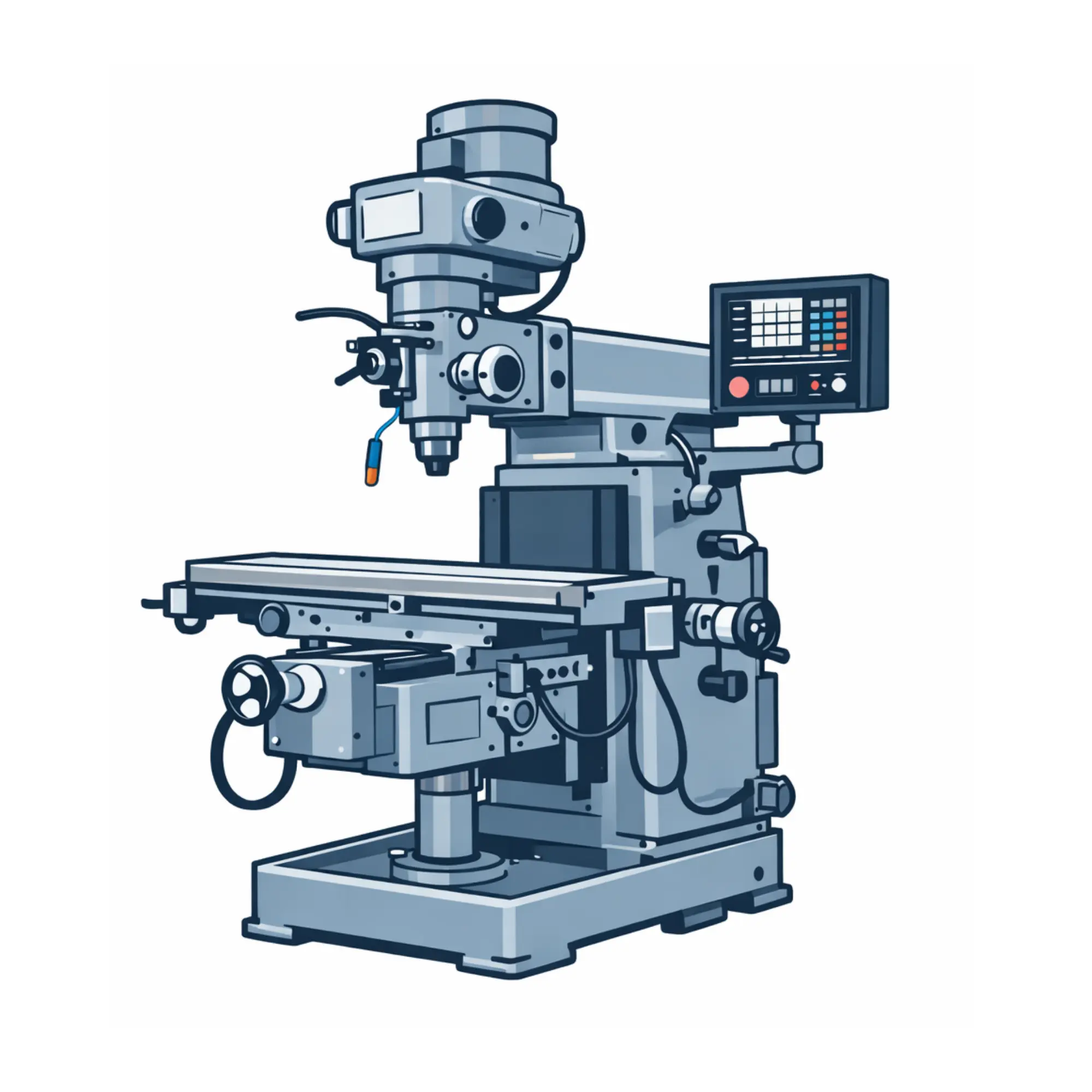
A milling machine removes material using a rotating cutting tool. By spinning the tool at high speed and moving the workpiece fixed on the table, it performs operations such as face milling, slotting, and step machining.
Machining is mainly carried out along three axes: X (left-right), Y (front-back), and Z (up-down).
In modern manufacturing, NC (Numerical Control) and CNC (Computer Numerical Control) milling machines are mainstream. Conventional manual milling machines required operators to turn handles manually for positioning and feed control. In contrast, NC and CNC machines operate automatically based on pre-programmed instructions.
This enables stable machining accuracy and reduces quality variation.
Strengths of Milling Machines
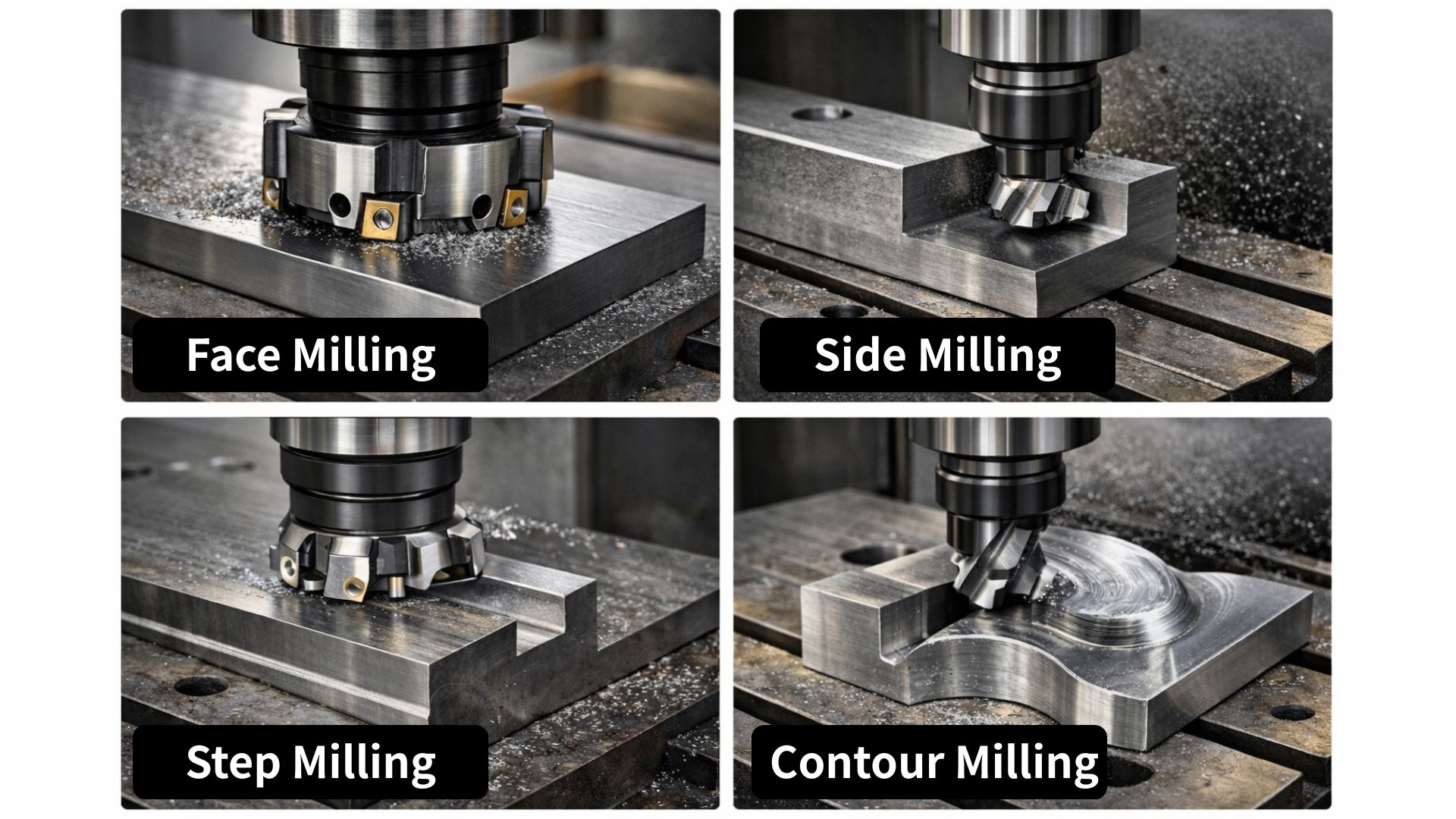
1. Excellent for Face, Slot, and Step Machining
Because milling machines combine rotating tools with linear feed motion, they can achieve high-precision face, side, and step machining. They are well suited for prismatic parts with many linear references.
2. Relatively High Machining Accuracy
Manual machines depend on operator skill, but NC/CNC machines provide stable positioning through numerical control. CNC machines, in particular, offer excellent repeatability for mass production under identical conditions.
3. Compatible with Various Materials
Milling machines can process iron, aluminum, stainless steel, copper, and plastics. Since cutting physically removes material, electrical conductivity is not a factor.
4. Capable of Complex Shapes (CNC)
CNC machines can control tool paths, allowing the machining of curved surfaces and 3D shapes. They are widely used for mold parts and precision mechanical components.
Limitations of Milling Machines
1. Extremely Hard Materials Have Limitations
Hardened steel and carbide materials may cause severe tool wear, making cutting difficult in some cases.
2. Tool Changes Can Be Time-Consuming (Manual and Some NC Machines)
On manual milling machines and some NC models, tool changes must be performed manually by the operator. This can increase setup time in multi-process machining.
Countermeasures
1. For Hardened Steel or Carbide → Use EDM
A common approach is process separation: rough machining by milling before heat treatment, followed by finishing with EDM after hardening.
2. For Tool Change Efficiency → Use a Machining Center
If budget and production planning allow, introducing a machining center is an effective solution.
Machining centers are equipped with ATC (Automatic Tool Changers), enabling automatic tool switching according to the program. However, they are generally more expensive than standard milling machines, so budget considerations are necessary.
Types of Milling Machines
1. Vertical Milling Machine
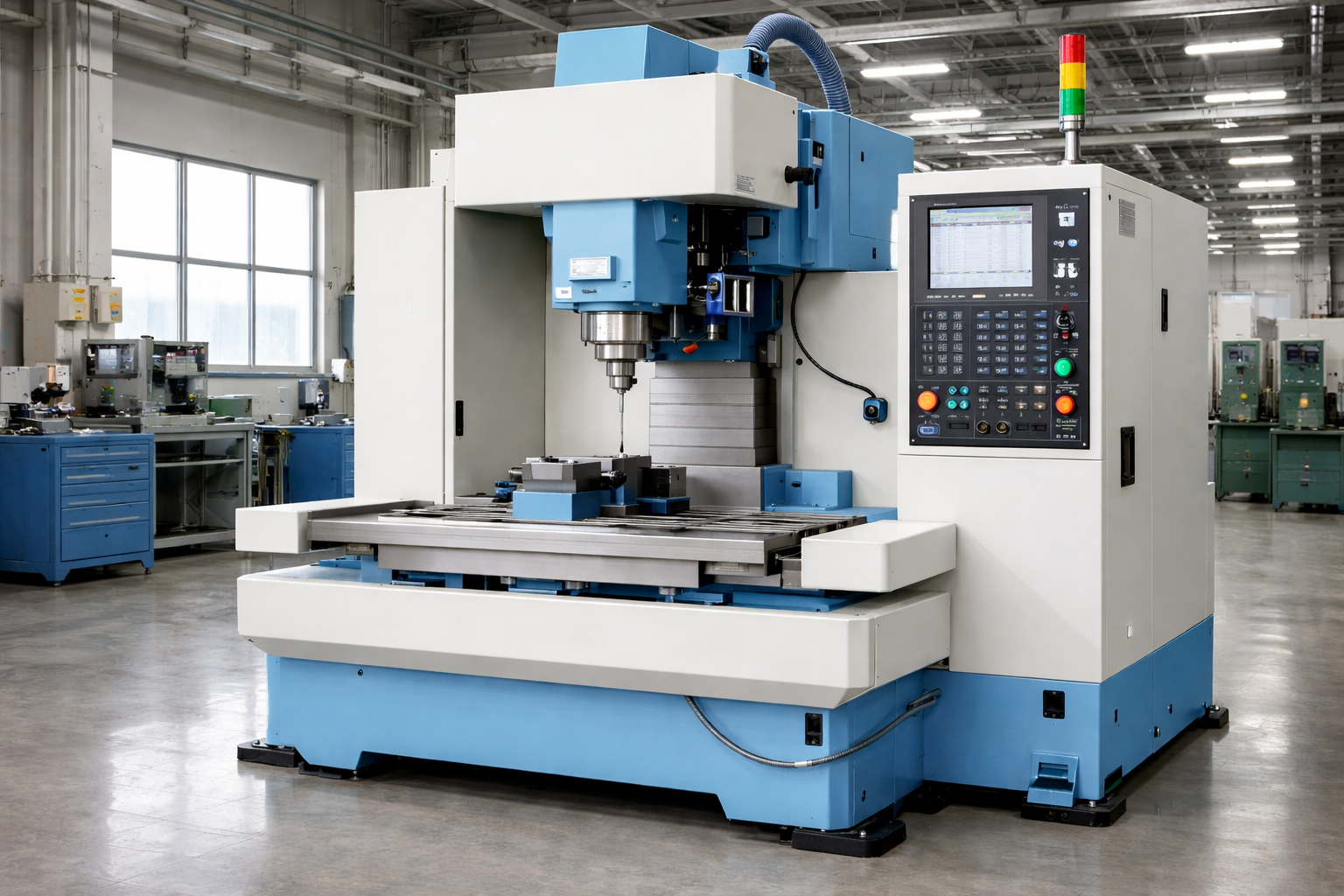
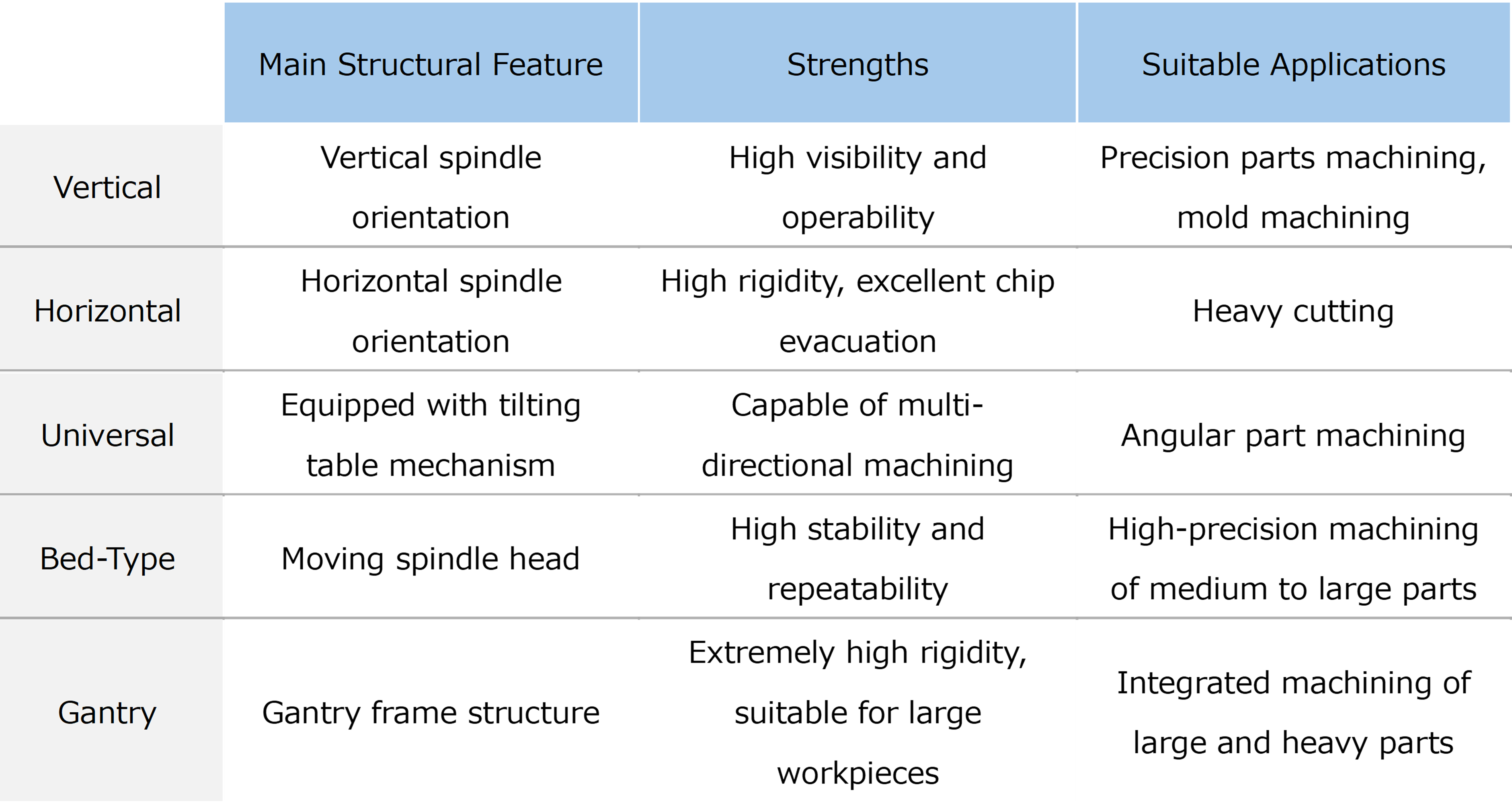
A vertical milling machine has a spindle oriented vertically. The tool rotates from top to bottom during machining and is one of the most common types.
Because the spindle is vertical, the machining point is easily visible from above, making setup and tool inspection easier. It is suitable for precision work and shape verification.
Typical applications include plate machining and mold component processing.
2. Horizontal Milling Machine
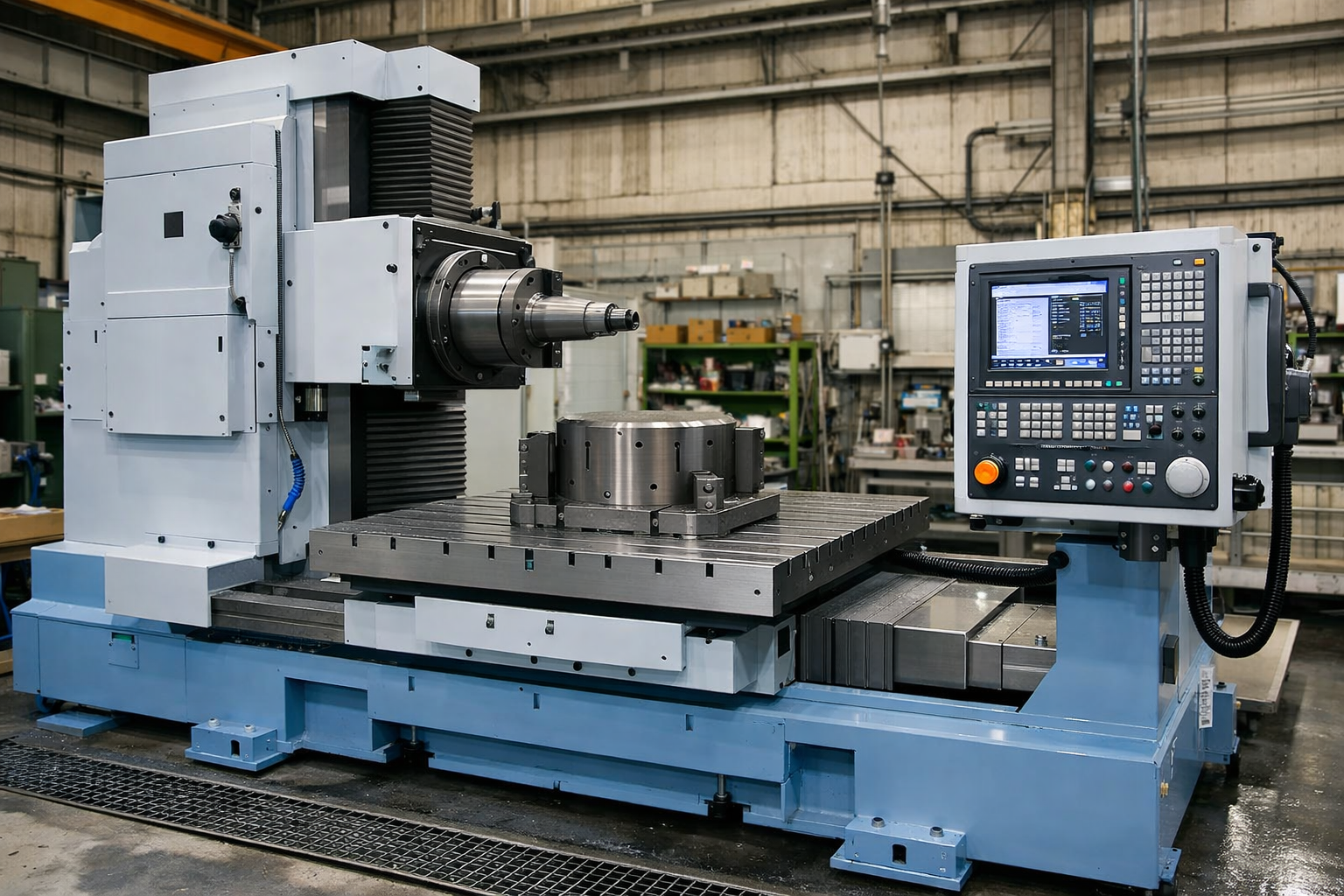
A horizontal milling machine has a spindle oriented horizontally. The tool rotates sideways and is mainly used for machining side surfaces and slots. Cutters are typically mounted on an arbor.
Since the spindle is horizontal, chips fall naturally downward due to gravity, resulting in excellent chip evacuation. Many models also support the cutter at both ends, providing high rigidity suitable for heavy cutting.
It is commonly used for side and slot machining of large parts.
3. Universal Milling Machine
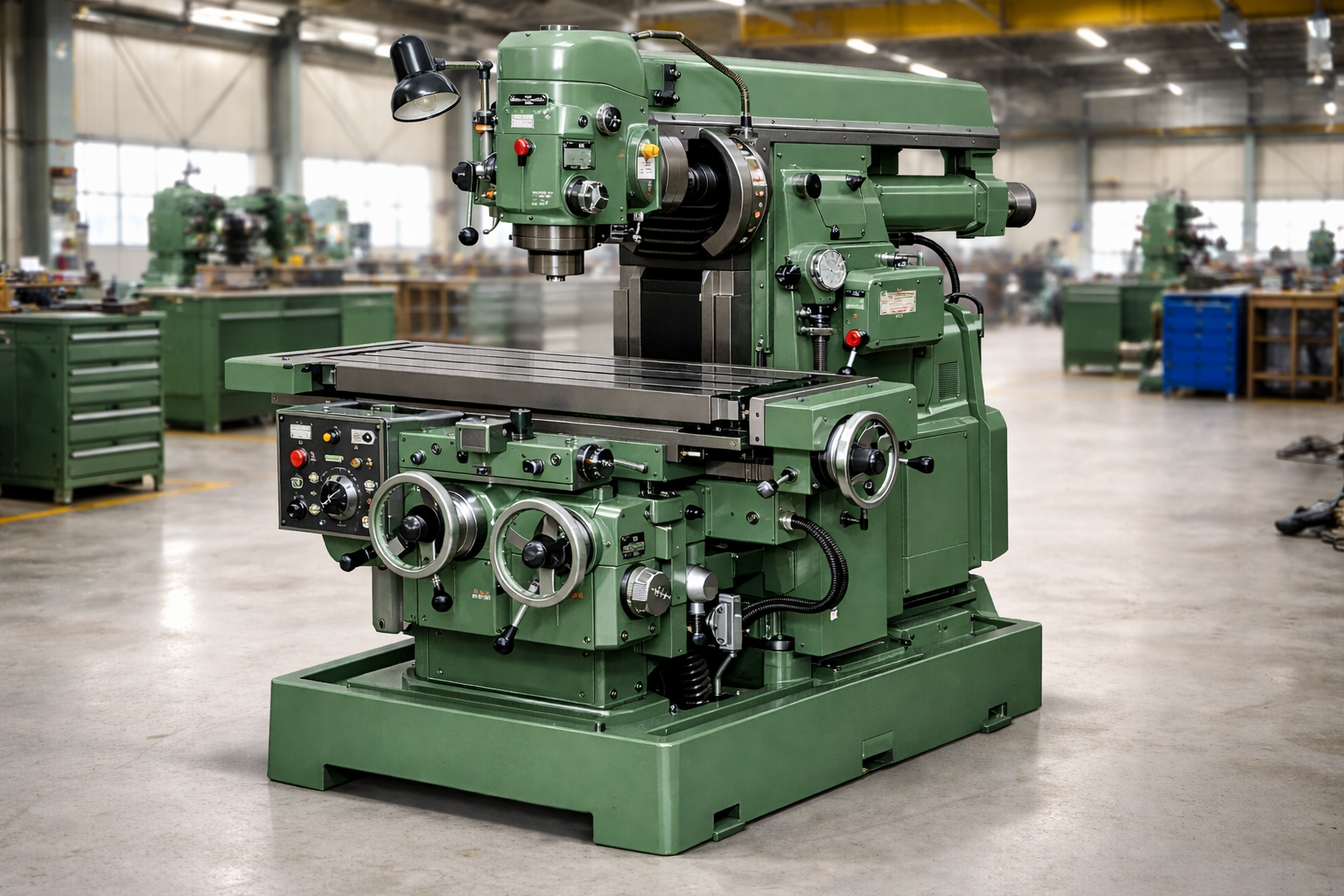
A universal milling machine features a table that can tilt left and right. Based on vertical or horizontal designs, it adds table rotation and tilting functions, enabling multi-directional machining.
This mechanism allows not only standard face and side machining but also angled grooves, angular machining, and helical slot machining.
4. Bed-Type Milling Machine
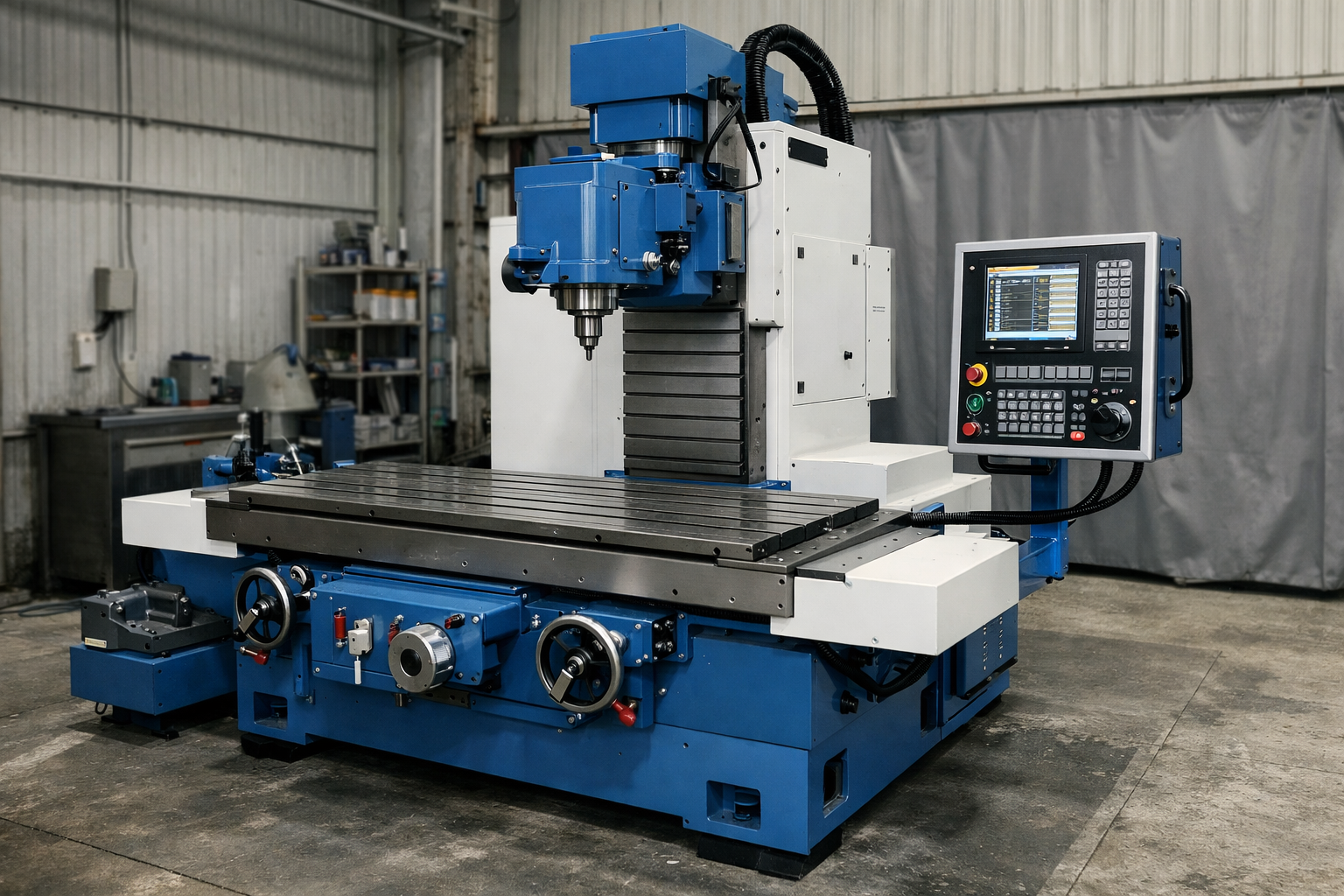
A bed-type milling machine has limited table movement, while the spindle head or column moves instead. This structure reduces vibration and deflection during machining, providing high rigidity.
It maintains stable machining accuracy even in heavy-duty or long-duration operations. It is particularly suitable for large and heavy workpieces requiring high precision.
Common applications include flat and side machining of machine parts, mold base machining, large plate machining, and structural components for industrial machinery.
5. Gantry Milling Machine
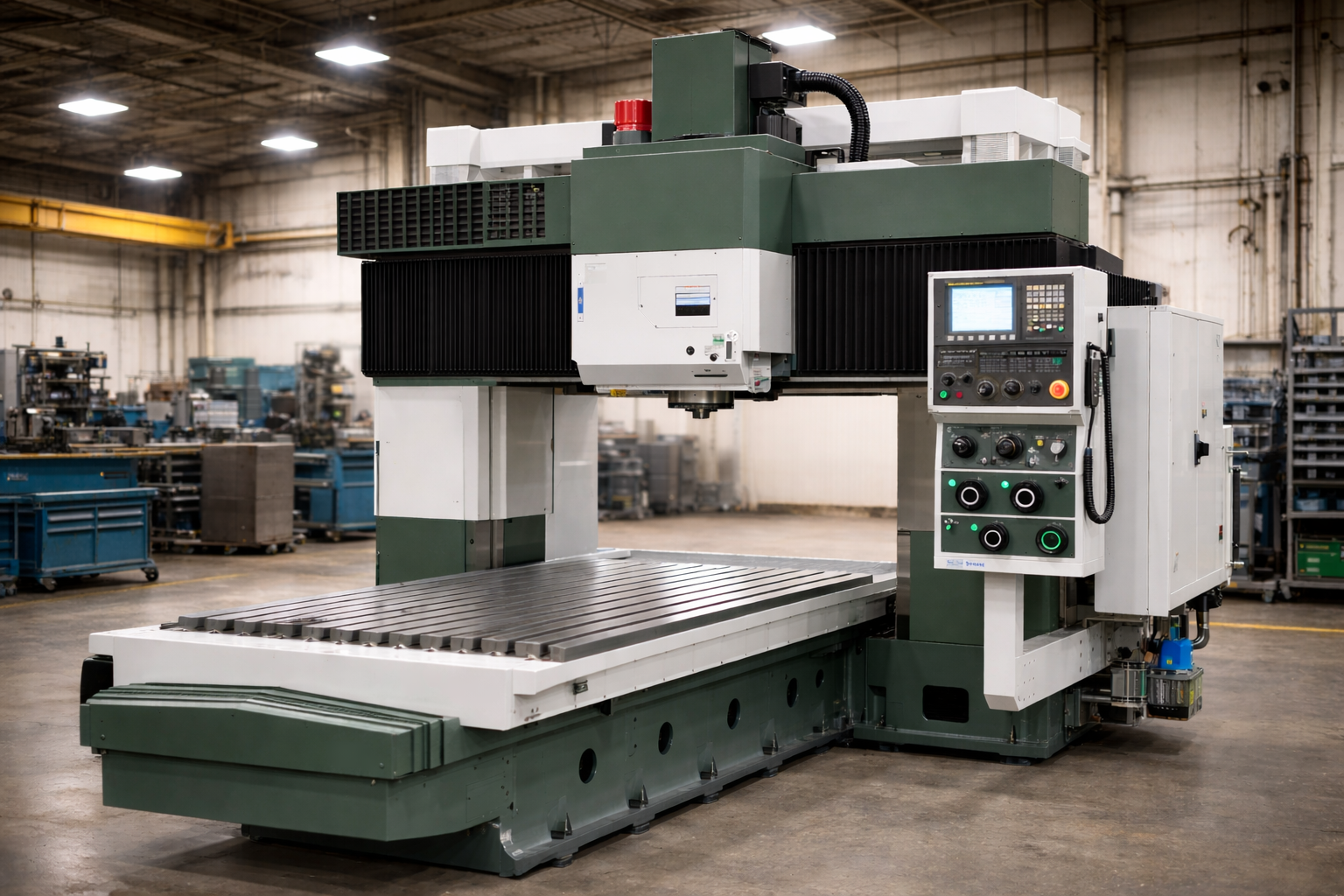
A gantry milling machine features a portal (gantry) frame structure, within which the spindle head moves for machining. The gantry frame provides high structural rigidity.
Its resistance to bending and twisting makes it ideal for heavy cutting and stable machining of large workpieces.
Typical applications include large press dies, plastic molds, large aluminum structural parts for aircraft, ship components, power generation equipment parts, and industrial machinery base plates. These applications require high rigidity and stable precision.
This type is primarily designed for machining large workpieces.
Summary
A milling machine is a machine tool that uses a rotating cutting tool to perform face, slot, and step machining. It is particularly suited for prismatic parts with linear references. NC/CNC machines provide stable positioning and high repeatability through numerical control.
Milling machines can process a wide range of materials, including steel, aluminum, stainless steel, copper, and plastics. CNC models can also machine complex curved surfaces and 3D shapes.
There are various types of milling machines—vertical, horizontal, universal, bed-type, and gantry—each with structural differences and specific strengths. Selecting the right type based on application needs leads to optimal equipment selection.
In addition to purchasing new equipment, companies can significantly reduce capital investment by utilizing used machinery.
We support the buying and selling of various used equipment, including:
Vertical milling machines
Gantry milling machines
CNC milling machines
Other machine tools
Please feel free to contact us for more information.
▶ View our list of used milling machines